Galaxy S20 5G Vs Galaxy S23

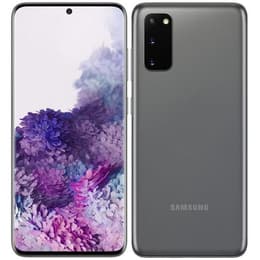
Galaxy S20 5G
Galaxy S20 5G
Starting at

Refurbished price:£133.00

Versus £899.00 new

See options
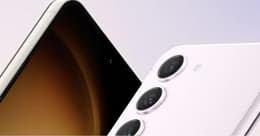
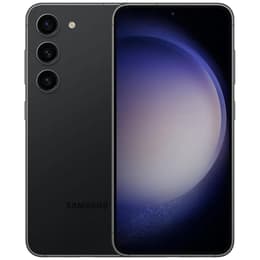
Galaxy S23
Galaxy S23
Starting at

Refurbished price:£186.84

Versus £1,019.00 new

See options

Ratings

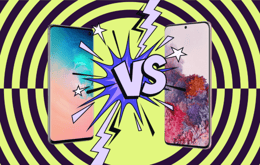
The Samsung Galaxy S20 5G, released in 2020, and the Samsung Galaxy S23, launched in 2023, represent different generations within Samsung's flagship smartphone series. While both devices run on the Android operating system and offer a premium experience, the S23 benefits from three years of technological advancements, particularly in processing power, camera capabilities, and extended software support. This comparison will explore the practical differences between these two models to help users make an informed decision.

Scores

Durability

The Galaxy S20 5G (March 2020) and Galaxy S23 (February 2023) differ in their expected software longevity and physical resilience, impacting long-term usability.

  • Software Longevity: The Galaxy S20 5G received its final major Android OS update with Android 13, and security updates concluded in early 2024. The Galaxy S23, launched with Android 13, is guaranteed major OS updates up to Android 17, with security updates extending into 2028, offering a significantly longer support period.
  • Physical Resilience: Both models carry an IP68 rating for dust and water resistance. The S20 5G uses Gorilla Glass 6, while the S23 incorporates Gorilla Glass Victus 2, providing enhanced drop and scratch protection.
  • Repairability: Both devices feature similar construction, making user repairs challenging. Professional services are recommended, with parts for the older S20 5G potentially becoming less available over time.

Year of Release

2020

2023

Compatible with latest Update

No

Yes

OS

Android

Android

Foldable

No

No

Performance

The three-year gap between the Galaxy S20 5G and the Galaxy S23 brings notable advancements in processing power and overall system efficiency, influencing daily performance.

  • Processing Power: The Galaxy S23 features a significantly more advanced processor, allowing for smoother operation across demanding applications, faster game loading, and more efficient handling of complex tasks. The S20 5G, while capable for everyday use, may show signs of slowdown with newer, resource-intensive applications.
  • Multitasking and Responsiveness: While the Galaxy S20 5G typically offers 12GB of RAM versus the S23's 8GB, the S23's optimized software and powerful processor often result in a more fluid multitasking experience and quicker app switching. Both provide responsive general navigation.
  • Battery Behavior: The S20 5G has a 4000 mAh battery, and the S23 a 3900 mAh unit. However, the S23's more efficient components generally lead to better real-world battery endurance, often lasting a full day of moderate to heavy use. The S20 5G may require more frequent charging for heavy users.

Memory (GB)

12 GB

8 GB

Screen quality

Both the Galaxy S20 5G and the Galaxy S23 offer high-quality display experiences, but key differences exist in their specifications and practical viewing.

  • Display Technology and Clarity: Both devices use Dynamic AMOLED 2X panels for vibrant colors and deep blacks. The S20 5G has a 6.2-inch 1440p display, while the S23 features a 6.1-inch 1080p display. The S20 5G's higher resolution offers a slight edge in pixel density, though the practical difference in sharpness is often subtle.
  • Brightness and Outdoor Visibility: The Galaxy S23 provides significantly higher peak brightness, up to 1750 nits, compared to the S20 5G's around 1200 nits. This makes the S23's display considerably easier to view in bright outdoor conditions.
  • Refresh Rate and Smoothness: Both phones feature a 120Hz refresh rate for smooth scrolling. The S23 employs an adaptive refresh rate that scales down to 1Hz for better power efficiency, whereas the S20 5G's 120Hz mode is less dynamic, consuming more power.

Resolution

1440 x 3200

1080 x 2340

Screen type

Dynamic AMOLED 2X

Dynamic AMOLED 2X

Audiovisual

The camera systems of the Galaxy S20 5G and Galaxy S23 reflect advancements over three generations, particularly in sensor technology and image processing.

  • Main Camera Performance: The Galaxy S23 features a 50 MP main sensor, offering improved detail and better low-light performance compared to the S20 5G's 12 MP main sensor. The S23 benefits from more advanced image processing, yielding more consistent and vibrant photos.
  • Zoom and Ultrawide Capabilities: Both phones include a telephoto lens with 3x optical zoom and an ultrawide lens. The S20 5G's 64 MP telephoto uses hybrid optical zoom, while the S23's 10 MP telephoto offers dedicated optical zoom, generally producing sharper zoomed-in shots.
  • Video Recording and Audio: The Galaxy S23 supports 8K video at 30 frames per second, an improvement over the S20 5G's 8K at 24 frames per second, offering smoother high-resolution footage. Both devices provide capable stereo speakers and clear microphone quality.

Main camera

12 megapixels

50 megapixels

Front camera

10 megapixels

12 megapixels

Miscellaneous

Beyond core performance and display, several practical elements differentiate the Galaxy S20 5G and Galaxy S23, influencing daily convenience and user experience.

  • Connectivity Standards: Both devices support 5G. The Galaxy S23 features newer Wi-Fi 6E and Bluetooth 5.3 standards, offering potentially faster and more stable wireless connections compared to the S20 5G's Wi-Fi 6 and Bluetooth 5.0. This can be beneficial in environments with compatible networks and accessories.
  • Physical Design and Handling: The Galaxy S23 is slightly more compact (146.3 x 70.9 x 7.6 mm) and marginally heavier (168g) than the S20 5G (151.7 x 69.1 x 7.9 mm, 163g). This makes the S23 a bit easier to handle for some, while the S20 5G offers a slightly larger screen. Both use a USB-C port and lack a headphone jack.
  • Biometric Security: Both models utilize an ultrasonic under-display fingerprint sensor and face recognition. The S23's fingerprint sensor may offer slight improvements in speed and reliability due to newer technology.

Weight

163 g

350 g

Screen size (in)

6.2

6.1

Mobile network

5G

5G

SIM card

Dual Physical SIM

Physical SIM + eSIM

Carrier compatibility

Unlocked

Unlocked

Connector

USB-C

USB-C

User feedback for the Galaxy S20 5G often praises its once-leading display quality and versatile camera system for its time. However, common criticisms now revolve around its aging battery performance and the conclusion of software support, which means no new Android features or the latest security patches. Users also note that its processor, while still functional, can struggle with the most demanding modern applications.

The Galaxy S23, conversely, receives widespread acclaim for its significantly improved battery life, compact design, and powerful, efficient processor that handles all tasks with ease. Its enhanced camera system, particularly in low light, is also a frequent highlight. Some users, however, occasionally mention the slightly lower display resolution compared to older flagships, though this is rarely a practical concern.

Users prioritizing long-term software support, superior battery endurance, and top-tier performance for gaming or intensive applications will find the Galaxy S23 well-suited to their needs. Its advanced camera system also makes it a strong choice for photography enthusiasts. Conversely, users who primarily need a capable smartphone for everyday tasks, appreciate a slightly larger screen, and are comfortable with an older software experience might still find the Galaxy S20 5G a viable option. Opting for a quality-assured refurbished option for either device can be an eco-friendly alternative, extending the life of these electronics.
See all articles

Our recent comparisons