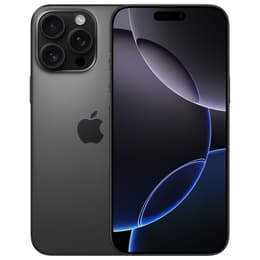

Galaxy A13 Vs iPhone 16 Pro Max

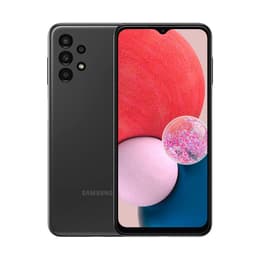
Galaxy A13
Galaxy A13
Starting at

Refurbished price:£73.00

Versus £249.00 new

See options
iPhone 16 Pro Max
iPhone 16 Pro Max
Starting at

Refurbished price:£658.00

Versus £1,199.00 new

See options

Ratings

The Samsung Galaxy A13, released in March 2022, is an Android smartphone designed for everyday use, focusing on essential features. In contrast, the iPhone 16 Pro Max, launched in September 2024, represents Apple's high-end offering, integrating advanced technology and premium capabilities. These devices operate on different ecosystems, with the Galaxy A13 running Android and the iPhone 16 Pro Max utilising iOS, leading to distinct user experiences and software environments.

Scores

Durability

The expected practical lifespan and software support differ significantly between these two devices, primarily due to their release timelines and manufacturer policies.

  • Release Timeline: The Galaxy A13 was released in March 2022, while the iPhone 16 Pro Max launched in September 2024. This two-and-a-half-year difference means the iPhone 16 Pro Max benefits from more recent hardware and a longer support window ahead.
  • OS Support Duration: Samsung typically provides two major Android OS updates and four years of security updates for its A-series devices. The Galaxy A13, having launched with Android 12, has received updates to Android 14. Apple, on the other hand, generally supports its iPhones with major iOS updates for five to seven years, with the iPhone 16 Pro Max expected to receive updates until approximately 2036. [1, 11, 13, 15, 18, 28, 35]
  • Repairability and Materials: The Galaxy A13 features a glass front with Gorilla Glass 5 protection and a plastic back and frame. The iPhone 16 Pro Max incorporates a titanium frame, Ceramic Shield front, and textured matte glass back, contributing to its overall durability and resistance to daily wear. [1, 3, 8, 11, 17, 21, 29]

Year of Release

2022

2024

Compatible with latest Update

No

Yes

Foldable

No

No

Performance

The performance capabilities of the Galaxy A13 and iPhone 16 Pro Max cater to different user demands, reflecting their respective hardware and software optimisations.

  • Processing Power: The Galaxy A13 is equipped with an octa-core processor designed for general tasks and moderate usage. Users report it handles basic functions and light gaming adequately, though some have noted occasional stutters and slower performance over time with more demanding applications. [3, 4, 22, 24, 26] The iPhone 16 Pro Max features a current-generation processor with a multi-core CPU, GPU, and a dedicated Neural Engine, enabling smooth multitasking, rapid app loading, and efficient handling of graphics-intensive games and professional applications. [8, 11, 12, 16, 21, 29]
  • Storage and Multitasking: The Galaxy A13 offers various storage options, typically ranging from 32GB to 128GB, with the flexibility of expandable storage via a microSD card. RAM options vary, impacting its ability to keep many applications open simultaneously. [1, 3, 4, 6, 7] The iPhone 16 Pro Max starts with a higher base storage of 256GB and goes up to 1TB, providing ample space for extensive media and applications without expandable storage. It includes a substantial amount of RAM, contributing to its ability to manage numerous demanding apps concurrently without slowdowns. [12, 16, 21]
  • Battery Behavior: The Galaxy A13 includes a 5000 mAh battery, which users generally find provides a full day of use, and often extends to two days with moderate usage. [1, 20, 23] The iPhone 16 Pro Max, with its 4685 mAh battery, is noted for its exceptional battery longevity, with some tests indicating over 25 hours of video playback or nearly two days of moderate usage, making it suitable for heavy users. [29, 33, 36, 38]

Memory (GB)

4 GB

8 GB

Screen quality

The display technologies and specifications present a clear distinction in visual experience between the Galaxy A13 and the iPhone 16 Pro Max.

  • Display Technology and Clarity: The Galaxy A13 features a 6.6-inch PLS TFT LCD with a Full HD+ resolution, offering clear visuals for everyday content. [1, 3, 7, 23] The iPhone 16 Pro Max boasts a larger 6.9-inch Super Retina XDR OLED display with a higher resolution, resulting in superior contrast, deeper blacks, and more vibrant colours. [11, 16, 17, 21, 29]
  • Brightness and Refresh Rate: The Galaxy A13's display provides adequate brightness for indoor and typical outdoor use, with a standard 60Hz refresh rate. [1, 23] The iPhone 16 Pro Max features higher peak brightness levels, enhancing visibility in bright outdoor conditions, and incorporates ProMotion technology, offering an adaptive refresh rate up to 120Hz for smoother scrolling and more fluid animations. [11, 17, 21, 29]
  • Viewing Experience: While the Galaxy A13 offers a large screen for media consumption, the iPhone 16 Pro Max enhances the viewing experience with features like HDR support, True Tone for adaptive white balance, and a Dynamic Island that integrates notifications and activities seamlessly into the display. [11, 17, 21]

Resolution

1080 x 2408

1320 x 2868

Screen type

PLS LCD

LTPO Super Retina XDR OLED

Audiovisual

The camera systems on the Galaxy A13 and iPhone 16 Pro Max are designed for different levels of photographic and videographic capabilities.

  • Rear Camera System: The Galaxy A13 includes a quad-camera setup with a 50 MP main sensor, a 5 MP ultrawide, and two 2 MP sensors for macro and depth. While the main camera performs well in good lighting, its low-light performance and the utility of the secondary lenses receive mixed user feedback. [1, 3, 20, 22, 24, 26] The iPhone 16 Pro Max features a professional-grade triple-camera system, including a 48 MP main sensor, a 48 MP ultrawide lens, and a 12 MP 5x telephoto lens with advanced optical image stabilisation. This setup is designed for high-resolution photography across various conditions, including improved low-light performance and enhanced zoom capabilities. [12, 14, 16, 21, 29, 30, 33]
  • Video Recording and Features: The Galaxy A13 records video at 1080p resolution at 30 frames per second. [1] The iPhone 16 Pro Max offers advanced video recording capabilities, including 4K resolution at up to 120 frames per second, Dolby Vision HDR, Cinematic Mode for depth-of-field effects, and Spatial Audio recording, catering to users who require high-quality video production. [12, 17, 29]
  • Front Camera and Audio: The Galaxy A13 has an 8 MP front camera suitable for basic selfies and video calls. [1, 3, 23] The iPhone 16 Pro Max features a 12 MP front camera with improved autofocus and computational photography features. It also includes studio-quality microphones for clearer audio capture during calls and video recordings, and enhanced speaker output for media consumption. [12, 16, 29]

Main camera

50 megapixels

48 megapixels

Front camera

8 megapixels

12 megapixels

Miscellaneous

Beyond core functionalities, several practical elements differentiate the Galaxy A13 and iPhone 16 Pro Max in terms of connectivity, design, and user interaction.

  • Connectivity and Ports: The Galaxy A13 supports Wi-Fi 5 and Bluetooth 5.0, and includes a USB-C 2.0 port along with a 3.5mm headphone jack. [7, 9, 10] The iPhone 16 Pro Max features more advanced connectivity with Wi-Fi 7, Bluetooth 5.4, and a USB-C port that supports Thunderbolt/USB4 speeds, offering faster data transfer and broader accessory compatibility. It does not include a headphone jack. [8, 11, 14, 17, 21]
  • Build Materials and Dimensions: The Galaxy A13 is constructed with a glass front and a plastic back and frame, weighing around 195 grams. [1, 3, 4, 9, 26] The iPhone 16 Pro Max uses a titanium frame, Ceramic Shield front, and textured matte glass back, contributing to a premium feel and enhanced durability, weighing 227 grams. Its dimensions are slightly different, reflecting its larger display. [8, 11, 17, 21]
  • Security and Unique Features: The Galaxy A13 incorporates a side-mounted fingerprint sensor for biometric security. [3, 4, 9, 10] The iPhone 16 Pro Max relies on Face ID for secure authentication and includes unique features like the Dynamic Island for interactive alerts and background activities, an Action Button for customisable shortcuts, and a dedicated Camera Control button for enhanced photography. [8, 11, 12, 16, 17, 27, 30]

Weight

195 g

227 g

Screen size (in)

6.6

6.9

Mobile network

4G

5G

SIM card

Dual Physical SIM

Physical SIM + eSIM

Carrier compatibility

Unlocked

Unlocked

The Samsung Galaxy A13 and iPhone 16 Pro Max cater to distinct user needs and preferences, reflecting their different market positions and technological advancements. Users often praise the Galaxy A13 for its robust battery life and its primary camera's performance in well-lit conditions, making it a practical choice for essential smartphone functions. [20, 23] However, common criticisms include its performance slowing down over extended use, particularly with more demanding applications, and the limited utility of its secondary camera lenses. [24]

The iPhone 16 Pro Max, conversely, receives acclaim for its exceptional overall performance, stunning display quality, and advanced camera system, which excels in various photographic and videographic scenarios. Its extended battery life is also a frequently highlighted positive. [29, 33, 36, 38] Some users, however, might find the advanced features and ecosystem specific to Apple to be a learning curve if transitioning from a different platform.

Users prioritising long battery life, expandable storage, and a familiar Android experience for everyday communication and light media consumption may find the Galaxy A13 well-suited to their needs. For those who demand top-tier performance for gaming, professional applications, advanced photography and videography, and a premium, integrated ecosystem with extended software support, the iPhone 16 Pro Max is a compelling option. Both devices offer reliable functionality, and considering a quality-assured refurbished option can be an eco-friendly alternative for either model, providing access to these features sustainably.

See all articles

Our recent comparisons