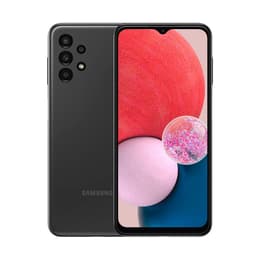
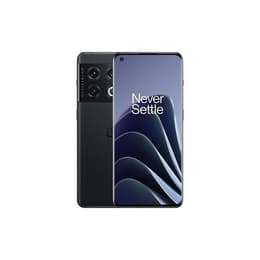

Galaxy A13 Vs OnePlus 10 Pro

Galaxy A13
Galaxy A13
Starting at

Refurbished price:£73.00

Versus £249.00 new

See options
OnePlus 10 Pro
OnePlus 10 Pro
Starting at

Refurbished price:£391.00

Versus £769.39 new

See options

Ratings

The Samsung Galaxy A13, released in March 2022, and the OnePlus 10 Pro, launched globally in March 2022, represent distinct segments within the smartphone market. While both operate on the Android platform, the Galaxy A13 is designed for essential daily tasks, whereas the OnePlus 10 Pro offers advanced features and performance for more demanding users. Their primary differences lie in processing power, display technology, and camera capabilities.

Scores

Durability

When considering the long-term usability of these devices, several factors contribute to their expected practical lifespan.

  • Release Timeline and Software Support: The Samsung Galaxy A13 was released in March 2022, typically receiving several years of Android updates and security patches. The OnePlus 10 Pro, also released globally in March 2022, benefits from a similar commitment to software longevity, with OxygenOS 16 (based on Android 16) expected in Q1 2026. This suggests the OnePlus 10 Pro may receive slightly longer flagship-level software support.
  • Build Quality and Durability: The Galaxy A13 features a plastic construction, with its display protected by Corning Gorilla Glass 5. While functional, some users have noted it can show signs of wear over time. The OnePlus 10 Pro, conversely, uses a more robust combination of glass (Gorilla Glass Victus for the display) and an aluminum frame, offering enhanced resistance to scratches and drops.
  • Repairability: Both devices, like most modern smartphones, present challenges for user repair. However, the availability of parts and service support can vary. Users seeking to extend the life of their devices might consider quality-assured refurbished options, which provide a sustainable choice for continued use.

Year of Release

2022

2022

Compatible with latest Update

No

Yes

OS

Android

Android

Foldable

No

No

Performance

The performance capabilities of the Galaxy A13 and the OnePlus 10 Pro cater to very different user expectations.

  • Everyday Responsiveness: The Galaxy A13 is equipped with a processor designed for basic smartphone functions. Users may experience occasional stuttering and lag when navigating menus or switching between multiple applications. In contrast, the OnePlus 10 Pro features a high-performance processor, enabling smooth navigation, rapid app loading, and seamless multitasking.
  • Demanding Applications and Gaming: For tasks such as graphic-intensive gaming or running complex productivity applications, the Galaxy A13's hardware may struggle, leading to lower frame rates and slower processing. The OnePlus 10 Pro, with its advanced processing unit and ample RAM configurations (up to 12GB), handles demanding applications and high-fidelity games with ease, maintaining consistent performance even under heavy load.
  • Storage and Multitasking: The Galaxy A13 offers various storage options (up to 128GB) and supports microSD card expansion, which is beneficial for users needing more space for photos and videos. The OnePlus 10 Pro provides faster internal storage (UFS 3.1) in capacities up to 512GB, but without expandable storage. Its higher RAM options (8GB or 12GB) further enhance its ability to manage numerous open applications simultaneously without slowdowns.

Memory (GB)

4 GB

8 GB

Screen quality

The visual experience offered by these two smartphones differs significantly due to their display technologies and specifications.

  • Display Technology and Clarity: The Samsung Galaxy A13 features a 6.6-inch PLS TFT LCD display with a Full HD+ resolution (1080 x 2408 pixels). This panel provides decent sharpness and color reproduction for everyday viewing. The OnePlus 10 Pro boasts a 6.7-inch QHD+ Fluid AMOLED display (3216 x 1440 pixels). This advanced panel delivers deeper blacks, higher contrast, and more vibrant colors, enhancing the viewing experience for multimedia content.
  • Brightness and Outdoor Visibility: The Galaxy A13 can reach a peak brightness of around 587 nits, which is generally sufficient for indoor use and adequate for outdoor visibility in most conditions. The OnePlus 10 Pro offers a higher peak brightness of up to 1300 nits, ensuring excellent visibility even in bright sunlight.
  • Refresh Rate and Smoothness: The Galaxy A13 has a standard 60Hz refresh rate, providing a typical scrolling and animation experience. The OnePlus 10 Pro features an adaptive refresh rate that can dynamically scale from 1Hz to 120Hz, thanks to LTPO 2.0 technology. This results in noticeably smoother scrolling, more fluid animations, and improved power efficiency by adjusting the refresh rate based on the content being displayed.

Resolution

1080 x 2408

1440 x 3216

Screen type

PLS LCD

LTPO2 Fluid AMOLED

Audiovisual

The camera systems of the Galaxy A13 and the OnePlus 10 Pro are designed for different levels of photographic capability.

  • Rear Camera Systems: The Galaxy A13 includes a quad-camera setup with a 50MP main sensor, a 5MP ultrawide, and two 2MP sensors for macro and depth. This system performs adequately in good lighting conditions for casual photography, but the auxiliary lenses offer limited utility, and low-light performance is basic. The OnePlus 10 Pro features a versatile triple-camera system co-developed with Hasselblad, comprising a 48MP main sensor with optical image stabilization (OIS), a 50MP ultrawide camera with a wide 150-degree field of view, and an 8MP telephoto lens offering 3.3x optical zoom and OIS. This setup provides greater flexibility and higher image quality across various scenarios.
  • Photography Performance: In everyday situations, the OnePlus 10 Pro captures detailed images with accurate colors and strong dynamic range, even in challenging lighting. Its ultrawide lens offers unique creative options, and the telephoto lens provides clear zoomed-in shots. The Galaxy A13's main camera can take good shots in bright light, but its ultrawide often lacks detail, and overall performance diminishes significantly in low-light environments.
  • Video Recording and Front Camera: The Galaxy A13 records video at 1080p at 30 frames per second and has an 8MP front camera suitable for basic video calls and selfies. The OnePlus 10 Pro supports advanced video recording up to 8K at 24fps and 4K at 120fps, along with a 32MP front camera that delivers high-resolution selfies and clear video calls.

Main camera

50 megapixels

48 megapixels

Front camera

8 megapixels

32 megapixels

Miscellaneous

Beyond core performance, several practical features and design elements differentiate these two devices.

  • Connectivity and Ports: The Samsung Galaxy A13 (4G LTE model) supports 4G connectivity, Wi-Fi 5, Bluetooth 5, and includes a USB-C 2.0 port, alongside a 3.5mm headphone jack. The OnePlus 10 Pro offers more advanced connectivity with 5G support, Wi-Fi 6, Bluetooth 5.2, and a USB-C 3.1 port, but it lacks a traditional headphone jack.
  • Biometric Security and Design: The Galaxy A13 features a side-mounted fingerprint sensor for unlocking. Its design is primarily plastic, contributing to a lighter feel. The OnePlus 10 Pro incorporates an in-display fingerprint sensor and is constructed with a glass front and back, framed by aluminum, giving it a more premium feel. It also includes OnePlus's signature Alert Slider for quick sound profile changes.
  • Charging and Battery Features: Both phones house a 5000mAh battery. The Galaxy A13 supports 15W wired charging. The OnePlus 10 Pro offers significantly faster charging, with 80W wired charging (65W in North America) and 50W wireless charging, along with reverse wireless charging capabilities.

Weight

195 g

201 g

Screen size (in)

6.6

6.7

Mobile network

4G

5G

SIM card

Dual Physical SIM

Physical SIM

Carrier compatibility

Unlocked

Unlocked

The Samsung Galaxy A13 and the OnePlus 10 Pro cater to distinct user needs and preferences. User feedback for the Galaxy A13 often praises its long battery life and decent main camera performance for its category. However, common criticisms include its sluggish performance and the basic quality of its display and auxiliary cameras.

The OnePlus 10 Pro, on the other hand, is frequently lauded for its vibrant, high-refresh-rate display, powerful performance, and versatile camera system developed with Hasselblad. Its fast charging capabilities are also a significant highlight for many users. Some users have noted that while its battery life is good, it might not always stretch to two full days with heavy use, and its software, while generally smooth, has seen some changes from previous OnePlus iterations.

Users prioritizing core smartphone functions, extended battery life for light use, and expandable storage may find the Samsung Galaxy A13 well-suited to their requirements. It serves as a reliable device for communication, basic browsing, and casual photography. Conversely, individuals who demand high-end performance for gaming and demanding applications, a superior visual experience, advanced photography features, and rapid charging will likely lean towards the OnePlus 10 Pro. It is designed for users who engage heavily with multimedia, photography, and performance-intensive tasks.

For those looking to make an informed and sustainable choice, both models are available as quality-assured refurbished options, providing an eco-friendly alternative to purchasing new devices.


See all articles

Our recent comparisons