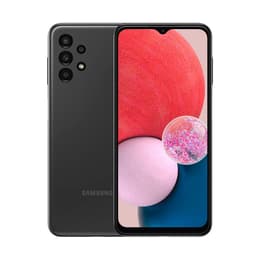

Galaxy A13 Vs Galaxy A54

Galaxy A13
Galaxy A13
Starting at

Refurbished price:£73.00

Versus £249.00 new

See options
Galaxy A54
Galaxy A54
Starting at

Refurbished price:£119.00

Versus £499.00 new

See options

Ratings

The Samsung Galaxy A13 (released March 2022) and the Samsung Galaxy A54 (released March 2023) are both Android smartphones from Samsung's A-series, offering different levels of features and performance. While the Galaxy A13 focuses on essential smartphone capabilities, the Galaxy A54 introduces more advanced hardware, an enhanced display, and improved camera systems. Both devices operate on the Android platform, providing a familiar user experience with Samsung's One UI.

Scores

Durability

The expected lifespan of a smartphone is significantly influenced by its release date and the manufacturer's software support policy. The Galaxy A54, being a newer device, benefits from a longer guaranteed support period.

  • Release Timeline: The Galaxy A13 was released in March 2022, while the Galaxy A54 followed a year later in March 2023. This difference in launch dates directly impacts their software longevity.
  • Software Longevity: The Galaxy A54 is committed to receiving four major Android OS updates and five years of security updates, extending its usability and security until approximately 2028. In contrast, the Galaxy A13 typically receives two major Android OS updates and security updates for the duration of its support lifecycle, which is generally shorter.
  • Build Materials: The Galaxy A13 features a plastic frame and back, with Gorilla Glass 5 protecting the front display. The Galaxy A54 offers a more robust build with Gorilla Glass 5 on both the front and back, encased in a plastic frame, and includes an IP67 rating for dust and water resistance.

Year of Release

2022

2023

Compatible with latest Update

No

Yes

OS

Android

Android

Foldable

No

No

Performance

The performance of these two Galaxy devices varies, impacting how smoothly they handle daily tasks, demanding applications, and multitasking.

  • Processor Capabilities: The Galaxy A54 features a more capable processor, which allows for smoother navigation, faster app loading times, and more efficient handling of graphically intensive games and applications. The Galaxy A13, with its processor, is designed for more basic daily tasks like browsing, social media, and light applications, and may exhibit slower performance with more demanding use.
  • Multitasking and Responsiveness: The Galaxy A54 generally offers more RAM options, contributing to better multitasking capabilities and a more responsive user experience, even with multiple apps open simultaneously. The Galaxy A13's lower RAM configurations can lead to noticeable slowdowns when switching between applications or running several in the background.
  • Storage Options: Both devices offer expandable storage via a microSD card, providing flexibility for users who need additional space for photos, videos, and apps. The Galaxy A54 typically starts with higher internal storage options, offering more space out of the box.

Memory (GB)

4 GB

8 GB

Screen quality

The display is a primary point of interaction, and both the Galaxy A13 and A54 offer different visual experiences.

  • Display Technology and Clarity: The Galaxy A54 features a Super AMOLED display, known for its vibrant colors, deep blacks, and excellent contrast, providing a rich viewing experience. The Galaxy A13 uses a PLS LCD panel, which offers good clarity and brightness for everyday use but does not match the contrast and color depth of an AMOLED screen.
  • Refresh Rate and Smoothness: The Galaxy A54 boasts a 120Hz refresh rate, resulting in noticeably smoother scrolling and more fluid animations, enhancing the overall user interface experience. The Galaxy A13 has a standard 60Hz refresh rate, which is adequate for most tasks but does not offer the same level of visual fluidity.
  • Brightness and Size: The Galaxy A54's display can achieve higher peak brightness, making it more comfortable to view content outdoors or in brightly lit environments. The Galaxy A13 has a slightly larger 6.6-inch display compared to the A54's 6.4-inch screen, offering a more expansive viewing area, though with a lower pixel density.

Resolution

1080 x 2408

1080 x 2340

Screen type

PLS LCD

Super AMOLED

Audiovisual

The camera systems on the Galaxy A13 and Galaxy A54 are designed for different levels of photographic capability, with the A54 offering a more advanced setup.

  • Main Camera Performance: The Galaxy A54 features a 50MP main camera with Optical Image Stabilization (OIS), which significantly improves low-light performance and video stability, producing sharper and more detailed images. The Galaxy A13 also has a 50MP main camera, but without OIS, its performance in challenging lighting conditions and for video recording is more limited.
  • Additional Lenses and Features: The Galaxy A54 includes a 12MP ultrawide camera and a 5MP macro camera, providing versatility for different types of shots. The Galaxy A13 typically features a 5MP ultrawide, and 2MP macro and depth sensors, which offer less detail and utility compared to the A54's setup.
  • Front Camera and Video Quality: The Galaxy A54 is equipped with a 32MP front-facing camera, capable of capturing high-resolution selfies and clear video calls. The Galaxy A13 has an 8MP front camera, suitable for basic selfies and video communication.

Main camera

50 megapixels

50 megapixels

Front camera

8 megapixels

32 megapixels

Miscellaneous

Beyond core features, several practical elements differentiate the Galaxy A13 and A54, influencing daily usability and connectivity.

  • Connectivity: The Galaxy A54 supports 5G connectivity, offering faster mobile data speeds where available, along with Wi-Fi 6 and Bluetooth 5.3 for more modern wireless connections. The Galaxy A13 is primarily a 4G LTE device, with Wi-Fi 5 and Bluetooth 5.0, suitable for standard wireless needs.
  • Port Types and Sensors: Both devices feature a USB-C port for charging and data transfer. The Galaxy A13 retains a 3.5mm headphone jack, which is absent on the Galaxy A54. For security, both include a fingerprint sensor, with the A54's often integrated under the display and the A13's typically side-mounted.
  • Physical Characteristics: The Galaxy A54 is slightly more compact in height and thinner than the Galaxy A13, though it is marginally heavier due to its glass back. The A13's plastic construction contributes to its lighter feel despite its larger dimensions.

Weight

195 g

202 g

Screen size (in)

6.6

6.4

Mobile network

4G

5G

SIM card

Dual Physical SIM

Dual Physical SIM

Carrier compatibility

Unlocked

Unlocked

User feedback for the Galaxy A13 often highlights its strong battery life and decent camera performance in good lighting conditions as praise points. However, common criticisms include sluggish performance, especially over time, and a less premium build quality. Users frequently report issues with responsiveness and overall speed after extended use.

For the Galaxy A54, users generally praise its vibrant display, improved camera capabilities, and robust software support. Its design, which resembles more premium models, is also a positive point. Some users note that while its performance is solid for a mid-range device, it may not match the speed of older flagship phones, and charging speeds could be faster.

Users prioritizing extended software support, a more fluid display experience, and enhanced camera performance, particularly in varied lighting, may find the Galaxy A54 better suited to their needs. This device is well-aligned for individuals who engage in moderate gaming, frequent multitasking, or value capturing higher-quality photos and videos. Conversely, users seeking a more budget-conscious option for essential communication, social media, and casual browsing, where maximum performance and advanced camera features are not primary concerns, might lean towards the Galaxy A13. Choosing a quality-assured refurbished option for either model can provide an eco-friendly alternative for consumers.

See all articles

Our recent comparisons