
Galaxy A35 Vs Google Pixel 6

Galaxy A35
Galaxy A35
Starting at

Refurbished price:£119.00

Versus £367.31 new

See options
Google Pixel 6
Google Pixel 6
Starting at

Refurbished price:£101.00

Versus £649.99 new

See options

Ratings

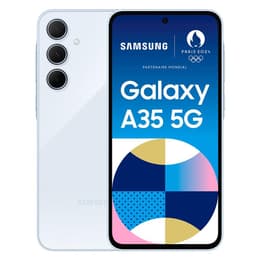
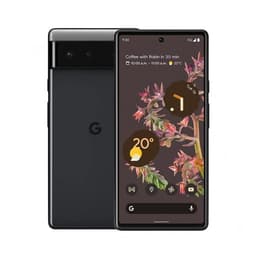
The Samsung Galaxy A35, released in March 2024, and the Google Pixel 6, launched in October 2021, are both Android smartphones that offer distinct user experiences. While the Galaxy A35 is a more recent mid-range offering from Samsung, the Pixel 6 was Google's flagship device at its release, introducing Google's custom-designed processor. The primary differentiators lie in their release timelines, software philosophies, and camera approaches, catering to different user priorities.

Scores

Durability

When considering the longevity of a smartphone, both the release timeline and software support are key factors. The Galaxy A35 is a newer device, while the Pixel 6 has been on the market for a longer period.

  • Release Timeline and OS Support: The Samsung Galaxy A35, released in March 2024, benefits from a more recent launch, offering four years of operating system updates and five years of security updates from its release date. In contrast, the Google Pixel 6, launched in October 2021, was initially promised five years of updates, which includes three major OS updates and five years of security patches, with support expected to end around October 2026 for OS updates and security updates. This means the Galaxy A35 will receive software support for a longer duration into the future.
  • Durability Features: Both devices offer robust protection against environmental elements. The Galaxy A35 features an IP67 rating for dust and water resistance and is protected by Corning Gorilla Glass Victus+ on the front. The Pixel 6 boasts an IP68 rating, indicating slightly better water resistance, and also uses Corning Gorilla Glass Victus for screen protection.
  • Expected Practical Lifespan: Users prioritizing the latest software features for the longest possible time will find the Galaxy A35's newer release and extended update policy more appealing. However, the Pixel 6, despite its age, continues to receive security updates, making it a viable option for those who value Google's software experience and are comfortable with its approaching end-of-life for major OS upgrades.

Year of Release

2024

2021

Compatible with latest Update

Yes

Yes

OS

Android

Android

Foldable

No

No

Performance

The performance of these two devices is influenced by their respective processors and how they handle daily tasks and more demanding applications.

  • Processor Capabilities: The Samsung Galaxy A35 is powered by an in-house processor designed for efficient mid-range performance, capable of handling everyday tasks smoothly. The Google Pixel 6, on the other hand, features a custom-designed processor that was Google's first foray into proprietary mobile silicon, optimized for artificial intelligence and machine learning tasks.
  • Real-world Usage: For general use such as browsing, social media, and switching between applications, both phones offer a responsive experience. The Galaxy A35 performs well with typical apps and light gaming, though demanding games might see some frame drops at higher settings. The Pixel 6's processor was designed to excel in areas like computational photography and on-device AI processing, providing a fluid experience for Google's ecosystem and features.
  • Storage and Multitasking: Both devices are available with 128GB or 256GB of internal storage. The Galaxy A35 offers the flexibility of expandable storage via a microSD card, which is not available on the Pixel 6. For multitasking, the Pixel 6 typically comes with 8GB of RAM, while the Galaxy A35 is available in 6GB or 8GB RAM configurations, with 8GB providing a smoother experience for managing multiple open applications.

Memory (GB)

6 GB

8 GB

Screen quality

The visual experience on a smartphone is largely defined by its display, and both the Galaxy A35 and Pixel 6 offer vibrant screens with distinct characteristics.

  • Display Technology and Clarity: The Samsung Galaxy A35 features a 6.6-inch Super AMOLED display, known for its vibrant colors and deep blacks, with a Full HD+ resolution (1080 x 2340 pixels). The Google Pixel 6 comes with a slightly smaller 6.4-inch P-OLED/AMOLED display, also offering Full HD+ resolution (1080 x 2400 pixels) and rich colors.
  • Refresh Rate and Brightness: The Galaxy A35 provides a smoother scrolling and viewing experience with its 120Hz refresh rate and can reach a peak brightness of 1000 nits in High Brightness Mode, ensuring good visibility outdoors. The Pixel 6 offers a 90Hz refresh rate, which is a noticeable improvement over standard 60Hz displays, and can achieve a peak brightness of up to 1300 nits, also providing clear outdoor visibility.
  • Viewing Experience: Both displays are protected by Gorilla Glass Victus (Victus+ on A35). Users who prioritize the absolute smoothest visual experience might lean towards the Galaxy A35's 120Hz display, while the Pixel 6's display still offers a very fluid experience with its 90Hz refresh rate and excellent color reproduction.

Resolution

1080 x 2340

1080 x 2400

Screen type

Super AMOLED

AMOLED

Audiovisual

Photography capabilities are a significant consideration for many smartphone users, and both the Galaxy A35 and Pixel 6 offer capable camera systems with different strengths.

  • Rear Camera Systems: The Samsung Galaxy A35 features a triple-camera setup with a 50MP main sensor with optical image stabilization (OIS), an 8MP ultrawide lens, and a 5MP macro lens. The Google Pixel 6 has a dual-camera system, comprising a 50MP main sensor with OIS, Dual Pixel PDAF, and Laser AF, alongside a 12MP ultrawide lens.
  • Photography Performance: The Galaxy A35 delivers quality photos and videos in various conditions, with its 50MP main sensor capturing good detail. The Pixel 6, known for Google's advanced computational photography, excels in image processing, often producing natural colors and strong dynamic range, particularly in challenging lighting conditions. The Pixel 6's ultrawide camera offers a slightly higher resolution than the A35's.
  • Video Recording and Front Camera: Both devices can record video at 4K resolution at 30 frames per second (fps) with their main cameras. The Pixel 6 can also record 4K at 60fps with its rear camera and offers 1080p at 60fps from its 8MP front camera, while the Galaxy A35 has a 13MP front camera capable of 4K@30fps video.

Main camera

50 megapixels

50 megapixels

Front camera

13 megapixels

8 megapixels

Miscellaneous

Beyond core features, several practical elements contribute to the overall user experience of these smartphones.

  • Connectivity and Ports: Both the Galaxy A35 and Pixel 6 support 5G connectivity, Wi-Fi 6, and NFC for mobile payments. They both utilize a USB-C port for charging and data transfer, but neither includes a 3.5mm headphone jack. The Galaxy A35 supports Bluetooth 5.3, while the Pixel 6 uses Bluetooth 5.2.
  • Biometrics and Security: For unlocking and security, both phones feature an in-display fingerprint sensor. The Pixel 6 also incorporates Google's Titan M2 security module for enhanced hardware security.
  • Design and Handling: The Galaxy A35 measures 161.7 x 78.0 x 8.2mm and weighs 209g, featuring a glass front and back with a plastic frame. The Pixel 6 is slightly more compact at 158.6 x 74.8 x 8.9mm and weighs 207g, with a glass front and back and an aluminum frame. The Pixel 6's distinctive camera bar across the back is a notable design element.

Weight

209 g

207 g

Screen size (in)

6.6

6.4

Mobile network

5G

5G

SIM card

Dual Physical SIM

Physical SIM + eSIM

Carrier compatibility

Unlocked

Unlocked

The Samsung Galaxy A35 and Google Pixel 6 each present a compelling package, though they cater to slightly different user needs and expectations. User feedback for the Galaxy A35 often praises its vibrant display, reliable battery life, and consistent software support, making it a solid choice for everyday use. Some users note that its gaming performance, while adequate for casual play, might not satisfy those seeking a high-end mobile gaming experience.

The Google Pixel 6 is frequently lauded for its exceptional camera capabilities, driven by Google's computational photography, and its clean Android experience with timely updates. However, some users have reported mixed experiences with battery life, particularly under heavy usage or 5G connectivity, and its processor, while strong in AI tasks, may not always match the raw performance of newer chips in general benchmarks.

Users prioritizing a newer device with a longer software update commitment and expandable storage may find the Samsung Galaxy A35 to be a more suitable option. Its 120Hz display also offers a smoother visual experience. Conversely, users who value cutting-edge camera performance, a pure Android interface, and Google's unique AI features might lean towards the Google Pixel 6. Its slightly more compact size and premium build materials could also be a deciding factor.

Both devices represent quality-assured options, and considering refurbished models can be an eco-friendly alternative for those looking to make a sustainable choice.


See all articles

Our recent comparisons