Galaxy Tab S8+ (12.4", 2022) Vs iPad 10 (2022, A14 series)

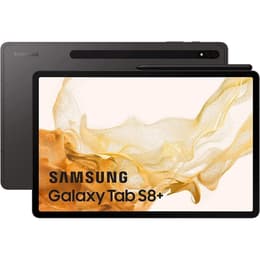
Galaxy Tab S8+ (12.4", 2022)
Starting at

Refurbished price:£323.36

Versus £999.00 new

See options
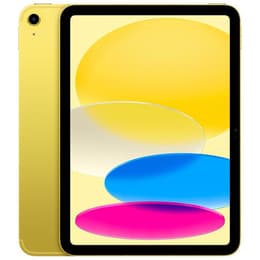
iPad 10 (2022, A14 series)
Starting at

Refurbished price:£223.00

Versus £349.00 new

See options

Ratings

The Samsung Galaxy Tab S8+ and the Apple iPad 10th Generation, both released in 2022, offer distinct tablet experiences. While the Galaxy Tab S8+ runs on Android and features a larger, more vibrant display, the iPad 10th Generation operates on iPadOS and integrates seamlessly within the Apple ecosystem. These differences cater to varying user preferences in terms of operating system, screen size, and overall functionality.

Scores

Durability

When considering the long-term usability of a tablet, software support and physical resilience are key factors.

  • Release Timeline: The Samsung Galaxy Tab S8+ was released in February 2022, while the Apple iPad 10th Generation followed in October 2022. This gives the iPad a slight advantage in terms of its newer launch date.
  • Software Longevity: Samsung has committed to providing four major Android OS upgrades and five years of security updates for the Galaxy Tab S8+ series, suggesting support until around 2027. Apple typically offers 5-6 years of iPadOS updates for its devices, meaning the iPad 10th Generation can also expect a similar, if not slightly longer, support window due to its later release.
  • Practical Lifespan: Both tablets are built with durable materials, featuring glass fronts and aluminum backs and frames. The practical lifespan for either device will largely depend on individual usage and care, with consistent software updates contributing significantly to their continued relevance and security.

Year of Release

2022

2022

Compatible with latest Update

Yes

Yes

OS

Android

iPadOS

Performance

The performance of a tablet dictates its ability to handle various tasks, from everyday browsing to more demanding applications.

  • Processing Power: The Galaxy Tab S8+ is equipped with a powerful octa-core processor, enabling it to manage demanding applications and multitasking smoothly. The iPad 10th Generation features a capable chip with a 6-core CPU and 4-core graphics, providing responsive performance for a wide range of activities, including video editing and graphics-intensive games.
  • Multitasking Capabilities: The Galaxy Tab S8+ offers substantial RAM options, with variants available up to 12GB, which supports efficient multitasking and running multiple applications simultaneously without significant slowdowns. The iPad 10th Generation, while having less RAM, is optimized by iPadOS to handle multitasking effectively, allowing users to switch between apps and utilize split-screen features with fluidity.
  • Storage Flexibility: The Galaxy Tab S8+ provides storage options up to 256GB, with some variants offering 512GB, and includes a microSD card slot for expandable storage up to 1TB, offering significant flexibility for users with large media libraries or extensive file storage needs. The iPad 10th Generation comes with 64GB or 256GB of internal storage, which is not expandable, requiring users to consider their storage needs at the time of purchase.

Memory (GB)

8 GB

4 GB

Screen quality

The display is a primary interface for tablets, influencing everything from media consumption to productivity.

  • Display Technology and Size: The Galaxy Tab S8+ boasts a larger 12.4-inch Super AMOLED display, known for its deep blacks, high contrast, and vibrant colors. In contrast, the iPad 10th Generation features a 10.9-inch Liquid Retina IPS LCD display, which offers accurate color reproduction and wide viewing angles.
  • Resolution and Refresh Rate: The Galaxy Tab S8+ provides a resolution of 2800 x 1752 pixels and a 120Hz refresh rate, contributing to smoother scrolling and a more fluid visual experience. The iPad 10th Generation has a resolution of 2360 x 1640 pixels and a standard 60Hz refresh rate, which is suitable for most daily tasks but may not appear as smooth during fast-paced content or scrolling.
  • Brightness and Clarity: Both tablets offer good brightness levels for indoor use. The iPad 10th Generation has a peak brightness of 500 nits, providing decent visibility in various lighting conditions. The Super AMOLED panel of the Tab S8+ generally offers excellent outdoor visibility due to its inherent contrast.

Resolution

1752 x 2800

2360 x 1640

Screen type

Super AMOLED

Liquid Retina display

Pixel density

270ppp

264ppp

Audiovisual

Tablet cameras are increasingly important for video calls, quick captures, and document scanning.

  • Rear Camera System: The Galaxy Tab S8+ features a dual-camera setup on the rear, including a 13MP main sensor and a 6MP ultra-wide lens, offering versatility for different types of shots. The iPad 10th Generation has a single 12MP wide rear camera, capable of capturing detailed photos and 4K video.
  • Front Camera and Video Capabilities: Both tablets excel in front-facing camera performance, crucial for video conferencing. The Galaxy Tab S8+ includes a 12MP ultra-wide front camera. The iPad 10th Generation also features a 12MP ultra-wide front camera, uniquely positioned on the landscape edge, which is beneficial for video calls as it keeps the user centered in the frame. Both devices support 4K video recording with their main cameras.
  • Audio Experience: The Galaxy Tab S8+ comes with quad stereo speakers tuned by AKG and supports Dolby Atmos, providing a rich audio experience for media consumption. The iPad 10th Generation also offers stereo speakers, delivering clear audio for video playback and calls.

Miscellaneous

Beyond core specifications, several practical elements contribute to the overall user experience.

  • Connectivity Standards: The Galaxy Tab S8+ supports Wi-Fi 6E, offering faster and more stable wireless connections where available, alongside Bluetooth v5.2 and optional 5G cellular connectivity. The iPad 10th Generation supports Wi-Fi 6 and Bluetooth 5.2, with 5G cellular options also available, ensuring modern wireless capabilities.
  • Ports and Biometrics: Both tablets utilize a USB-C port for charging and data transfer. The Galaxy Tab S8+ features a USB Type-C 3.2 port, while the iPad 10th Generation's USB-C port operates at USB 2.0 speeds. For security, the Galaxy Tab S8+ includes an on-screen fingerprint scanner. The iPad 10th Generation integrates Touch ID into its power button.
  • Design and Accessories: The Galaxy Tab S8+ has a slim profile and comes with the S Pen included, which attaches magnetically for charging and storage. The iPad 10th Generation supports the first-generation Apple Pencil and the Apple Pencil (USB-C), but not the second-generation Apple Pencil, and has a redesigned form factor with flatter edges.

Weight

567 g

477 g

Screen size (in)

12.4

10.9

Network

Wi-Fi + 5G

Wi-Fi

Carrier compatibility

Unlocked

Without SIM Port

User feedback for the Samsung Galaxy Tab S8+ often highlights its impressive Super AMOLED display and the included S Pen as significant advantages, making it well-suited for creative tasks and media consumption. Users also appreciate its robust multitasking capabilities, especially with the larger screen size. Some common criticisms revolve around its battery life, with some users reporting around 6-9 hours of screen-on time, particularly with heavy usage or the 120Hz refresh rate enabled. The Android ecosystem's tablet app optimization is also sometimes mentioned as a point of comparison with iPadOS.

For the Apple iPad 10th Generation, users frequently praise its reliable performance for everyday tasks and its seamless integration within the Apple ecosystem. The updated design and the landscape-oriented front camera are also well-received for video calls. Battery life is generally considered solid, with Apple claiming up to 10 hours of web browsing or video playback, though some users report varying experiences depending on usage intensity. A frequent point of discussion is its compatibility with only the first-generation Apple Pencil (requiring an adapter for charging) and the Apple Pencil (USB-C), which can be less convenient than the magnetic charging of the second-generation Pencil supported by other iPad models.

Users prioritizing a large, high-refresh-rate OLED display and expandable storage, along with the versatility of the Android operating system and an included stylus, may find the Samsung Galaxy Tab S8+ to be a strong fit. Conversely, users who value a streamlined operating system, consistent performance for a wide range of apps, and deep integration with other Apple devices might lean towards the iPad 10th Generation. Both devices offer quality-assured refurbished options, providing an eco-friendly alternative for those looking to make an informed and sustainable choice.

See all articles

Our recent comparisons