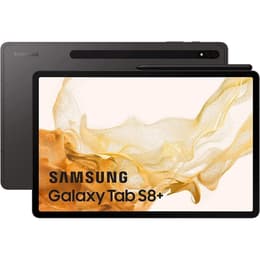
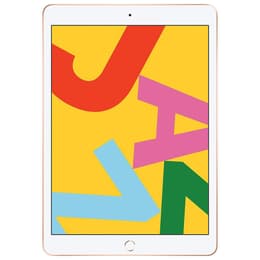

Galaxy Tab S8+ (12.4", 2022) Vs iPad 7 (2019, A10 series)

Galaxy Tab S8+ (12.4", 2022)
Starting at

Refurbished price:£323.36

Versus £999.00 new

See options
iPad 7 (2019, A10 series)
Starting at

Refurbished price:£78.00

Versus £349.00 new

See options

Ratings

The Samsung Galaxy Tab S8+ (2022) and the Apple iPad (7th Generation) (2019) are tablets designed for different user needs and released three years apart. The Galaxy Tab S8+ operates on Android, offering a larger, more vibrant display and a focus on productivity with its included stylus. In contrast, the iPad (7th Generation) runs on iPadOS, providing a more integrated experience within the Apple ecosystem and a simpler, more accessible interface. These differences extend to their core hardware, display technology, and overall user experience.

Scores

Durability

The practical lifespan of a tablet is often influenced by its release date and the manufacturer's software support policy. The Galaxy Tab S8+ benefits from a more recent release, offering a longer runway for updates and overall usability.

  • Release Timeline: The Galaxy Tab S8+ was released in 2022, making it a significantly newer device compared to the iPad (7th Generation), which debuted in 2019. This three-year difference impacts how long each device will continue to receive major software updates and security patches.
  • Software Longevity: Samsung has committed to providing four Android OS upgrades and five years of security updates for the Galaxy Tab S8+ series, suggesting support could extend until around 2027. The iPad (7th Generation) shipped with iPadOS 13.1 and its last supported major OS version is iPadOS 18, meaning it will not receive future iPadOS versions. [4, 10]
  • Repairability and Practical Lifespan: While specific repairability scores can vary, both devices are generally designed for a multi-year lifespan. However, the newer components and longer software support for the Galaxy Tab S8+ may offer a slightly extended practical lifespan for users who prioritize up-to-date software and hardware compatibility.

Year of Release

2022

2019

Compatible with latest Update

Yes

Yes

OS

Android

iPadOS

Performance

Performance is a key differentiator, with the newer Galaxy Tab S8+ offering a more robust experience for demanding tasks, while the iPad (7th Generation) provides reliable performance for everyday use.

  • Processing Power: The Galaxy Tab S8+ features a current-generation processor that handles demanding applications, multitasking, and graphic-intensive games with notable smoothness and responsiveness. [5, 29] The iPad (7th Generation) is powered by a processor that, while capable for its time, may show limitations with newer, more complex applications or extensive multitasking. [16, 27, 32]
  • Multitasking and Responsiveness: With its more powerful internal components and typically higher RAM configuration, the Galaxy Tab S8+ offers a fluid multitasking experience, allowing users to switch between apps and run multiple programs simultaneously without significant slowdowns. The iPad (7th Generation) is suitable for general use and light multitasking, though users may experience occasional delays with numerous apps open or very demanding tasks. [32]
  • Storage Options: Both tablets offer various storage configurations. The Galaxy Tab S8+ comes with 128GB or 256GB of internal storage and supports expandable storage via a microSD card, offering flexibility for users with large media libraries or extensive document needs. [5, 10] The iPad (7th Generation) is available with 32GB or 128GB of storage, without an option for external expansion. [2, 6]

Memory (GB)

8 GB

3 GB

Screen quality

The display experience varies significantly between these two tablets, with the Galaxy Tab S8+ offering a more advanced and immersive visual experience.

  • Display Technology and Clarity: The Galaxy Tab S8+ features a 12.4-inch Super AMOLED display, known for its deep blacks, vibrant colors, and high contrast. [7, 9, 10] This provides a rich viewing experience for media consumption and detailed work. The iPad (7th Generation) has a 10.2-inch Retina IPS LCD, which offers good clarity and color accuracy for general use, though it does not match the contrast levels of an AMOLED panel. [1, 2, 25]
  • Refresh Rate and Smoothness: The Galaxy Tab S8+ boasts a 120Hz refresh rate, resulting in smoother scrolling, more fluid animations, and a more responsive touch experience, particularly noticeable during gaming or fast-paced content. [7, 9, 10] The iPad (7th Generation) operates at a standard 60Hz refresh rate, which is adequate for most tasks but lacks the enhanced fluidity of a higher refresh rate display.
  • Brightness and Special Features: The Galaxy Tab S8+ supports HDR10+, enhancing dynamic range for compatible content. [7] Its brightness levels are suitable for various lighting conditions. The iPad (7th Generation) offers a brightness of 500 nits, providing good visibility indoors and outdoors. [1, 15] However, it lacks advanced display features like lamination, anti-reflective coating, True Tone, and wide color support found in some other tablets. [25]

Resolution

1752 x 2800

2160 x 1620

Screen type

Super AMOLED

Retina display

Pixel density

270ppp

264ppp

Audiovisual

While tablets are not typically primary photography devices, their camera systems serve practical purposes like video calls and document scanning. The Galaxy Tab S8+ offers a more versatile camera setup.

  • Rear Camera Capabilities: The Galaxy Tab S8+ includes a dual-camera system on the rear, featuring a 13-megapixel wide lens and a 6-megapixel ultrawide lens, capable of capturing detailed photos and 4K video. [9, 10, 39] The iPad (7th Generation) has an 8-megapixel rear camera, suitable for basic photography and document scanning, with 1080p video recording. [1, 2, 15]
  • Front Camera for Communication: For video conferencing, the Galaxy Tab S8+ is equipped with a 12-megapixel ultrawide front camera that includes auto-framing features, designed to keep the user centered during calls. [9, 18, 38] The iPad (7th Generation) features a 1.2-megapixel FaceTime HD front camera, which is functional for video calls but offers lower resolution and detail, especially in less-than-ideal lighting. [1, 15]
  • Audio Experience: The Galaxy Tab S8+ provides a robust audio experience with four stereo speakers, delivering clear and loud sound for media consumption. [9, 36] The iPad (7th Generation) also features stereo speakers, though they are bottom-firing, which can affect the stereo separation when held in landscape orientation. [1, 31]

Miscellaneous

Beyond core performance and display, several practical features contribute to the overall user experience and device utility.

  • Connectivity and Ports: The Galaxy Tab S8+ supports modern connectivity standards, including Wi-Fi 6 and Bluetooth 5.2, with 5G options available on cellular models, ensuring fast and reliable wireless connections. It uses a USB-C 3.2 port for charging and data transfer. [7, 11, 22] The iPad (7th Generation) uses Wi-Fi 5 (802.11ac) and Bluetooth 4.2, and features a Lightning port for charging and data, along with a 3.5mm headphone jack. [1, 2, 6]
  • Stylus and Accessories: The Galaxy Tab S8+ comes with the S Pen included, offering a low-latency writing and drawing experience. [5, 9, 29] The iPad (7th Generation) supports the first-generation Apple Pencil and Apple's Smart Keyboard, both of which are sold separately. [1, 4]
  • Design and Biometrics: The Galaxy Tab S8+ has a sleek aluminum design with an on-screen fingerprint scanner for security. [7, 17] Its larger screen size contributes to its overall dimensions and weight. The iPad (7th Generation) maintains a classic iPad design with an aluminum frame and features Touch ID integrated into the home button for secure access. [3, 4, 23]

Weight

567 g

483 g

Screen size (in)

12.4

10.2

Network

Wi-Fi + 5G

Wi-Fi

Carrier compatibility

Unlocked

Without SIM Port

User feedback for the Galaxy Tab S8+ often highlights its stunning AMOLED display, powerful performance for demanding tasks, and the versatility offered by the included S Pen and DeX mode. [9, 29, 36] Some users note that while it excels as a tablet, its software experience for desktop-like productivity still has room for refinement. [12, 20] The iPad (7th Generation) is frequently praised for its reliable performance for everyday tasks, its integrated ecosystem, and its overall ease of use. [16, 24] Common criticisms include its aging processor, which can lead to slowdowns with newer apps, and the limitations of its display technology compared to more modern tablets. [27, 32]

Users prioritizing a large, high-quality display for media consumption, advanced multitasking, and creative work with an included stylus may find the Galaxy Tab S8+ well-suited to their needs. Its newer hardware and longer software support timeline also make it a strong contender for those seeking a device with extended longevity. Conversely, individuals who are deeply integrated into the Apple ecosystem, prefer a simpler user experience, or primarily need a tablet for web browsing, email, and light productivity might lean towards the iPad (7th Generation). It remains a capable device for these core functions, especially for students or those seeking a straightforward tablet experience. For those considering either device, exploring quality-assured refurbished options can provide an eco-friendly alternative, extending the life cycle of these electronics.

See all articles

Our recent comparisons