
Galaxy Tab A9+ (11.0", 2023) Vs iPad Air 7 (2025, M3 series)

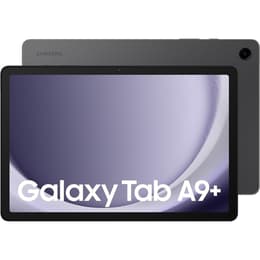
Galaxy Tab A9+ (11.0", 2023)
Starting at

Refurbished price:£144.00

Versus £309.90 new

See options
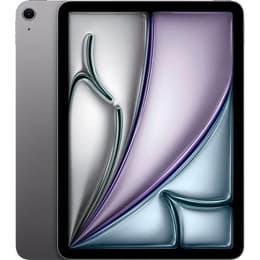
iPad Air 7 (2025, M3 series)
Starting at

Refurbished price:£457.00

Versus £599.00 new

See options

Ratings

The Samsung Galaxy Tab A9+ (released in October 2023) and the Apple iPad Air (M3 series, released in March 2025) represent distinct approaches to tablet computing. While both devices offer expansive displays for media consumption and productivity, they cater to different user ecosystems and performance expectations. The primary differentiators lie in their operating systems, Android and iPadOS respectively, and the significant performance gap driven by their internal processing capabilities.

Scores

Durability

When considering the practical lifespan of these tablets, several factors come into play, including their release timelines, software support, and potential for repair.

  • Release Timeline: The Galaxy Tab A9+ was introduced in October 2023, making it a relatively recent Android tablet. The iPad Air (M3 series) followed in March 2025, giving it a nearly 1.5-year advantage in terms of its initial market presence and expected support cycle. [1, 6]
  • Software Longevity: Apple typically provides a longer period of major software updates for its devices compared to many Android manufacturers. This means the iPad Air (M3) is likely to receive new iPadOS versions and security updates for a more extended duration than the Galaxy Tab A9+, which launched with Android 13. [3, 6] This extended support can contribute to a longer practical lifespan for the iPad Air, as it will continue to support newer applications and features.
  • Repairability: iPads, including the Air series, have historically been noted for their challenging repairability due to the extensive use of adhesive in their construction, making component replacement difficult. [8, 10, 11, 13, 31] While specific repairability scores for the Galaxy Tab A9+ are not widely published, many tablets share similar construction methods. Users considering long-term ownership might factor in the general ease or difficulty of professional repairs for either device.

Year of Release

2023

2025

Compatible with latest Update

Yes

Yes

OS

Android

iPadOS

Performance

The performance capabilities of these two tablets are a key area of distinction, influencing how smoothly they handle various tasks and applications.

  • Processing Power: The Galaxy Tab A9+ is equipped with an octa-core processor designed for efficient everyday use, allowing for smooth navigation and handling of common applications. [3, 6] The iPad Air (M3 series), however, features a significantly more advanced processing unit with an 8-core CPU, 9-core GPU, and a 16-core Neural Engine. [1, 7, 22, 24, 27, 28, 29, 33] This architecture provides a substantial boost in performance, enabling the iPad Air to manage highly demanding applications, complex multitasking workflows, and graphics-intensive gaming with greater responsiveness. [1, 23, 24, 27]
  • Multitasking and Responsiveness: Both tablets offer configurations with ample memory for multitasking. The Galaxy Tab A9+ is available with up to 8GB of RAM, which supports running multiple applications simultaneously without significant slowdowns. [3, 14] The iPad Air (M3) comes with 8GB of unified memory across all configurations, [1, 7, 22, 24, 33] which, combined with its powerful processor, ensures a highly responsive user experience even when switching between numerous demanding applications or working with large files. The Galaxy Tab A9+ also offers features like Multi Window, allowing up to three apps to be displayed simultaneously. [14, 32, 37]
  • Storage Options: The Galaxy Tab A9+ offers internal storage options up to 256GB and includes a microSD card slot for expansion up to 1TB, providing flexibility for users who need extensive local storage for media and files. [2, 3, 6, 14] The iPad Air (M3) provides internal storage options ranging up to 1TB, but it does not support external memory expansion. [1, 7, 12, 22, 23, 24, 25, 28, 29, 33]

Memory (GB)

4 GB

8 GB

Screen quality

The visual experience on a tablet is largely defined by its display, and both devices offer capable screens with distinct characteristics.

  • Display Technology and Resolution: The Galaxy Tab A9+ features an 11-inch TFT LCD display with a resolution of 1920 x 1200 pixels. [2, 3, 5, 6, 14, 18, 19] This provides clear visuals suitable for general browsing and media consumption. The iPad Air (M3) comes with an 11-inch or 13-inch Liquid Retina IPS LCD display, offering a higher resolution of 2360 x 1640 pixels for the 11-inch model and 2732 x 2048 pixels for the 13-inch model. [4, 7, 12, 16, 24, 28, 29, 30] This results in a sharper image with greater detail.
  • Brightness and Color: The iPad Air (M3) display is capable of reaching 600 nits of brightness, features P3 wide color support, and True Tone technology, which adjusts the display's color and intensity to match the ambient light. [4, 7, 12, 16, 23, 24, 28, 29, 30] It also includes an anti-reflective coating for improved outdoor visibility. [4, 7, 16, 28] While the Galaxy Tab A9+ offers a bright and engaging screen, [5, 19] the iPad Air's display technologies contribute to a more vibrant and adaptable viewing experience, particularly in varied lighting conditions.
  • Refresh Rate and Smoothness: The Galaxy Tab A9+ boasts a 90Hz refresh rate, which contributes to smoother scrolling and a more fluid visual experience, especially noticeable during gaming or fast-paced content. [2, 14, 19, 32] The iPad Air (M3) features a standard refresh rate, which still provides a smooth experience for most tasks, but the higher refresh rate on the Tab A9+ may offer a subtle advantage in certain dynamic visual scenarios.

Resolution

1200 x 1920

2360 x 1640

Screen type

TFT LCD

Liquid Retina display

Pixel density

210ppp

264ppp

Audiovisual

Both tablets include camera systems suitable for everyday use, with the iPad Air offering more advanced capabilities for photography and video conferencing.

  • Rear Camera Performance: The Galaxy Tab A9+ is equipped with an 8-megapixel autofocus rear camera, capable of recording video at Full HD (1920 x 1080) resolution at 30 frames per second. [2, 18, 19, 21] This is suitable for casual photography and document scanning. The iPad Air (M3) features a 12-megapixel Wide rear camera with an f/1.8 aperture, offering higher resolution photos and the ability to record 4K video at up to 60 frames per second. [1, 4, 7, 16, 22, 23, 28] This provides more detail and flexibility for video content creation.
  • Front Camera and Video Calls: For video calls and selfies, the Galaxy Tab A9+ includes a 5-megapixel front camera. [2, 5, 19, 21] The iPad Air (M3) significantly upgrades this with a 12-megapixel Ultra Wide front camera that supports Center Stage, a feature that automatically keeps the user in the frame during video calls. [1, 4, 7, 12, 16, 22, 23, 24, 28, 29, 36] This makes the iPad Air particularly well-suited for virtual meetings and online communication.
  • Audio Experience: The Galaxy Tab A9+ features quad speakers with Dolby Atmos support, providing an immersive audio experience for media consumption. [5, 32] The iPad Air (M3) also includes multiple speakers, contributing to a rich sound profile for media and calls. [24]

Miscellaneous

Beyond core performance and display, various practical features and design elements differentiate these two tablets.

  • Connectivity and Ports: The Galaxy Tab A9+ supports Wi-Fi 5 (802.11ac) and Bluetooth 5.1 (some models 5.3), with optional 5G cellular connectivity. [3, 6, 14, 17, 32, 35] It includes a USB-C 2.0 port and retains a 3.5mm headphone jack. [3, 14] The iPad Air (M3) offers more advanced connectivity with Wi-Fi 6E and Bluetooth 5.3, along with optional 5G. [1, 7, 9, 12, 16, 23, 24, 25, 28, 29, 36] Its USB-C port supports USB 3 speeds (up to 10Gb/s) and DisplayPort for external monitor support, but it omits the 3.5mm headphone jack. [4, 7, 12, 22, 23, 28, 29, 30]
  • Biometric Security and Accessories: The Galaxy Tab A9+ uses face recognition for unlocking. [5] The iPad Air (M3) integrates Touch ID into its top button for secure authentication. [4, 7, 23, 24, 29, 36] The iPad Air also boasts extensive accessory support, including compatibility with the Apple Pencil Pro and Apple Pencil (USB-C), as well as a redesigned Magic Keyboard with a larger trackpad and function row, enhancing its versatility for productivity tasks. [1, 4, 7, 9, 12, 15, 23, 25, 26, 28, 36] The Galaxy Tab A9+ does not offer official stylus support.
  • Design and Handling: The Galaxy Tab A9+ measures 257.1 x 168.7 x 6.9 mm and weighs 480g for the Wi-Fi model. [3, 6, 17, 21] The 11-inch iPad Air (M3) is slightly more compact and lighter at 247.6 x 178.5 x 6.1 mm and 461g for the Wi-Fi model. [7, 12, 24, 30, 38] Both feature an aluminum back, contributing to a premium feel. [22] The iPad Air also offers a larger 13-inch variant for users desiring more screen real estate. [1, 7, 12, 22, 24, 27, 28]

Weight

1 g

460 g

Screen size (in)

11.0

11

Network

Wi-Fi + 4G

Wi-Fi

Carrier compatibility

Unlocked

Without SIM Port

Choosing between the Galaxy Tab A9+ and the iPad Air (M3) largely depends on individual priorities and intended use cases. Users frequently praise the Galaxy Tab A9+ for its expansive display and quad speakers, making it a strong contender for media consumption and casual browsing. Its expandable storage is also a common positive point for those who need to store a large volume of files locally. Some users, however, might find its performance less suited for very demanding applications or extensive multitasking compared to higher-end tablets.

The iPad Air (M3), on the other hand, receives consistent acclaim for its powerful processing capabilities, which enable smooth performance across professional applications, creative tasks, and advanced gaming. Its robust ecosystem of accessories, including the Apple Pencil and Magic Keyboard, is often highlighted as a significant advantage for productivity. The advanced front camera with Center Stage is also a noted benefit for video conferencing. A common consideration for some users might be the lack of expandable storage and the generally higher cost of repairs due to its construction.

Users prioritizing a tablet for entertainment, light productivity, and general web browsing, especially those who value expandable storage and a 3.5mm headphone jack, may find the Galaxy Tab A9+ well-suited to their needs. Conversely, users who require a device for demanding creative work, extensive multitasking, or who are deeply integrated into the Apple ecosystem and value long-term software support and advanced accessory compatibility, will likely lean toward the iPad Air (M3). Both devices are available as quality-assured refurbished options, providing an eco-friendly alternative for consumers.

See all articles

Our recent comparisons