Galaxy Tab A9+ (11.0", 2023) Vs iPad 10 (2022, A14 series)

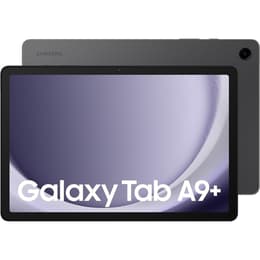
Galaxy Tab A9+ (11.0", 2023)
Starting at

Refurbished price:£144.00

Versus £309.90 new

See options
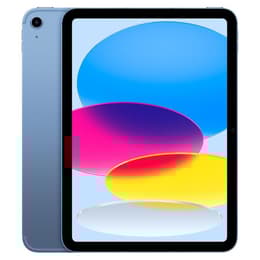
iPad 10 (2022, A14 series)
Starting at

Refurbished price:£217.00

Versus £349.00 new

See options

Ratings

The Samsung Galaxy Tab A9+ (released in 2023) and the Apple iPad (10th Generation, released in 2022) are both popular tablet options, each offering distinct experiences. While the Galaxy Tab A9+ runs on Android with Samsung's One UI, the iPad operates on Apple's iPadOS, leading to fundamental differences in their ecosystems and user interfaces. These tablets cater to varying user preferences, particularly concerning software environment and accessory compatibility.

Scores

Durability

The longevity of a tablet is often influenced by its release timeline and the duration of software support it receives.

  • Software Updates: The Galaxy Tab A9+ launched with Android 13 and is expected to receive three major Android OS updates, potentially up to Android 16, along with four years of security updates, anticipated until October 2027. The iPad (10th Generation) launched with iPadOS 16. Apple typically provides 5-6 years of major iPadOS updates for its devices, with the A14 Bionic chip suggesting software support could extend until 2025 or 2026.
  • Practical Lifespan: Users prioritizing the latest software features for an extended period might find the iPad's update policy more aligned with their needs, though the Galaxy Tab A9+ offers a respectable update cycle for an Android tablet. Both devices are built to last, with their practical lifespan often extending beyond official software support for general use.
  • Repairability: Specific repairability scores are not readily available for either model, but both manufacturers offer repair services. The availability of parts and independent repair options can vary by region.

Year of Release

2023

2022

Compatible with latest Update

Yes

Yes

OS

Android

iPadOS

Performance

Performance in tablets is crucial for handling applications, multitasking, and media consumption, with both devices offering different strengths.

  • Processing Power: The Galaxy Tab A9+ handles everyday tasks such as web browsing, video streaming, and social media smoothly. It is capable of light multitasking and casual gaming, though some users have noted occasional stuttering when switching between multiple demanding applications. The iPad (10th Generation) provides a responsive experience for a wide range of activities, including demanding applications, graphic design, video editing, and intensive 3D mobile gaming, maintaining smooth operation even with heavy workloads.
  • Memory and Storage: The Galaxy Tab A9+ is available with 4GB or 8GB of RAM, with the 8GB variant offering a smoother experience for multitasking. It comes with 64GB or 128GB of internal storage and supports microSD cards for expansion up to 1TB. The iPad (10th Generation) features 4GB of RAM and is available with either 64GB or 256GB of internal storage, without an option for expandable storage.
  • Battery Endurance: The Galaxy Tab A9+ is equipped with a 7040 mAh battery, generally providing around 7 to 12 hours of mixed usage, depending on the intensity of tasks. The iPad (10th Generation) has a 7606 mAh (28.6 Wh) battery, typically offering about 10 hours of web browsing or video playback on a single charge.

Memory (GB)

4 GB

4 GB

Screen quality

The visual experience is a key aspect of any tablet, and these two models offer distinct display technologies and characteristics.

  • Display Technology and Size: The Galaxy Tab A9+ features an 11.0-inch TFT LCD panel. The iPad (10th Generation) comes with a 10.9-inch Liquid Retina IPS LCD display.
  • Resolution and Clarity: The Galaxy Tab A9+ offers a resolution of 1920 x 1200 pixels, resulting in a pixel density of approximately 206 PPI. The iPad (10th Generation) provides a sharper resolution of 2360 x 1640 pixels, with a pixel density of 264 PPI.
  • Brightness and Refresh Rate: The Galaxy Tab A9+ has a 90Hz adaptive refresh rate, contributing to smoother scrolling and animations. Its display is generally clear indoors but can appear less vibrant in direct sunlight. The iPad (10th Generation) features a standard 60Hz refresh rate and offers a brightness of 500 nits, providing good visibility in various lighting conditions.

Resolution

1200 x 1920

2360 x 1640

Screen type

TFT LCD

Liquid Retina display

Pixel density

210ppp

264ppp

Audiovisual

While tablets are not typically primary photography devices, their cameras are important for video calls, document scanning, and casual captures.

  • Camera System: The Galaxy Tab A9+ includes an 8MP rear camera and a 5MP front-facing camera. The iPad (10th Generation) is equipped with a 12MP wide rear camera with an f/1.8 aperture and a 12MP ultrawide front camera that supports Center Stage.
  • Photo and Video Quality: The Galaxy Tab A9+ delivers average photo quality for everyday use, with some users noting muddy colors and grainy results in low-light video. Both front and rear cameras record video at 1080p at 30 frames per second. The iPad (10th Generation) produces sharper, brighter, and cleaner images, with improved low-light performance and Smart HDR 3. Its rear camera can record 4K video at up to 60 frames per second, while the front camera records 1080p video at up to 60 frames per second.
  • Audio Experience: The Galaxy Tab A9+ features quad speakers with Dolby Atmos support, providing an immersive audio experience for media consumption. The iPad (10th Generation) offers stereo speakers, delivering clear audio for various uses.

Miscellaneous

Beyond core features, several practical elements differentiate these two tablets in daily use.

  • Connectivity: The Galaxy Tab A9+ supports Wi-Fi 5 (802.11ac) and Bluetooth 5.1, with an optional 5G cellular variant available. The iPad (10th Generation) features Wi-Fi 6 (802.11ax) and Bluetooth 5.2, also offering an optional 5G cellular model that supports sub-6GHz bands.
  • Ports and Biometrics: The Galaxy Tab A9+ includes a USB-C port (with USB 2.0 speeds) and retains a 3.5mm headphone jack. It offers face recognition for unlocking but lacks a fingerprint sensor. The iPad (10th Generation) has a USB-C port (with USB 2.0 speeds) but omits the traditional headphone jack. It integrates a Touch ID fingerprint sensor into the power button.
  • Design and Handling: The Galaxy Tab A9+ has a metal body and measures 257.1 x 168.7 x 6.9 mm, weighing 480g for the Wi-Fi model and 491g for the 5G model. The iPad (10th Generation) features an aluminum chassis with flat sides, measuring 248.6 x 179.5 x 7 mm and weighing 477g for the Wi-Fi model and 481g for the cellular model.

Weight

1 g

477 g

Screen size (in)

11.0

10.9

Network

Wi-Fi + 4G

Wi-Fi

Carrier compatibility

Unlocked

Without SIM Port

User feedback indicates that the Galaxy Tab A9+ is often praised for its large 11-inch 90Hz display, which provides a smooth visual experience for media consumption and general browsing. Users appreciate its expandable storage via microSD, quad speakers with Dolby Atmos, and its capability to handle daily tasks and light multitasking effectively. Common criticisms include its average camera performance, the absence of a fingerprint sensor, and a relatively smaller base storage option.

The iPad (10th Generation) receives positive remarks for its refreshed design, robust performance for demanding applications and gaming, high-quality cameras with features like Center Stage, and reliable battery life. The inclusion of a USB-C port is also a welcome change. Some users express concerns about the continued reliance on the first-generation Apple Pencil, the 64GB base storage being somewhat limited for modern use, and the potential for a shorter software support window compared to higher-end iPad models.

Users prioritizing a larger, smoother display for entertainment and productivity within the Android ecosystem, along with expandable storage, may find the Galaxy Tab A9+ well-suited to their needs. Conversely, those who value a powerful processor for intensive tasks, a more refined camera system, and the iPadOS ecosystem for its app optimization and accessory integration, might lean toward the iPad (10th Generation). Both tablets offer compelling features for different user profiles, and considering a quality-assured refurbished option for either device can be a sustainable choice.


See all articles

Our recent comparisons