
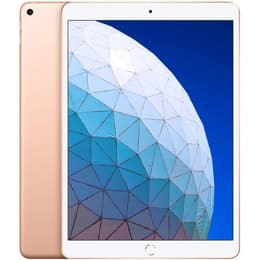
iPad 7 (2019, A10 series) Vs iPad Air 3 (2019, A12 series)

iPad 7 (2019, A10 series)
Starting at

Refurbished price:£78.00

Versus £349.00 new

See options
iPad Air 3 (2019, A12 series)
Starting at

Refurbished price:£104.00

Versus £479.00 new

See options

Ratings

The iPad 2019, officially known as the 7th generation iPad, and the iPad Air 2019, or 3rd generation iPad Air, are both tablet computers released by Apple in 2019. While they share the same operating system, iPadOS, and a similar design language, the iPad Air 2019 introduces a more capable internal processor, a more advanced display, and an improved front-facing camera, setting it apart from its standard counterpart. The iPad 7th generation was released in September 2019, while the iPad Air 3rd generation made its debut earlier in March 2019.

Scores

Durability

When considering the long-term usability of these devices, their release timelines and hardware play a significant role in software support and practical lifespan. The iPad Air 3rd generation was released in March 2019, preceding the iPad 7th generation which launched in September 2019.

  • Software Longevity: The iPad Air 3rd generation, equipped with a more advanced processor, is generally expected to receive major iPadOS updates for a longer duration than the iPad 7th generation. While the iPad 7th generation is likely to support iPadOS 17, its future beyond that is less certain, with some user discussions suggesting it may not receive iPadOS 19. The iPad Air 3rd generation, however, has been noted to support iPadOS 18 and is anticipated to continue receiving updates for a longer period.
  • Practical Lifespan: For users who rely on the latest software features and security updates, the iPad Air 3rd generation offers a potentially longer practical lifespan due to its extended software support. Both devices are built with durable aluminum enclosures, but the longevity of their internal components and software compatibility will ultimately determine their usable life.
  • Repairability: Both models share a similar design philosophy, and while specific repairability scores can vary, they generally offer comparable ease of access for common repairs.

Year of Release

2019

2019

Compatible with latest Update

Yes

Yes

OS

iPadOS

iPadOS

Maximum Operating System supported

iPadOS 18

iPadOS 18

Performance

The core difference in performance between these two tablets stems from their internal processing capabilities, which influence how smoothly applications run and how efficiently tasks are handled. Both models come with 3GB of RAM, which is a factor in multitasking efficiency.

  • Processing Power: The iPad Air 3rd generation features a more advanced processor, which translates to a noticeable difference in speed and responsiveness, especially when handling demanding applications, complex games, or intensive multitasking. This allows for quicker app loading times and a more fluid user experience.
  • Everyday Responsiveness: For general use such as web browsing, email, and media consumption, both devices offer a capable experience. However, users of the iPad 7th generation may observe occasional slowdowns or stutters when running multiple applications simultaneously or engaging with graphically intensive content as the device ages. The iPad Air 3rd generation maintains a smoother performance profile for these activities.
  • Storage Options: The iPad 7th generation was available with 32GB or 128GB of internal storage. The iPad Air 3rd generation offered more generous base storage options, starting at 64GB and also available in a 256GB configuration, providing more room for apps, media, and documents.

Memory (GB)

3 GB

3 GB

Processor

Apple A10 Fusion

Apple A12 Bionic

Screen quality

The visual experience is a key aspect of any tablet, and while both iPads feature Retina displays, there are distinct differences in their technology and presentation.

  • Display Technology and Size: Both tablets utilize LED-backlit Multi-Touch IPS LCD Retina displays. The iPad 7th generation features a 10.2-inch display with a resolution of 2160 x 1620 pixels. The iPad Air 3rd generation offers a slightly larger 10.5-inch display with a higher resolution of 2224 x 1668 pixels. Both maintain a pixel density of 264 pixels per inch (ppi), ensuring sharp text and images.
  • Visual Enhancements: A notable difference is the iPad Air 3rd generation's fully laminated display, which reduces the gap between the glass and the display panel, offering a more direct and immersive viewing experience. It also includes an anti-reflective coating and True Tone technology, which automatically adjusts the display's white balance to match the ambient light, providing a more natural viewing experience. The iPad 7th generation has a non-laminated display, which can result in a slight air gap and potentially more reflections.
  • Brightness: Both models offer a peak brightness of 500 nits, providing adequate visibility in various indoor lighting conditions.

Resolution

2160 x 1620

2224 x 1668

True Tone

No

Yes

Pro-Motion

No

No

Screen type

Retina display

Retina display

Pixel density

264ppp

264ppp

Brightness

500 nits brightness

500 nits brightness

Sound quality

Speakers

Stereo speakers

Stereo speakers

Audiovisual

For capturing photos, recording videos, and engaging in video calls, both iPads offer camera systems, but with a significant distinction in their front-facing capabilities.

  • Rear Camera Performance: Both the iPad 7th generation and the iPad Air 3rd generation are equipped with an 8-megapixel rear camera. These cameras are capable of capturing clear photos and recording 1080p HD video at 30 frames per second. They share features such as autofocus, panorama, and HDR for photos.
  • Front Camera for Communication: The most significant difference lies in the front-facing camera. The iPad 7th generation features a 1.2-megapixel FaceTime HD camera, suitable for basic video calls and selfies, recording 720p HD video. In contrast, the iPad Air 3rd generation boasts a 7-megapixel FaceTime HD camera, which provides significantly clearer and more detailed images and supports 1080p HD video recording, making it much better suited for video conferencing and higher-quality selfies.
  • Audio Experience: Both tablets include stereo speakers and dual microphones, contributing to a decent audio experience for media consumption and calls. However, some users have noted that the iPad Air 3rd generation's speakers are primarily located on one side when held in landscape orientation, which can affect the stereo sound perception.

Miscellaneous

Beyond the core performance and display, several practical elements contribute to the overall user experience and differentiate these two iPad models.

  • Connectivity and Ports: Both devices support Wi-Fi (802.11a/b/g/n/ac) for wireless internet access and Bluetooth 4.2 for connecting accessories. Cellular models of both tablets offer LTE connectivity for mobile data. For physical connections, both feature a Lightning port for charging and data transfer, and a 3.5mm headphone jack, providing compatibility with a wide range of audio accessories.
  • Physical Design and Handling: The iPad 7th generation measures 250.6 x 174.1 x 7.5 mm and weighs approximately 483 grams for the Wi-Fi model. The iPad Air 3rd generation is noticeably thinner and lighter, with dimensions of 250.6 x 174.1 x 6.1 mm and a weight of around 456 grams for the Wi-Fi model. This difference in thickness and weight can impact portability and comfort during extended use. Both models feature Touch ID for secure authentication.
  • Accessory Compatibility: Both tablets support the first-generation Apple Pencil for drawing and note-taking, and the Smart Keyboard for enhanced productivity, connecting via the Smart Connector.

Weight

483 g

456 g

Width

17.41 cm

17.41 cm

Height

25.06 cm

25.06 cm

Depth

0.75 cm

0.61 cm

Screen size (in)

10.2

10.5

Network

Wi-Fi

Wi-Fi

Carrier compatibility

Without SIM Port

Without SIM Port

Wi-Fi technology

Wi-Fi 6 802.11a/b/g/n/ac

Wi-Fi 6 802.11a/b/g/n/ac

Bluetooth Version

Bluetooth 4.2

Bluetooth 5.0

Face ID

No

No

Touch ID

Yes

Yes

Connector

Lightning connector

Lightning connector

User sentiment for the iPad 7th generation often highlights its reliability as a device for everyday tasks. Many users praise its suitability for media consumption, web browsing, and light productivity such as note-taking. Its battery life is frequently mentioned as sufficient for a full day of use. However, common criticisms include the base 32GB storage being restrictive for those with many apps or media, and the non-laminated display being less visually appealing than more premium options. As the device ages, some users have reported a noticeable slowdown with heavy multitasking or demanding applications, and occasional Wi-Fi connectivity issues or app crashes.

The iPad Air 3rd generation generally receives positive feedback for its robust performance and enhanced display. Users appreciate its ability to handle more intensive applications, its vibrant laminated screen with True Tone, and the improved front camera for video calls. It is often recommended for students and professionals who require a more capable device for tasks like college work, entertainment, and light office use. Criticisms sometimes point to the 3GB of RAM as a potential limitation for very heavy multitasking, and the speaker placement being less ideal for landscape viewing. The continued use of a Lightning port, rather than USB-C, is also occasionally noted as a drawback compared to newer devices.

For users prioritizing a tablet for basic functions, media consumption, and casual web browsing, the iPad 7th generation remains a capable choice. Its performance is well-suited for these less demanding activities. Conversely, users who require more processing power for demanding applications, a superior display for visual tasks, and a higher-quality front camera for frequent video communication will find the iPad Air 3rd generation better aligned with their needs. Both models offer a quality-assured refurbished option, providing an eco-friendly alternative for those seeking reliable technology.

See all articles

Our recent comparisons