
Galaxy Tab S9 Ultra (14.6", 2023) Vs iPad Pro (2024, M4 series)

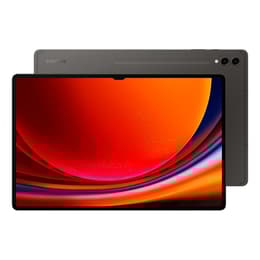
Galaxy Tab S9 Ultra (14.6", 2023)
Starting at

Refurbished price:£493.00

Versus £1,364.76 new

See options
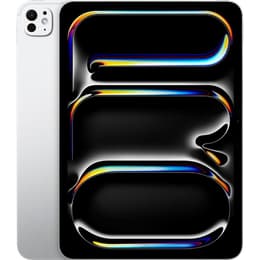
iPad Pro (2024, M4 series)
Starting at

Refurbished price:£642.00

Versus £999.00 new

See options

Ratings

The Samsung Galaxy Tab S9 Ultra, released in August 2023, and the iPad Pro M4 Series, launched in May 2024, represent two distinct approaches to high-end tablet computing. While both offer expansive displays and powerful performance, they differ significantly in their operating systems and ecosystem integration. The Tab S9 Ultra runs on Android, emphasizing multitasking and an included stylus, whereas the iPad Pro M4 operates on iPadOS, focusing on a refined user experience and deep integration within Apple's ecosystem.

Scores

Durability

When considering the longevity of these devices, several factors come into play, including their release timelines, software support, and repairability.

  • Release Timeline: The Galaxy Tab S9 Ultra was released in August 2023, while the iPad Pro M4 Series followed in May 2024. This difference means the iPad Pro M4 benefits from a slightly newer hardware generation and a longer potential support window from its manufacturer.
  • Software Support: Apple typically provides extensive software updates for its devices, often spanning five to seven years or more, ensuring the iPad Pro M4 will receive new iPadOS features and security patches for a considerable period. Samsung also offers several years of Android and security updates for its flagship tablets, though the exact duration can vary.
  • Repairability: The iPad Pro M4 has seen some improvements in battery replacement, with easier access compared to previous models, though overall repairability remains challenging due to adhesive use and screen removal risks, earning it a 5/10 score from iFixit. The Galaxy Tab S9 Ultra also presents moderate repairability, with an accessible battery but a delicate screen removal process.

Year of Release

2023

2024

Compatible with latest Update

Yes

Yes

OS

Android

iPadOS

Performance

Both tablets are engineered for demanding tasks, offering robust performance for a variety of applications, from creative work to intensive multitasking.

  • Processing Power: The iPad Pro M4 Series features a highly efficient processor designed to handle complex workflows, including video editing and 3D rendering, with smooth operation and quick app loading times. The Galaxy Tab S9 Ultra is equipped with a powerful current-generation processor, enabling seamless multitasking across multiple applications and responsive performance for gaming and productivity.
  • Memory and Storage: The iPad Pro M4 offers configurations with 8GB or 16GB of RAM, paired with storage options up to 2TB, providing ample space and memory for professional applications and large files. The Galaxy Tab S9 Ultra comes with 12GB or 16GB of RAM and up to 1TB of internal storage, with the added flexibility of expandable storage via a microSD card slot.
  • Battery Behavior: The iPad Pro M4 is designed for efficient power consumption, aiming for approximately 10 hours of general use, with user experiences often confirming a full day of moderate to heavy usage. The Galaxy Tab S9 Ultra, with its larger battery capacity, typically provides around 9 to 10 hours of screen-on time, supporting extended periods of streaming, browsing, and productivity.

Memory (GB)

12 GB

8 GB

Screen quality

The visual experience on both tablets is a highlight, with each device featuring advanced display technologies designed to deliver vibrant and detailed imagery.

  • Display Technology: The iPad Pro M4 Series introduces an Ultra Retina XDR display, utilizing Tandem OLED technology across both its 11-inch and 13-inch models. This technology employs two stacked OLED panels to achieve exceptional brightness and contrast. The Galaxy Tab S9 Ultra boasts a 14.6-inch Dynamic AMOLED 2X display, known for its deep blacks and vivid color reproduction.
  • Resolution and Brightness: The iPad Pro M4 offers resolutions of 2420x1668 for the 11-inch model and 2752x2064 for the 13-inch model, with a peak SDR brightness of 1000 nits and up to 1600 nits for HDR content. The Galaxy Tab S9 Ultra features a resolution of 1848 x 2960 pixels, providing a sharp image, and reaches a peak brightness of 930 nits, making it suitable for various lighting conditions.
  • Refresh Rate and Size: Both tablets feature a 120Hz adaptive refresh rate, known as ProMotion on the iPad, ensuring smooth scrolling and fluid animations. The Galaxy Tab S9 Ultra offers a single, expansive 14.6-inch screen, providing a large canvas for work and entertainment. The iPad Pro M4 comes in two sizes, 11-inch and 13-inch, offering choices for users who prefer a more compact or a larger viewing area.

Resolution

1848 x 2960

2420 x 1668

Screen type

Dynamic AMOLED 2X

Ultra Retina XDR display

Pixel density

240ppp

264ppp

Audiovisual

While tablets are not typically primary photography devices, both models offer capable camera systems for video calls, document scanning, and casual photography.

  • Rear Camera System: The Galaxy Tab S9 Ultra features a dual rear camera setup, including a 13MP wide-angle lens and an 8MP ultrawide lens, suitable for capturing a broader perspective. The iPad Pro M4 includes a 12MP wide-angle rear camera, complemented by a LiDAR scanner for enhanced depth sensing and augmented reality applications.
  • Front Camera and Video: Both tablets prioritize front-facing cameras for video conferencing. The Tab S9 Ultra has a dual front camera system with two 12MP lenses, one wide and one ultrawide, allowing for flexible framing during calls. The iPad Pro M4 features a 12MP ultrawide front camera, notably repositioned to a landscape orientation for a more natural video call experience. Both devices are capable of recording high-quality video.
  • Audio Experience: Both tablets are equipped with quad stereo speakers, delivering rich and immersive audio for media consumption and video calls. Users report clear and loud sound from both devices. The microphones on both are designed to capture clear audio for communication.

Miscellaneous

Beyond core specifications, several practical elements contribute to the overall user experience and versatility of these high-end tablets.

  • Connectivity and Ports: Both devices support modern wireless standards, including Wi-Fi 6E and Bluetooth 5.3, for fast and reliable connections. The iPad Pro M4 features a USB-C port with Thunderbolt 3 and USB4 support, offering high-speed data transfer and external display capabilities. The Galaxy Tab S9 Ultra includes a USB-C 3.2 port, providing versatile connectivity for accessories and data transfer.
  • Biometric Security: The iPad Pro M4 utilizes Face ID for secure authentication and unlocking. The Galaxy Tab S9 Ultra incorporates an in-display fingerprint sensor for convenient and secure access.
  • Design and Handling: The iPad Pro M4 is notably thin and light, with the 13-inch model weighing 579g and measuring 5.1mm thick, making it one of Apple's thinnest devices. The Galaxy Tab S9 Ultra is also remarkably thin at 5.5mm and weighs 732g, offering a large screen in a relatively slender profile. The Tab S9 Ultra also features an IP68 rating for dust and water resistance.

Weight

129 g

444 g

Screen size (in)

14.6

11

Network

Wi-Fi + 5G

Wi-Fi

Carrier compatibility

Unlocked

Without SIM Port

The Samsung Galaxy Tab S9 Ultra and the iPad Pro M4 Series cater to users seeking powerful and versatile tablet experiences, though they excel in different areas. Users often praise the Tab S9 Ultra for its expansive 14.6-inch AMOLED display, which provides an immersive viewing experience, and the inclusion of the S Pen, making it ready for creative and productivity tasks out of the box. Its DeX mode is frequently highlighted for offering a desktop-like environment, enhancing its utility as a laptop alternative.

Conversely, the iPad Pro M4 is lauded for its exceptional processing power, with users noting its ability to handle demanding applications with ease and its smooth, responsive performance. Its Ultra Retina XDR OLED display is consistently praised for its brightness, color accuracy, and overall visual quality. Some users, however, express that the M4's power might be overkill for everyday tasks, and the camera quality, while good, isn't a primary selling point for a tablet.

Users prioritizing a large, vibrant display for media consumption and an included stylus for note-taking and drawing, coupled with Android's flexibility and expandable storage, may find the Galaxy Tab S9 Ultra well-suited to their needs. Those who value a highly refined operating system, industry-leading processing power for creative and professional applications, and a robust accessory ecosystem, might lean towards the iPad Pro M4. Both devices offer a premium tablet experience, and choosing between them often comes down to preferred operating system and specific workflow requirements. For those considering a more sustainable choice, quality-assured refurbished options for both models can provide an excellent way to access these advanced tablets.


See all articles

Our recent comparisons