Samsung Tab
Compare models
Differences at a glance
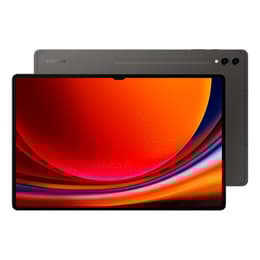
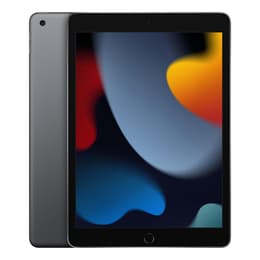
The Samsung Galaxy Tab S9 Ultra, released in 2023, and the Apple iPad (9th Generation), launched in 2021, represent distinct approaches to the tablet experience. While both are designed for productivity and entertainment, they differ significantly in size, display technology, and operating system. The Tab S9 Ultra runs on Android, offering a large, expansive display, whereas the iPad operates on iPadOS, providing a more compact form factor with a focus on its established app ecosystem.
Colour
Storage
The practical lifespan of a tablet is often influenced by its initial release date and the manufacturer's commitment to software updates, alongside its physical resilience.
Year of Release
Compatible with latest Update
OS
The performance of these tablets is shaped by their internal components, influencing how smoothly they handle various tasks from everyday browsing to demanding applications.
The visual experience on a tablet is largely defined by its display, with both devices offering distinct characteristics.
Resolution
Screen type
Pixel density
The camera systems on these tablets cater to different user needs, from video conferencing to casual photography.
Beyond core specifications, several practical features and design elements differentiate these two tablets.
Weight
Screen size (in)
Network
Carrier compatibility
The Samsung Galaxy Tab S9 Ultra and the Apple iPad (9th Generation) cater to different user preferences and needs. Users often praise the Galaxy Tab S9 Ultra for its expansive and vibrant OLED display, powerful performance for demanding tasks, and the included S Pen, making it a strong contender for creative professionals and those who prioritize a large screen for media consumption and multitasking. Some common criticisms include its very large size, which can be unwieldy for some, and the ongoing challenge of Android app optimization for such a large tablet form factor.
Conversely, the iPad (9th Generation) is frequently lauded for its reliable performance for everyday tasks, the robust iPadOS ecosystem with a vast selection of optimized applications, and the inclusion of a headphone jack. Its more compact size is often seen as a benefit for portability. Criticisms sometimes point to its more traditional design, including thicker bezels and the Lightning port, which some users find less modern compared to USB-C.
Users prioritizing a large, high-quality display, advanced multitasking capabilities, and an included stylus for creative or professional work may find the Galaxy Tab S9 Ultra well-suited to their needs. Those who value a more compact and portable device, a mature app ecosystem, and consistent performance for general productivity and entertainment might lean toward the iPad (9th Generation). Both devices offer compelling features, and choosing between them often comes down to individual priorities regarding screen size, operating system preference, and specific use cases. For those considering either of these devices, exploring quality-assured refurbished options can be an eco-friendly alternative.