
Samsung
Compare models
Differences at a glance
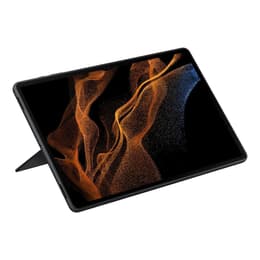
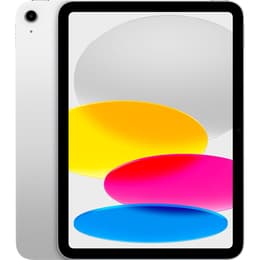
The Samsung Galaxy Tab S8 Ultra, released in 2022, and the iPad (2025 A16 Series), launched in 2025, represent distinct approaches to the tablet experience. While both are powerful devices designed for productivity and entertainment, they operate on different ecosystems—Android for the Tab S8 Ultra and iPadOS for the iPad A16. Key differentiators include their display technologies, overall size, and the integrated software experiences they offer.
Colour
Storage
When considering the long-term usability of these tablets, their release timelines and software support policies are important factors. The Galaxy Tab S8 Ultra, launched in 2022, typically receives several years of major Android operating system updates and security patches. Samsung has committed to four years of major Android updates for devices like the Tab S8 Ultra, with security updates extending further.
The iPad (2025 A16 Series), being a newer device from 2025, benefits from Apple's generally longer software support cycles, which often span five to seven years for major iPadOS updates, with security updates potentially lasting even longer. Both devices feature robust aluminum builds, contributing to their physical durability. The Galaxy Tab S8 Ultra is notably thin at 5.5mm, which, while elegant, might suggest a need for careful handling.
Year of Release
Compatible with latest Update
OS
Both the Galaxy Tab S8 Ultra and the iPad (2025 A16 Series) are equipped with powerful internal components designed to handle demanding tasks. The Galaxy Tab S8 Ultra features a high-end processor from its release year, enabling smooth multitasking, efficient app loading, and capable performance for graphically intensive games. It is available with various RAM configurations, including options up to 16GB, which supports extensive multitasking.
The iPad (2025 A16 Series) is powered by a chip known for its strong performance in Apple's ecosystem, providing a highly responsive user experience across iPadOS applications and games. It typically comes with 6GB of RAM, which is optimized for iPadOS's memory management. In terms of storage, both offer a range of options, with the iPad A16 starting at 128GB and the Tab S8 Ultra also offering 128GB as a base.
The display is a significant distinguishing feature between these two tablets, impacting the visual experience for users. The Samsung Galaxy Tab S8 Ultra boasts a substantial 14.6-inch Super AMOLED display, which is known for its deep blacks, vibrant colors, and excellent contrast. This large screen also features a 120Hz refresh rate, contributing to smoother scrolling and more fluid animations.
In contrast, the iPad (2025 A16 Series) features a 10.9-inch Liquid Retina IPS LCD display. While not offering the same deep blacks as AMOLED, IPS LCD technology provides accurate color reproduction and wide viewing angles. Its resolution ensures clear and sharp visuals for everyday tasks and media consumption. Both displays offer good brightness levels suitable for indoor and outdoor use, with the iPad A16 typically reaching 500 nits.
Resolution
Screen type
Pixel density
Both tablets offer capable camera systems, though their configurations and strengths cater to slightly different user needs. The Samsung Galaxy Tab S8 Ultra features a dual-camera setup on the rear, consisting of a 13MP wide lens and a 6MP ultrawide lens, suitable for general photography and document scanning. On the front, it stands out with dual 12MP cameras (wide and ultrawide), which are particularly beneficial for high-quality video calls and auto-framing features.
The iPad (2025 A16 Series) includes a 12MP wide camera on the rear, capable of recording 4K video. Its front-facing camera is a 12MP ultrawide lens positioned for landscape use, supporting Center Stage technology to keep subjects in frame during video conferences. For audio, the Tab S8 Ultra is equipped with quad speakers, providing a rich sound experience, while the iPad A16 typically features stereo speakers.
Beyond their core specifications, several practical elements differentiate the user experience of these two tablets. Both the Galaxy Tab S8 Ultra and the iPad (2025 A16 Series) feature USB-C ports for charging and data transfer, offering modern connectivity. They also support current Wi-Fi standards, including Wi-Fi 6 or 6E, and Bluetooth for wireless accessories.
A notable difference lies in stylus integration: the Galaxy Tab S8 Ultra includes the S Pen in the box, which magnetically attaches to the device and offers low-latency writing and drawing. The iPad A16 supports the Apple Pencil (1st Gen and USB-C), which is typically purchased separately. For biometric security, the Tab S8 Ultra features an under-display fingerprint sensor, while the iPad A16 integrates Touch ID into its power button.
Weight
Screen size (in)
Network
Carrier compatibility
User feedback for the Galaxy Tab S8 Ultra often highlights its expansive and vibrant Super AMOLED display as a major draw, making it ideal for media consumption and creative tasks. Its included S Pen and DeX desktop environment are frequently praised for enhancing productivity. Some users, however, find its large size and thin profile to be less portable and potentially more fragile.
For the iPad (2025 A16 Series), general sentiment for similar iPad models often centers on the robust iPadOS ecosystem, strong app optimization, and consistent performance. Users appreciate the balance of power and portability, making it a versatile device for a wide range of activities. Potential criticisms for non-Pro iPads sometimes relate to the display technology not being OLED or the need to purchase accessories separately.
Users prioritizing a large, immersive display for drawing, extensive media viewing, or a desktop-like Android experience may find the Galaxy Tab S8 Ultra well-suited to their needs. Conversely, those who value a highly optimized tablet operating system, a vast selection of tablet-specific applications, and a more compact form factor for general productivity and creative work might lean toward the iPad A16. Both devices offer compelling features for different user profiles. For those considering a more sustainable choice, quality-assured refurbished options for both models can provide an eco-friendly alternative.