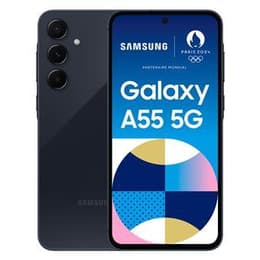
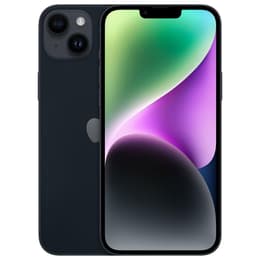

Galaxy A55 Vs iPhone 14 Plus

Galaxy A55
Galaxy A55
Starting at

Refurbished price:£194.00

Versus £426.69 new

See options
iPhone 14 Plus
iPhone 14 Plus
Starting at

Refurbished price:£235.00

Versus £699.00 new

See options

Ratings

The Samsung Galaxy A55 and the iPhone 14 Plus are both prominent smartphones, though they cater to different ecosystems and were released at different times. The Galaxy A55, an Android device, was launched in March 2024, while the iPhone 14 Plus, running iOS, became available in October 2022. These devices offer distinct user experiences, primarily differing in their operating systems, display technology, and camera philosophies.

Scores

Durability

When considering the long-term usability of these devices, their release timelines and software support are key factors. The Galaxy A55, being a newer device, benefits from a longer guaranteed software update period from its manufacturer, while the iPhone 14 Plus, though older, typically receives extended iOS support.

  • Software Longevity: The Samsung Galaxy A55 launched with Android 14 and is expected to receive four years of major OS updates and five years of security updates, extending its functional lifespan well into the future. The iPhone 14 Plus, released with iOS 16, generally receives iOS updates for approximately five to six years from its launch, meaning its software support will likely conclude sooner than the A55's.
  • Repairability: The Galaxy A55 has demonstrated a high repairability score of 8.5 out of 10, indicating that it is relatively straightforward to repair due to design improvements like easier part detachment and longer availability of replacement parts. In contrast, the iPhone 14 Plus initially received a good repairability score, but this was later downgraded due to software validation requirements for replacement parts, which can complicate third-party repairs.
  • Practical Lifespan: Both devices are built to last, but the Galaxy A55's newer release and strong repairability score suggest a slightly longer practical lifespan for users who intend to keep their device for many years and value ease of maintenance.

Year of Release

2024

2022

Compatible with latest Update

Yes

Yes

OS

Android

iOS

Foldable

No

No

Performance

The performance of a smartphone is crucial for daily tasks, from app usage to multitasking and gaming. Both the Galaxy A55 and the iPhone 14 Plus offer capable hardware, but their underlying architectures provide different experiences.

  • Everyday Responsiveness: The Galaxy A55, powered by its current-generation processor, handles demanding applications and multitasking smoothly, with users reporting snappy performance for daily use and effortless multitasking. The iPhone 14 Plus, featuring a powerful chip, delivers consistent and efficient performance for a wide range of tasks, ensuring smooth operation across the iOS ecosystem.
  • Battery Behavior: The Galaxy A55 is equipped with a 5000 mAh battery, providing solid endurance that often lasts a full day of heavy use, with some users reporting up to two days with moderate usage. The iPhone 14 Plus, with its 4325 mAh battery, is also noted for its impressive battery life, frequently lasting a full day or more, even with active use.
  • Storage and Multitasking: The Galaxy A55 offers storage options of 128GB or 256GB, expandable via microSD card, and comes with 8GB or 12GB of RAM, which aids in managing multiple applications simultaneously. The iPhone 14 Plus provides 128GB, 256GB, or 512GB of internal storage and features 6GB of RAM, which is optimized for efficient multitasking within iOS.

Memory (GB)

8 GB

6 GB

Screen quality

The display is a primary interface for any smartphone, and both devices offer large, vibrant screens, though they utilize different technologies and refresh rates.

  • Display Technology and Clarity: The Samsung Galaxy A55 features a 6.6-inch Super AMOLED display, known for its deep blacks and vibrant colors, with a Full HD+ resolution (2340x1080 pixels) that provides clear visuals. The iPhone 14 Plus boasts a 6.7-inch Super Retina XDR OLED display, offering excellent contrast, HDR support, and a sharp resolution of 2778x1284 pixels.
  • Brightness and Smoothness: The Galaxy A55's display supports a 120Hz refresh rate, contributing to smoother scrolling and a more fluid visual experience. It also offers good brightness levels for outdoor visibility. The iPhone 14 Plus has a standard 60Hz refresh rate, which is less fluid than higher refresh rate displays, but it achieves high peak brightness levels, making it highly visible even in bright sunlight.
  • Viewing Experience: Both phones offer large screen sizes that are well-suited for media consumption and productivity. Users of the Galaxy A55 praise its screen as excellent, vibrant, and sharp. iPhone 14 Plus users appreciate its wide and crisp display for an immersive viewing experience.

Resolution

1080 x 2340

1284 x 2778

Screen type

Super AMOLED

Super Retina XDR OLED

Audiovisual

Photography and videography capabilities are significant considerations for many users, and both the Galaxy A55 and iPhone 14 Plus offer robust camera systems designed for different photographic styles.

  • Rear Camera System: The Samsung Galaxy A55 features a versatile triple-camera setup, including a 50MP main sensor with optical image stabilization (OIS), a 12MP ultrawide lens, and a 5MP macro lens. It performs well in good lighting and offers enhanced low-light performance through its Nightography features. The iPhone 14 Plus comes with a dual 12MP camera system, comprising a main wide-angle lens and an ultrawide lens, both benefiting from Apple's Photonic Engine for improved low-light performance.
  • Front Camera and Video: The Galaxy A55 includes a 32MP front-facing camera, capable of capturing detailed selfies, though some users have noted occasional yellowish tones. It supports 4K video recording. The iPhone 14 Plus features a 12MP TrueDepth front camera, which also benefits from low-light enhancements and offers high-quality video recording.
  • User Experience: Users generally find the Galaxy A55's camera to be decent for everyday shots, though some mention it can be slow to focus and not always deliver flagship-level results. The iPhone 14 Plus's camera is praised for its overall quality, but some users have expressed disappointment with the lack of a telephoto lens and perceived lower quality from the front camera compared to older Pro models.

Main camera

50 megapixels

12 megapixels

Front camera

32 megapixels

12 megapixels

Miscellaneous

Beyond core features, several practical elements contribute to the overall user experience, including connectivity, physical design, and additional functionalities.

  • Connectivity and Ports: The Samsung Galaxy A55 supports 5G, Wi-Fi 6, and Bluetooth 5.3, and features a USB Type-C 2.0 port for charging and data transfer. The iPhone 14 Plus also offers 5G connectivity, Wi-Fi, and Bluetooth, utilizing Apple's proprietary Lightning port.
  • Build Materials and Handling: The Galaxy A55 features an aluminum frame and Gorilla Glass Victus+ on the front, providing a durable build with an IP67 rating for dust and water resistance. It is noted for its substantial feel and weight. The iPhone 14 Plus has an aluminum frame and Ceramic Shield front, offering robust protection with an IP68 rating, and is often described as lightweight for its size.
  • Sensors and Other Features: The Galaxy A55 includes an in-display fingerprint scanner for secure unlocking. It also features stereo speakers that provide good audio output. The iPhone 14 Plus relies on Face ID for biometric authentication and introduces safety features like Crash Detection and Emergency SOS via satellite.

Weight

213 g

203 g

Screen size (in)

6.6

6.7

Mobile network

5G

5G

SIM card

Dual Physical SIM

Physical SIM + eSIM

Carrier compatibility

Unlocked

Unlocked

Connector

USB-C

Lightning

User feedback for the Samsung Galaxy A55 often highlights its excellent and vibrant display, solid battery life, and smooth performance for daily tasks. Users appreciate its premium build quality with an aluminum frame and Gorilla Glass Victus+. Criticisms sometimes point to the camera being decent but not extraordinary, with occasional focus issues, and some users note the size and weight.

For the iPhone 14 Plus, common praise revolves around its exceptional battery life, large and crisp display, and the reliable performance of its operating system. Users also value its lightweight design for a large phone. Frequent criticisms include the 60Hz refresh rate display, which some find less fluid than competitors, and the camera system, while good, is sometimes seen as lacking advanced features like a telephoto lens compared to Pro models.

Users prioritizing an expansive and fluid display experience, along with strong battery life and a highly repairable Android device, may find the Samsung Galaxy A55 well-suited to their needs. Its newer release also offers a longer software support window. Conversely, users who value the iOS ecosystem, robust safety features, and a consistently performing camera for general use, coupled with excellent battery endurance in a large form factor, may lean toward the iPhone 14 Plus. Both devices represent quality choices, and opting for a quality-assured refurbished option can be a sustainable choice for either model.

See all articles

Our recent comparisons