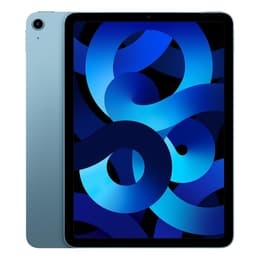

Galaxy Tab S9 FE (10.9", 2023) Vs iPad Air 5 (2022, M1 series)

Galaxy Tab S9 FE (10.9", 2023)
Starting at

Refurbished price:£227.00

Versus £606.86 new

See options
iPad Air 5 (2022, M1 series)
Starting at

Refurbished price:£275.00

Versus £669.00 new

See options

Ratings

The Samsung Galaxy Tab S9 FE, released in October 2023, and the Apple iPad Air (5th Gen), launched in March 2022, are both prominent tablets designed for a range of users. While both offer a portable computing experience, they differ significantly in their operating systems, core hardware, and ecosystem integration. The Galaxy Tab S9 FE runs on Android, offering a more open and customizable environment, while the iPad Air operates on iPadOS, known for its streamlined interface and strong app ecosystem. These differences influence everything from performance capabilities to accessory compatibility and overall user experience.

Scores

Durability

When considering the long-term usability of a tablet, software support and physical resilience are key factors.

  • Software Longevity: The Galaxy Tab S9 FE is expected to receive four major Android OS updates and five years of security patches, extending its software support until Android 17. The iPad Air (5th Gen) also receives consistent iPadOS updates, with Apple generally providing support for many years, often exceeding five years from its release.
  • Physical Durability: The Galaxy Tab S9 FE features an IP68 rating for dust and water resistance, offering protection against immersion in up to 1.5 meters of fresh water for 30 minutes. The iPad Air (5th Gen) does not carry an official IP rating, suggesting less formal protection against dust and water exposure. Both devices feature aluminum frames, contributing to their overall build quality.
  • Repairability: While specific repairability scores can vary, both devices are generally designed with integrated components, which can make certain repairs more complex. Users seeking to extend the life of their devices through refurbishment can find quality-assured options for both models.

Year of Release

2023

2022

Compatible with latest Update

Yes

Yes

OS

Android

iPadOS

Performance

The performance of a tablet dictates its ability to handle various tasks, from everyday browsing to demanding applications.

  • Processing Power: The iPad Air (5th Gen) is equipped with a powerful processor that enables smooth multitasking, efficient handling of graphics-intensive applications, and responsive performance across iPadOS. This allows for demanding creative work and seamless gaming experiences. The Galaxy Tab S9 FE features a processor designed for mid-range devices, providing smooth performance for daily tasks, streaming, and office applications.
  • Multitasking and Responsiveness: The iPad Air's hardware and software optimization contribute to a highly responsive user experience, allowing for quick app launches and fluid transitions between applications. The Galaxy Tab S9 FE handles casual multitasking well, though users might notice some slowdown when running multiple demanding applications simultaneously or playing graphics-intensive games.
  • Storage and RAM: The iPad Air (5th Gen) comes with 8GB of RAM and storage options of 64GB or 256GB. The Galaxy Tab S9 FE offers configurations with 6GB or 8GB of RAM and 128GB or 256GB of internal storage, with the added flexibility of expandable storage via a microSD card.

Memory (GB)

6 GB

8 GB

Screen quality

The display is a primary interface for tablets, influencing everything from media consumption to productivity.

  • Display Technology and Clarity: The iPad Air (5th Gen) features a 10.9-inch Liquid Retina IPS LCD display with a resolution of 2360x1640 pixels, offering sharp visuals and accurate color reproduction. The Galaxy Tab S9 FE also has a 10.9-inch IPS LCD display with a resolution of 2304x1440 pixels, providing clear images and good viewing angles.
  • Brightness and Refresh Rate: The iPad Air's display offers 500 nits of brightness, suitable for various lighting conditions. It operates at a standard 60Hz refresh rate. The Galaxy Tab S9 FE features a 90Hz refresh rate, which contributes to smoother scrolling and a more fluid visual experience, and offers up to 720 nits of brightness.
  • Viewing Experience: Both tablets provide a substantial screen size for media consumption and productivity. The iPad Air's display is fully laminated and has an anti-reflective coating, enhancing outdoor visibility. User reports indicate the Galaxy Tab S9 FE's display is legible under bright sunlight.

Resolution

1440 x 2304

2360 x 1640

Screen type

IPS LCD

Liquid Retina display

Pixel density

250ppp

264ppp

Audiovisual

Tablet cameras are increasingly used for video calls, document scanning, and casual photography.

  • Rear Camera System: The iPad Air (5th Gen) is equipped with a 12MP wide rear camera capable of 4K video recording. The Galaxy Tab S9 FE features an 8MP rear camera, suitable for basic photography and document scanning.
  • Front Camera and Video Conferencing: Both tablets excel in front-facing camera capabilities, crucial for video calls. The iPad Air has a 12MP ultrawide front camera with Center Stage, which automatically adjusts to keep the user in frame during video calls. The Galaxy Tab S9 FE also has a 12MP ultrawide front camera, positioned on the longer edge, which is beneficial for landscape video calls.
  • Audio Experience: The iPad Air features stereo speakers, providing clear audio for media consumption. The Galaxy Tab S9 FE also includes dual stereo speakers tuned by AKG, offering loud and clear audio.

Miscellaneous

Beyond core specifications, several practical features contribute to the overall user experience of a tablet.

  • Connectivity: Both devices support Wi-Fi 6 for fast wireless internet. The iPad Air (5th Gen) also offers optional 5G connectivity for cellular models. The Galaxy Tab S9 FE also has 5G options and Bluetooth 5.3, while the iPad Air uses Bluetooth 5.0.
  • Ports and Biometrics: Both tablets feature a USB-C port for charging and data transfer. Neither includes a traditional headphone jack. For security, the iPad Air integrates Touch ID into its top button. The Galaxy Tab S9 FE also has a fingerprint sensor integrated into the power button.
  • Design and Accessories: The iPad Air (5th Gen) weighs approximately 461 grams and measures 6.1 mm thick. The Galaxy Tab S9 FE weighs around 523-524 grams and is 6.5 mm thick. The Galaxy Tab S9 FE includes an S Pen in the box, while the Apple Pencil (2nd Gen) for the iPad Air is sold separately.

Weight

129 g

461 g

Screen size (in)

10.9

10.9

Network

Wi-Fi + 5G

Wi-Fi

Carrier compatibility

Unlocked

Without SIM Port

Users often praise the iPad Air (5th Gen) for its robust performance, attributed to its powerful processor, which allows it to handle demanding applications and multitasking with ease. Its integration within the Apple ecosystem and consistent software updates are also frequently highlighted as strong points. Some users, however, note the absence of a high refresh rate display and the separate purchase required for the Apple Pencil as potential drawbacks.

The Galaxy Tab S9 FE is often commended for its inclusion of the S Pen, its IP68 water and dust resistance, and its vibrant display with a 90Hz refresh rate. Users appreciate its solid build quality and the flexibility of Android. Criticisms sometimes point to its processor not being as powerful as higher-end tablets, which can affect performance in very demanding games or heavy multitasking.

Users prioritizing a highly optimized ecosystem, strong performance for creative tasks, and long-term software support may find the iPad Air (5th Gen) well-suited to their needs. Those who value an included stylus, water resistance, expandable storage, and a higher refresh rate display for smoother visuals might lean toward the Galaxy Tab S9 FE. Both devices offer compelling features for different user profiles, and considering a quality-assured refurbished option can be a sustainable choice for either model.

See all articles

Our recent comparisons