
Galaxy A54 Vs iPhone 16e

Galaxy A54
Galaxy A54
Starting at

Refurbished price:£119.00

Versus £499.00 new

See options
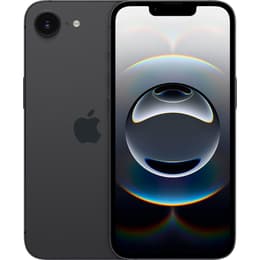
iPhone 16e
iPhone 16e
Starting at

Refurbished price:£359.00

Versus £599.00 new

See options

Ratings

The Samsung Galaxy A54, released in March 2023, and the hypothetical iPhone 16E, representing an entry-level model from Apple's 2025/2026 lineup, offer distinct approaches to smartphone design and functionality. While the Galaxy A54 operates on the Android platform, the iPhone 16E runs on Apple's iOS, presenting fundamental differences in user experience. This comparison will explore their core specifications and practical distinctions to help users determine which device aligns best with their needs.

Scores

Durability

When considering the long-term usability of a smartphone, factors like software support and physical resilience are key. The Galaxy A54 and the iPhone 16E offer different timelines and approaches to device longevity.

  • Software Support: The Samsung Galaxy A54 typically receives four major Android operating system updates and five years of security updates, extending its software support until approximately March 2028. In contrast, Apple is known for providing extended software support, with iPhones generally receiving major iOS updates for six to seven years from their release, and security updates often continuing beyond that period. This suggests the iPhone 16E would likely benefit from a longer period of software updates.
  • Physical Durability: The Galaxy A54 features Gorilla Glass 5 on both its front and back, offering a degree of protection against scratches and drops, and carries an IP67 rating for dust and water resistance. The iPhone 16E, following Apple's recent models, is expected to feature a Ceramic Shield front cover, designed for enhanced drop performance, and an IP68 rating, indicating greater resistance to dust and water immersion.
  • Repairability: While specific repairability scores can vary, Apple has been making efforts to improve the repairability of its devices, though they often remain more complex to repair than some Android counterparts. The Galaxy A54's construction, with a glass back and plastic frame, may offer a different repair experience.

Year of Release

2023

2025

OS

Android

iOS

Foldable

No

No

Performance

The performance of a smartphone is crucial for daily tasks, app usage, and multitasking. Both devices are designed to handle common operations efficiently, though they achieve this with different hardware configurations.

  • Processing Power: The Galaxy A54 is equipped with an Exynos 1380 processor, which capably manages everyday applications, web browsing, and moderate gaming. The iPhone 16E is anticipated to feature a powerful A-series chip, likely an A16 Bionic or a similar current-generation Apple silicon, enabling smooth operation for demanding applications, intensive multitasking, and graphically rich games.
  • Storage and Multitasking: The Galaxy A54 offers storage options of 128GB or 256GB, with the added flexibility of expandable storage via a microSD card up to 1TB. It comes with 6GB or 8GB of RAM, contributing to its multitasking capabilities. The iPhone 16E is expected to provide internal storage options of 128GB, 256GB, or 512GB, without expandable storage. Its optimized iOS ecosystem typically allows for efficient multitasking even with comparable RAM configurations.
  • Battery Behavior: The Galaxy A54 houses a 5000 mAh battery, generally providing sufficient power for a full day of typical use. The iPhone 16E is expected to have a smaller battery capacity, similar to the iPhone 15's 3349 mAh, but Apple's software and hardware optimizations typically ensure a full day of moderate usage.

Memory (GB)

8 GB

8 GB

Screen quality

The display is a primary interface for smartphone interaction, and both devices offer vibrant viewing experiences with distinct characteristics.

  • Display Technology and Size: The Samsung Galaxy A54 features a 6.4-inch Super AMOLED display, known for its deep blacks and vibrant color reproduction. The iPhone 16E is expected to come with a 6.1-inch Super Retina XDR OLED display, which also delivers excellent contrast and color accuracy.
  • Resolution and Clarity: The Galaxy A54 offers a resolution of 1080 x 2340 pixels (FHD+), resulting in a clear and sharp image for everyday content consumption. The iPhone 16E is anticipated to have a resolution of 2556 x 1179 pixels, providing a high pixel density for crisp text and detailed visuals.
  • Brightness and Refresh Rate: The Galaxy A54's display can reach a peak brightness of up to 1000 nits, ensuring good visibility outdoors, and features a 120Hz refresh rate for smooth scrolling and fluid animations. The iPhone 16E is expected to offer a high peak brightness of up to 2000 nits for outdoor viewing, but typically maintains a 60Hz refresh rate, with higher refresh rates usually reserved for Pro models.

Resolution

1080 x 2340

2532x1170

Audiovisual

Camera capabilities are a significant consideration for many users, and both the Galaxy A54 and the iPhone 16E provide versatile camera systems for capturing photos and videos.

  • Rear Camera System: The Galaxy A54 features a triple-camera setup on the rear, including a 50 MP main sensor with optical image stabilization (OIS), a 12 MP ultrawide lens, and a 5 MP macro lens. User feedback indicates strong performance in good lighting conditions, with decent low-light capabilities and a capable ultrawide lens, though the macro lens may be less consistent. The iPhone 16E is expected to have a dual-camera system, likely comprising a 48 MP main sensor with sensor-shift OIS and a 12 MP ultrawide lens, similar to the iPhone 15.
  • Front Camera and Video: For selfies and video calls, the Galaxy A54 is equipped with a 32 MP front camera. It supports video recording up to 4K at 30 frames per second (fps). The iPhone 16E is anticipated to feature a 12 MP front camera with autofocus. It is expected to offer video recording capabilities up to 4K at 60fps, including advanced features like Cinematic mode.
  • Audio and Speakers: The Galaxy A54 includes stereo speakers with Dolby Atmos support, providing a rich audio experience for media consumption. The iPhone 16E also features stereo speakers, delivering clear audio for calls and media playback.

Front camera

32 megapixels

TrueDepth 12MP

Miscellaneous

Beyond core performance and display, several practical features contribute to the overall user experience and daily convenience of a smartphone.

  • Connectivity and Ports: Both devices support 5G connectivity for fast mobile data. The Galaxy A54 includes Wi-Fi 6 and Bluetooth 5.3. It features a USB-C 2.0 port for charging and data transfer, but lacks a traditional 3.5mm headphone jack. The iPhone 16E is expected to support Wi-Fi 6 and Bluetooth 5.3, along with a second-generation Ultra Wideband chip for enhanced spatial awareness. It will also feature a USB-C port, aligning with current industry standards, though likely limited to USB 2.0 speeds for data transfer.
  • Biometric Security: The Galaxy A54 incorporates an in-display optical fingerprint sensor for secure unlocking and authentication. The iPhone 16E is expected to rely on Face ID, Apple's facial recognition system, for biometric security.
  • Design and Handling: The Galaxy A54 measures 158.2 x 76.7 x 8.2 mm and weighs 202g, featuring a glass front and back with a plastic frame. The iPhone 16E is anticipated to be more compact and lighter, with dimensions around 147.6 x 71.6 x 7.8 mm and a weight of approximately 171g, utilizing a Ceramic Shield front and an aluminum frame.

Weight

202 g

167 g

Screen size (in)

6.4

6.1

Mobile network

5G

5G

SIM card

Dual Physical SIM

eSIM

Carrier compatibility

Unlocked

Unlocked

Connector

USB-C

USB-C

The Samsung Galaxy A54 and the hypothetical iPhone 16E cater to different user preferences, primarily distinguished by their operating systems and ecosystem integration. Users often praise the Galaxy A54 for its vibrant AMOLED display with a high refresh rate, its robust battery life, and the flexibility of expandable storage. Some common feedback notes that while its camera performs well in good lighting, it can show limitations in very low-light conditions, and its processor, while capable for daily use, may not match the raw power of higher-end chipsets.

For the iPhone 16E, user sentiment for similar entry-level iPhones typically highlights the smooth and intuitive iOS experience, the strong performance of its A-series chip, and the consistent quality of its camera system, particularly for video recording. The long-term software support from Apple is also a frequently cited advantage. Potential considerations for users might include the 60Hz refresh rate display, which is standard for non-Pro iPhones, and the absence of expandable storage.

Users prioritizing a larger, high-refresh-rate display and the versatility of Android, including expandable storage, may find the Galaxy A54 well-suited to their needs. Conversely, users who value a compact form factor, the long-term software commitment of iOS, and a powerful processor for demanding applications might lean towards the iPhone 16E. Both devices offer a quality-assured refurbished option, providing an eco-friendly alternative for consumers seeking reliable technology.

See all articles

Our recent comparisons