

Compare models

Google Pixel 10 Vs iPhone 15 Plus

  • 1-year minimum warranty
  • Free delivery on all items
  • Free 30-day returns
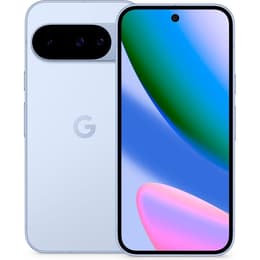
Google Pixel 10
Starting at

Refurbished price:£415.00

Versus £799.00 new

See options
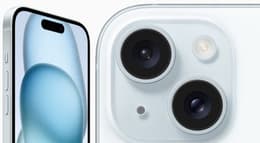
iPhone 15 Plus
Starting at

Refurbished price:£353.00

Versus £799.00 new

See options

Differences at a glance

The Google Pixel 10 (2025) and the Apple iPhone 15 Plus (2023) are contemporary smartphones designed to deliver robust daily performance within distinct operating ecosystems. While the Google Pixel 10 runs on Android with deep integration of on-device software tools, the iPhone 15 Plus operates on iOS, prioritizing streamlined cross-device connectivity. The primary differentiators between these two models lie in their physical footprint, screen real estate, and software environments, catering to users with differing interface preferences.

Available Models

Colour

Storage (GB)

Scores

Durability

Both devices are engineered to handle extended usage cycles, though their software update timelines and hardware longevity structures differ according to their respective release schedules.

  • OS support duration: The Google Pixel 10 benefits from an extended multi-year software commitment providing up to seven major operating system upgrades, whereas the iPhone 15 Plus typically receives traditional, long-term iOS support spanning several years.
  • Repairability and build: Both handsets feature sturdy aluminum frames and robust glass panels, alongside modular internal components that facilitate standard manufacturer or quality-assured refurbished option repairs.
  • Expected lifespan: Generous memory allocation on the Google device and efficient system optimization on the Apple device ensure both models maintain practical utility for daily tasks over many years.

Year of Release

2025

2023

Compatible with latest Update

Yes

Yes

OS

Android

iOS

Foldable

No

No

Performance

System responsiveness and everyday multitasking capabilities are handled differently through distinct hardware architectures and memory configurations across both operating systems.

  • Multitasking capacity: The Google Pixel 10 relies on ample system memory to keep multiple demanding background applications active simultaneously, while the iPhone 15 Plus uses tightly integrated hardware and software to maintain smooth operation.
  • App loading and gaming: Both devices open resource-heavy applications quickly and render mobile games with stable frame rates and thermal management.
  • Storage configurations: Users can select from various internal storage tiers to accommodate offline media libraries, large application files, and high-resolution photo archives without relying on expandable card slots.

Screen quality

Display characteristics vary significantly in physical dimensions and panel technology, impacting media consumption and outdoor usability.

  • Panel technology and resolution: The iPhone 15 Plus features a spacious OLED screen with a high-resolution layout, while the Google Pixel 10 utilizes a slightly more compact OLED display equipped with an adaptive refresh rate reaching up to 120Hz for smoother scrolling.
  • Outdoor visibility: Both screens reach high peak brightness thresholds, ensuring that text and images remain legible under direct sunlight.
  • Viewing experience: The larger display on the Apple model offers extra screen space for viewing video content, whereas the Google device balances viewing comfort with a more pocket-friendly physical form factor.

Resolution

1080x2424

1290 x 2796

Screen type

OLED

Super Retina XDR OLED

Audiovisual

Photography and video recording suites utilize distinct hardware arrangements and image processing software to capture everyday moments and media.

  • Camera hardware: The Google Pixel 10 incorporates a versatile triple-lens rear array featuring a dedicated telephoto zoom lens, whereas the iPhone 15 Plus employs a dual-lens rear system emphasizing high-resolution primary capture and smart cropping.
  • Low-light performance: Both smartphones process dim environments effectively, reducing digital noise and preserving natural color accuracy in evening settings.
  • Video and audio: Video recording remains stable and detailed on both platforms, supported by sensitive internal microphones that capture clear voice audio during calls and video logs.

Front camera

42 megapixels

12 megapixels

Miscellaneous

Physical handling, connectivity standards, and daily utility features shape the practical experience of carrying and using each device.

  • Physical dimensions: The iPhone 15 Plus offers a noticeably larger and heavier chassis, while the Google Pixel 10 provides a lighter, more compact profile suited to single-handed operation.
  • Ports and charging: Both devices adopt universal USB-C connectivity for wired power delivery and data transfer, alongside current-generation wireless charging compatibility.
  • Security sensors: The Google model provides biometric authentication via an under-display fingerprint reader and facial recognition, whereas the Apple model relies entirely on advanced facial mapping technology.

Weight

204 g

201 g

Screen size (in)

6.3

6.7

Mobile network

5G

5G

SIM card

eSIM

Physical SIM + eSIM

Carrier compatibility

Unlocked

Unlocked

Connector

USB-C

USB-C

What the community thinks

Choosing between these two smartphones depends heavily on individual preferences regarding software environment and physical dimensions. Users prioritizing a larger display space for media consumption and a streamlined operating system often lean toward the iPhone 15 Plus. Conversely, users who value a higher refresh rate, expanded on-device artificial intelligence features, and a compact form factor frequently find the Google Pixel 10 better suited to their daily workflow. For shoppers exploring an eco-friendly alternative, both models are widely available as a quality-assured refurbished option, supporting sustainable technology choices without compromising on modern performance or reliability.