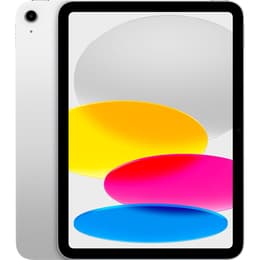
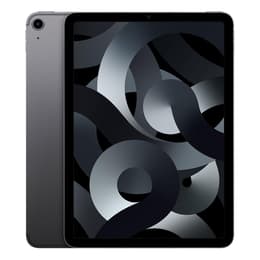

iPad 11 (2025, A16 series) Vs iPad Air 5 (2022, M1 series)

iPad 11 (2025, A16 series)
Starting at

Refurbished price:£284.00

Versus £329.00 new

See options
iPad Air 5 (2022, M1 series)
Starting at

Refurbished price:£275.00

Versus £669.00 new

See options

Ratings

The iPad 2025 (11th generation) and the iPad Air 2022 (5th generation) are two distinct tablet offerings from Apple, released three years apart. While both run on Apple's iPadOS, they cater to slightly different user needs through their internal components and display technologies. The iPad Air 2022, launched in March 2022, features the powerful M1 chip, while the iPad 2025, released in March 2025, incorporates a version of the A16 chip. These core differences influence their performance capabilities and overall user experience.

Scores

Durability

When considering the longevity of a tablet, several factors come into play, including release timeline, software support, and physical durability.

  • Release Timeline and Software Support: The iPad 2025, being the newer device, benefits from a later release date in March 2025, compared to the iPad Air 2022's March 2022 launch. This typically translates to a longer period of official iPadOS updates and security patches from Apple. While Apple is known for providing extended software support for its devices, the iPad 2025 is expected to receive major iPadOS updates for at least one year longer than the iPad Air 2022, ensuring access to the latest features and security enhancements for a more extended duration.
  • Repairability: Both iPad models, like many modern tablets, generally present challenges for repair. Apple iPads typically receive low repairability scores due to the extensive use of adhesive and fused components, which can make disassembly and part replacement difficult and potentially costly. This means that for both devices, professional repair is often recommended for significant damage.
  • Practical Lifespan: Users can generally expect a practical lifespan of several years for both tablets, especially when considering quality-assured refurbished options. The newer iPad 2025 will likely remain fully functional and supported for a slightly longer period due to its more recent hardware and extended software update window.

Year of Release

2025

2022

Compatible with latest Update

Yes

Yes

OS

iPadOS

iPadOS

Maximum Operating System supported

iPadOS 18

iPadOS 18

Performance

The performance of these two iPads is a key differentiator, primarily due to their underlying processors and memory configurations.

  • Processor Capabilities: The iPad Air 2022 is equipped with the M1 chip, which features an 8-core CPU, an 8-core GPU, and a 16-core Neural Engine. This chip delivers robust performance, making it capable of handling demanding applications, complex multitasking, and graphics-intensive tasks smoothly. The iPad 2025, on the other hand, uses a version of the A16 chip, which includes a 5-core CPU and a 4-core GPU. While still a capable processor for everyday use, this configuration offers a different performance profile compared to the M1, particularly in sustained heavy workloads and advanced graphics processing.
  • Multitasking and Responsiveness: The iPad Air 2022 comes with 8 GB of RAM, contributing to its ability to manage numerous applications simultaneously and switch between them without noticeable slowdowns. The iPad 2025 features 6 GB of RAM. While sufficient for most common tasks, the difference in RAM can become apparent during intensive multitasking or when running very memory-demanding applications, where the iPad Air 2022 may offer a slightly smoother experience.
  • Storage Options: The iPad Air 2022 is available with 64 GB or 256 GB of internal storage. The iPad 2025 offers more flexible storage configurations, starting at 128 GB and going up to 256 GB or 512 GB, providing more base storage and a higher maximum capacity option for users with extensive digital libraries or large application needs.

Memory (GB)

6 GB

8 GB

Processor

Apple A16

Apple M1

Screen quality

The visual experience on both tablets is delivered through their respective displays, each offering distinct characteristics.

  • Display Technology and Clarity: Both devices feature a 10.9-inch Liquid Retina display with IPS technology, offering a resolution of 2360x1640 pixels at 264 pixels per inch (ppi). This ensures sharp text and clear images for general viewing. However, the iPad Air 2022's display is fully laminated and includes an anti-reflective coating, which can reduce glare and make the screen appear closer to the surface, enhancing the viewing and writing experience. The iPad 2025's display, while offering good clarity, does not feature a laminated screen, which can result in a slight air gap between the glass and the display panel.
  • Brightness and Color: Both tablets provide a maximum brightness of 500 nits, making them suitable for indoor and outdoor use, though direct sunlight can still pose challenges. The iPad Air 2022 supports a P3 wide color gamut, allowing for a broader and more accurate range of colors, which is beneficial for creative professionals and those who prioritize color fidelity. The iPad 2025 supports sRGB color, which is standard but less expansive than P3. Both include True Tone technology for automatic white balance adjustment based on ambient light.
  • Refresh Rate: Both the iPad Air 2022 and the iPad 2025 feature a standard 60Hz refresh rate. This provides a smooth experience for most everyday tasks, but users accustomed to higher refresh rate displays might notice the difference during fast-paced content or scrolling.

Resolution

2360 x 1640

2360 x 1640

True Tone

Yes

Yes

Pro-Motion

No

No

Screen type

Liquid Retina display

Liquid Retina display

Pixel density

264ppp

264ppp

Brightness

500 nits brightness

500 nits brightness

Sound quality

Speakers

Stereo speakers (landscape)

Stereo speakers

Audiovisual

The camera systems on these tablets are designed for versatility, catering to video calls, document scanning, and casual photography.

  • Rear Camera System: Both the iPad Air 2022 and the iPad 2025 are equipped with a 12 MP Wide rear camera with an f/1.8 aperture. This allows for capturing detailed photos and supports 4K video recording at various frame rates, up to 60 frames per second on the iPad Air 2022. The iPad 2025 also supports 4K video recording. Both cameras are suitable for general photography, scanning documents, and augmented reality applications.
  • Front Camera and Video Calls: For the front-facing camera, both models feature a 12 MP Ultra Wide lens with Center Stage technology. Center Stage automatically adjusts the camera to keep subjects in frame during video calls, even as they move, making it a practical feature for virtual meetings and family chats. The iPad Air 2022's front camera records 1080p video at up to 60 frames per second. The iPad 2025 also offers a landscape-oriented front camera, enhancing the video calling experience. The iPad 2025 benefits from Smart HDR 4, an improvement over the Smart HDR 3 found in the iPad Air 2022, which can lead to more detailed and vivid photos.
  • Audio for Media and Communication: Both tablets feature stereo speakers, providing a more immersive audio experience for media consumption. They also include microphones suitable for clear audio during video calls and voice recordings.

Miscellaneous

Beyond core performance and display, several practical elements contribute to the overall user experience of these tablets.

  • Connectivity: The iPad Air 2022 supports Wi-Fi 6 and Bluetooth 5.0. The iPad 2025 offers slightly newer connectivity standards with Wi-Fi 6E and Bluetooth 5.3, potentially providing faster wireless speeds and improved efficiency with compatible accessories. Both models offer optional 5G cellular connectivity for staying connected away from Wi-Fi networks. For cellular models, the iPad 2025 relies entirely on eSIM technology, while the iPad Air 2022 supports both Nano-SIM and eSIM.
  • Ports and Accessories: Both tablets feature a versatile USB-C port. The iPad Air 2022's USB-C port supports USB 3.2 Gen 2, offering data transfer speeds up to 10Gb/s, and can connect to external displays up to 6K resolution. The iPad 2025 also includes a USB-C port. Both are compatible with the Apple Pencil (2nd generation for the Air, 1st generation and USB-C for the 2025 model) and Apple's Magic Keyboard and Smart Keyboard Folio accessories, transforming them into more productivity-focused tools.
  • Biometrics and Design: Both devices integrate Touch ID into the top button for secure authentication and unlocking. In terms of physical design, the iPad Air 2022 measures 247.6 x 178.5 x 6.1 mm and weighs approximately 461g. The iPad 2025 maintains a similar form factor to the 10th generation iPad, which is comparable in size to the iPad Air but with slightly thicker bezels.

Weight

477 g

461 g

Width

179.5 cm

17.85 cm

Height

248.6 cm

24.76 cm

Depth

7 cm

0.61 cm

Screen size (in)

11

10.9

Network

Wi-Fi

Wi-Fi

Carrier compatibility

Without SIM Port

Without SIM Port

Wi-Fi technology

Wi-Fi 6 802.11ax

Wi-Fi 6 802.11ax

Bluetooth Version

Bluetooth 5.3

Bluetooth 5.0

Face ID

No

No

Touch ID

Yes

Yes

Connector

USB Type-C

USB Type-C

Choosing between the iPad 2025 and the iPad Air 2022 involves weighing their respective strengths against individual user priorities. The iPad Air 2022, with its M1 chip and 8GB of RAM, is frequently praised by users for its robust performance, making it a strong contender for those who engage in more demanding tasks such as video editing, graphic design, or intensive multitasking. Its fully laminated P3 wide color display is also a highlight for users who prioritize visual fidelity and a premium viewing experience. Some users, however, have noted its 64GB base storage option as potentially limiting for long-term use.

The iPad 2025, while featuring a newer A16 chip, offers a different performance profile with 6GB of RAM and a slightly less powerful GPU configuration compared to the M1. It is often lauded for its improved base storage of 128GB and higher maximum storage options, which is a significant advantage for users who need ample space for apps, documents, and media. Its newer connectivity standards, including Wi-Fi 6E and Bluetooth 5.3, also offer a more future-proof experience. However, the non-laminated display might be a point of consideration for those accustomed to the more premium feel of the Air's screen.

Users prioritizing raw processing power for creative work, advanced gaming, or heavy multitasking may find the iPad Air 2022 better suited to their needs. Conversely, those seeking a more recent device with a larger base storage, enhanced connectivity, and a longer software support window for general productivity, media consumption, and casual use might lean towards the iPad 2025. Both devices represent excellent choices, especially when considering quality-assured refurbished options, which provide an eco-friendly alternative to new purchases. Ultimately, the decision hinges on balancing performance demands with the benefits of a newer release and expanded storage capabilities.


See all articles

Our recent comparisons