
Galaxy Tab A9 (8.7", 2023) Vs iPad Air 5 (2022, M1 series)

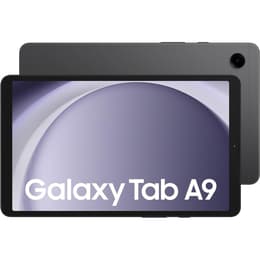
Galaxy Tab A9 (8.7", 2023)
Starting at

Refurbished price:£87.00

Versus £219.00 new

See options
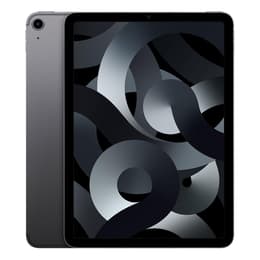
iPad Air 5 (2022, M1 series)
Starting at

Refurbished price:£274.00

Versus £669.00 new

See options

Ratings

The Samsung Galaxy Tab A9 (2023) and the iPad Air (2022 M1 Series) represent distinct approaches to the tablet experience, catering to different user needs and expectations. While the Galaxy Tab A9, released in October 2023, offers a compact Android experience, the iPad Air, launched in March 2022, provides a more powerful iPadOS platform with a larger display. The primary differentiators lie in their operating systems, overall performance capabilities, and screen sizes, influencing how users interact with applications and media.

Scores

Durability

When considering the longevity of these tablets, their release timelines and software support policies are key factors.

  • Release Dates: The Galaxy Tab A9 was released in October 2023, making it a newer device compared to the iPad Air (2022 M1 Series), which launched in March 2022.
  • Software Support: Samsung has committed to providing three major OS upgrades and four years of security patches for the Galaxy Tab A9, meaning it should receive updates until Android 16. The iPad Air, running on iPadOS, typically benefits from a longer software support window from Apple, often extending to five or more years from its release, which suggests a longer practical lifespan for receiving the latest features and security updates.
  • Practical Lifespan: The iPad Air's more powerful internal components and Apple's consistent long-term software support generally translate to a longer period of optimal performance and compatibility with new applications, especially for demanding tasks.

Year of Release

2023

2022

Compatible with latest Update

Yes

Yes

OS

Android

iPadOS

Performance

The performance capabilities of these two tablets vary significantly, impacting their suitability for different types of users and tasks.

  • Everyday Responsiveness: The Galaxy Tab A9 handles common applications like web browsing, video streaming, and social media smoothly, making it suitable for general daily use and light multitasking. The iPad Air, equipped with a powerful processor, delivers a highly responsive experience, excelling in demanding applications, complex multitasking, and graphics-intensive gaming.
  • Multitasking and Storage: The Galaxy Tab A9 is available with 4GB or 8GB of RAM and 64GB or 128GB of internal storage, expandable via microSD card. The iPad Air comes with 8GB of RAM and storage options of 64GB or 256GB, providing ample capacity for a wide range of applications and media. Its robust processing power allows for seamless switching between multiple applications and handling professional-grade creative tasks.
  • Gaming and Intensive Apps: While the Galaxy Tab A9 can run some games and handle basic productivity, it is not designed for high-performance gaming or resource-heavy professional software. The iPad Air, with its advanced processing unit, offers exceptional performance for editing multiple streams of 4K video, playing graphics-intensive games, and utilizing 3D and augmented reality applications.

Memory (GB)

4 GB

8 GB

Screen quality

The visual experience offered by these tablets differs considerably due to their display technologies and specifications.

  • Display Technology and Size: The Galaxy Tab A9 features an 8.7-inch LCD screen with a resolution of 1340 x 800 pixels. This smaller display is well-suited for portability and basic media consumption. The iPad Air boasts a larger 10.9-inch Liquid Retina IPS LCD display with a higher resolution of 2360 x 1640 pixels, providing a more expansive and detailed viewing area.
  • Clarity and Brightness: The Galaxy Tab A9's display offers decent clarity for its size, with users reporting it to be bright enough for indoor use and usable in bright, non-direct sunlight. The iPad Air's display provides sharp text and vibrant colors, with 500 nits of brightness and an anti-reflective coating, enhancing visibility in various lighting conditions.
  • Refresh Rate: Both tablets feature a standard 60Hz refresh rate. While the Galaxy Tab A9's display is functional, some users might notice a slight difference in smoothness compared to higher refresh rate screens, particularly during fast scrolling.

Resolution

800 x 1340

2360 x 1640

Screen type

TFT LCD

Liquid Retina display

Pixel density

180ppp

264ppp

Audiovisual

The camera systems on these tablets are designed for different purposes, with varying capabilities for photography and video calls.

  • Rear Camera Performance: The Galaxy Tab A9 includes an 8-megapixel rear camera, suitable for casual photos and document scanning in well-lit conditions. The iPad Air features a 12-megapixel wide rear camera capable of capturing quality pictures and 4K video, as well as scanning documents and supporting augmented reality experiences.
  • Front Camera and Video Calls: For video calls, the Galaxy Tab A9 has a 2-megapixel front camera. The iPad Air is equipped with a 12-megapixel ultrawide front camera that supports Apple's Center Stage feature, which automatically pans and zooms to keep subjects in frame during video calls, providing a more natural conferencing experience.
  • Audio Experience: The Galaxy Tab A9 features dual speakers. The iPad Air offers stereo speakers, providing a clear audio experience for media consumption and video calls.

Miscellaneous

Beyond core specifications, several practical features differentiate these two tablets in terms of connectivity, physical design, and user interaction.

  • Connectivity Options: The Galaxy Tab A9 supports Wi-Fi 5 and Bluetooth 5.3, with an optional LTE model for mobile data. The iPad Air offers more advanced connectivity with Wi-Fi 6 and Bluetooth 5.0, and cellular models support 5G for faster mobile internet speeds.
  • Ports and Biometrics: Both devices feature a USB-C port, though the iPad Air's USB-C 3.1 Gen 2 port offers faster transfer speeds than the Galaxy Tab A9's USB-C 2.0. The iPad Air integrates Touch ID into its top button for secure authentication, while the Galaxy Tab A9 does not include a fingerprint sensor.
  • Design and Handling: The Galaxy Tab A9 has an aluminum back and plastic frame, weighing around 332-333 grams and measuring 8.0 mm thick, making it a compact and lightweight device. The iPad Air features an aluminum unibody design, weighing approximately 461-462 grams and measuring 6.1 mm thick, offering a more premium feel and a larger form factor.

Weight

332 g

461 g

Width

21,1 cm

17.85 cm

Height

12,47 cm

24.76 cm

Depth

0,8 cm

0.61 cm

Screen size (in)

8.7

10.9

Network

Wi-Fi + 4G

Wi-Fi

Carrier compatibility

Unlocked

Without SIM Port

The Samsung Galaxy Tab A9 and the iPad Air (2022 M1 Series) cater to distinct user profiles, each excelling in different areas based on user priorities.

Users on forums often praise the Galaxy Tab A9 for its compact size, making it highly portable and convenient for on-the-go media consumption and basic tasks. Its Android operating system and expandable storage are frequently highlighted as practical advantages. However, some users express concerns regarding its screen resolution and camera quality, noting that these aspects are more suited for casual use rather than demanding visual tasks.

Conversely, the iPad Air (2022 M1 Series) receives consistent acclaim for its powerful performance, vibrant display, and robust ecosystem, making it a favorite among those who require a tablet for more intensive work, creative projects, and immersive entertainment. Its support for accessories like the Apple Pencil and Magic Keyboard is also a significant draw for productivity-focused users. While generally well-received, some users occasionally mention the 60Hz refresh rate as a point of comparison to higher-end tablets, though it remains a minor criticism given its overall capabilities.

Users prioritizing a highly portable device for everyday browsing, video streaming, and light productivity, especially within the Android ecosystem, may find the Galaxy Tab A9 well-suited to their needs. Those who require a powerful tablet for demanding applications, creative work, advanced multitasking, and a more expansive visual experience will likely lean toward the iPad Air. Both devices offer quality-assured refurbished options, providing a sustainable choice for consumers looking to make an informed purchasing decision.

See all articles

Our recent comparisons