
Google Pixel 6 Vs Google Pixel 9 Pro Fold

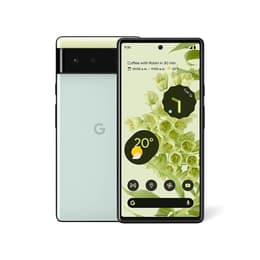
Google Pixel 6
Google Pixel 6
Starting at

Refurbished price:£101.00

Versus £649.99 new

See options
Google Pixel 9 Pro Fold
Starting at

Refurbished price:£538.00

Versus £1,739.49 new

See options

Ratings

The Google Pixel 6, released in October 2021, represents a traditional smartphone design, while the Google Pixel 9 Pro Fold, launched in September 2024, introduces a foldable form factor. These devices cater to different user preferences, with the Pixel 9 Pro Fold offering a significantly larger display and a generational leap in internal components and camera technology. Both operate on the Android platform, providing a consistent software experience, though the newer foldable benefits from more recent software optimizations and extended support.

Scores

Durability

The practical lifespan and software support differ considerably between these two Pixel devices, primarily due to their respective release dates and Google's evolving update policies.

  • Software Longevity: The Pixel 6, released in 2021, is guaranteed software and security updates until October 2026, providing a solid five years of support from its launch. The Pixel 9 Pro Fold, being a much newer device from 2024, benefits from Google's extended support policy, promising seven years of OS and security updates, extending its usable life until 2031.
  • Physical Durability: The Pixel 6 features a robust design with Gorilla Glass Victus on both the front and back, along with an IP68 rating for water and dust resistance, making it resilient to everyday wear and tear. The Pixel 9 Pro Fold, while incorporating Gorilla Glass Victus 2 for its cover screen and an IPX8 water resistance rating, presents different durability considerations due to its folding mechanism and flexible internal display. Foldable screens, by nature, require careful handling compared to traditional slab phones.
  • Repairability: Traditional smartphones like the Pixel 6 generally offer more straightforward repair processes for common components. The complex engineering of a foldable device like the Pixel 9 Pro Fold, with its hinge mechanism and flexible display, typically results in more intricate and potentially specialized repairs.

Year of Release

2021

2024

Compatible with latest Update

Yes

Yes

OS

Android

Android

Foldable

No

Yes

Performance

A significant difference between these two devices lies in their processing power and overall system responsiveness, reflecting several generations of technological advancement.

  • Processing Capabilities: The Pixel 6 is powered by the first-generation Google Tensor chip, which delivered capable performance for its time, handling everyday applications and moderate multitasking smoothly. The Pixel 9 Pro Fold features the Tensor G4 processor, offering a substantial increase in raw power and efficiency. This newer chip provides faster app loading, smoother transitions, and more robust performance for demanding tasks like advanced gaming, high-resolution video editing, and complex AI computations.
  • Multitasking and Storage: The Pixel 6 comes with 8GB of RAM and storage options of 128GB or 256GB. The Pixel 9 Pro Fold elevates this with 16GB of RAM, enabling more applications to run simultaneously without slowdowns, and offers larger storage configurations starting from 256GB, extending to 512GB or even 1TB. This larger RAM capacity is particularly beneficial for the foldable's multitasking capabilities across its expansive screen.
  • Battery Behavior: The Pixel 6 houses a 4614 mAh battery, with user experiences varying from all-day use to more frequent charging, especially with heavy 5G usage or gaming. The Pixel 9 Pro Fold, with a 4650 mAh battery, combined with the more power-efficient Tensor G4 chip and potentially adaptive refresh rates on its displays, is designed to manage power consumption effectively across its dual-screen setup, aiming for reliable daily endurance.

Memory (GB)

8 GB

16 GB

Screen quality

The display experience is a primary differentiator, with the Pixel 9 Pro Fold offering a versatile and expansive viewing area compared to the Pixel 6's traditional flat screen.

  • Display Technology and Size: The Pixel 6 features a 6.4-inch OLED display, providing vibrant colors and deep blacks in a conventional smartphone form factor. The Pixel 9 Pro Fold offers a dual-screen setup: a 6.5-inch cover OLED display for quick interactions and an impressive 8.0-inch foldable OLED main display when unfolded, transforming the device into a tablet-like experience.
  • Resolution and Clarity: The Pixel 6's display has a Full HD+ resolution (1080 x 2400 pixels), offering clear visuals for everyday content. The Pixel 9 Pro Fold's main foldable display boasts a higher resolution (e.g., 2152x2076 pixels or 1840x2208 pixels), providing enhanced sharpness and detail, particularly noticeable on its larger canvas.
  • Refresh Rate and Brightness: The Pixel 6 features a 90Hz refresh rate, contributing to smoother scrolling and a more fluid user interface. The Pixel 9 Pro Fold steps up with 120Hz refresh rates on both its cover and main displays, delivering an even more responsive and fluid visual experience. The newer foldable also typically offers higher peak brightness levels, improving visibility in bright outdoor conditions.

Resolution

1080 x 2400

2076 x 2152

Audiovisual

Both devices leverage Google's renowned computational photography, but the Pixel 9 Pro Fold benefits from more advanced hardware and software enhancements.

  • Rear Camera System: The Pixel 6 features a dual-camera setup with a 50MP main sensor and a 12MP ultrawide lens, known for producing excellent photos with natural colors and strong low-light performance for its generation. The Pixel 9 Pro Fold significantly upgrades this with a triple-camera system, including a 50MP main sensor, a 48MP ultrawide lens with Macro Focus, and a 48MP telephoto lens offering 5x optical zoom. This provides greater versatility and detail across various focal lengths.
  • Photography Features: The Pixel 6 introduced features like Magic Eraser and improved Real Tone for accurate skin representation. The Pixel 9 Pro Fold builds upon this with enhanced computational photography, including features like Video Boost for improved video quality and Night Sight for superior low-light still photography. The Macro Focus on the ultrawide lens also allows for detailed close-up shots.
  • Front Camera and Video: The Pixel 6 includes an 8MP front camera. The Pixel 9 Pro Fold features a higher-resolution 42MP front camera, capable of capturing more detailed selfies and supporting higher-quality video calls. Both devices offer capable video recording, but the Pixel 9 Pro Fold's newer processor and camera hardware enable more advanced video processing and potentially higher resolution or frame rate options.

Front camera

8 megapixels

10 megapixels

Miscellaneous

Beyond the core components, several practical elements distinguish the user experience and functionality of these two Pixel smartphones.

  • Connectivity Standards: The Pixel 6 supports 5G connectivity, Wi-Fi 6E, and Bluetooth 5.2, providing fast wireless communication for its time. The Pixel 9 Pro Fold incorporates more current standards, including 5G, Wi-Fi 7, and Bluetooth 5.3, offering potentially faster speeds, improved efficiency, and more stable connections with compatible accessories and networks.
  • Physical Design and Handling: The Pixel 6 is a traditional slab phone, weighing 207g and measuring 8.9mm thick. Its design is straightforward and comfortable for one-handed use for many. The Pixel 9 Pro Fold, as a foldable, is inherently heavier and thicker when folded, but it offers the unique advantage of a much larger screen when unfolded, transforming its utility. Its build materials include a polished metal frame and a distinct camera bar design.
  • Biometric Security and Ports: Both devices utilize a USB-C port for charging and data transfer. The Pixel 6 features an under-display optical fingerprint sensor for secure unlocking. The Pixel 9 Pro Fold also includes a fingerprint sensor, likely integrated into the power button or under the display, and may offer more advanced facial recognition capabilities.

Weight

207 g

257 g

Screen size (in)

6.4

8.0

Mobile network

5G

5G

SIM card

Physical SIM + eSIM

Physical SIM + eSIM

Carrier compatibility

Unlocked

Unlocked

The Google Pixel 6 and Google Pixel 9 Pro Fold cater to distinct user needs, reflecting the evolution of smartphone technology over several years. The Pixel 6, while an older model, is praised by many users for its reliable performance and excellent camera capabilities, particularly its computational photography, which was groundbreaking at its release. Some common criticisms from users have included its fingerprint sensor responsiveness and occasional inconsistencies in battery life, especially under heavy usage.

The Pixel 9 Pro Fold, as a newer and more advanced device, generally receives acclaim for its innovative foldable design, offering a versatile large screen experience for productivity and media consumption. Users appreciate the significant leap in processing power and the enhanced camera system with its added telephoto capabilities. While specific long-term user sentiment for the Pixel 9 Pro Fold is still developing, foldable devices typically present considerations regarding their physical durability and the perceived crease on the inner display.

Users prioritizing a traditional, dependable smartphone experience with a strong camera and solid software support for a few more years may find the Pixel 6 well-suited to their needs. It remains a capable device for everyday tasks and photography. Conversely, users who value cutting-edge technology, a highly versatile large screen for multitasking and immersive content, and the longest possible software support will likely lean towards the Pixel 9 Pro Fold. This device is ideal for those who embrace the foldable form factor and require top-tier performance for demanding applications.

For those considering either device, exploring quality-assured refurbished options can provide an eco-friendly alternative, extending the life cycle of these technologies and offering a sustainable choice.

See all articles

Our recent comparisons