

Galaxy A06 Vs Google Pixel 9

Galaxy A06
Galaxy A06
Starting at

Refurbished price:£70.00

Versus £158.08 new

See options
Google Pixel 9
Google Pixel 9
Starting at

Refurbished price:£330.00

Versus £892.46 new

See options

Ratings

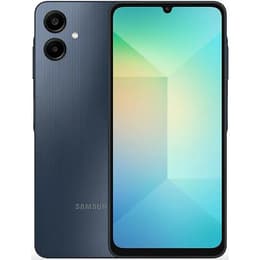
The Samsung Galaxy A06 (released in 2024 for the LTE version and 2025 for the 5G version) and the Google Pixel 9 (released in 2024) are both Android smartphones, yet they cater to different user expectations and needs. While the Galaxy A06 focuses on delivering essential smartphone functionalities, the Pixel 9 emphasizes advanced performance, camera capabilities, and a premium user experience. Both devices run on the Android operating system, but they offer distinct software experiences and hardware foundations.

Scores

Durability

The longevity of a smartphone is influenced by its release timeline, software support, and physical durability.

  • Release Timeline: The Samsung Galaxy A06 LTE was released in August 2024, with the 5G variant following in February 2025. The Google Pixel 9 was released in August 2024. This means the Pixel 9 and Galaxy A06 LTE are of similar age, while the A06 5G is slightly newer.
  • Software Longevity: The Pixel 9 offers a substantial commitment to software updates, providing 7 years of OS, security, and Pixel Drop updates from its launch with Android 14. In contrast, the Galaxy A06 5G is slated to receive 4 OS upgrades and 4 years of security updates, while the LTE version receives 2 OS upgrades and 4 years of security updates. This difference means the Pixel 9 will maintain current software features and security protections for a significantly longer period.
  • Physical Durability: The Pixel 9 features an IP68 rating for dust and water resistance, along with Gorilla Glass Victus 2 on both the front and back for enhanced screen and body protection. The Galaxy A06 5G has an IP54 rating, offering some protection against dust and splashes, but the LTE version lacks an official IP rating. Both models of the A06 feature a plastic back and frame with a glass front.

Year of Release

2024

2024

Compatible with latest Update

Yes

Yes

OS

Android

Android

Foldable

No

No

Performance

Performance varies significantly between these two devices, impacting how smoothly they handle daily tasks and demanding applications.

  • Processor Capabilities: The Google Pixel 9 is powered by the Google Tensor G4, a processor designed for efficient handling of complex tasks, advanced AI features, and smooth multitasking. The Samsung Galaxy A06 LTE uses the MediaTek Helio G85, while the 5G version features the MediaTek Dimensity 6300. These processors are suitable for everyday use like browsing, social media, and light gaming.
  • System Responsiveness: Users of the Pixel 9 can expect a highly responsive experience, with applications loading quickly and transitions feeling fluid, even with multiple apps open. The Tensor G4's optimization for the Android ecosystem contributes to this. The Galaxy A06, while capable for basic functions, may exhibit occasional lag or stutter, particularly when running more demanding applications or engaging in heavy multitasking.
  • Memory and Storage: The Pixel 9 typically comes with 12GB of RAM and utilizes faster UFS storage, contributing to its overall speed and efficiency. The Galaxy A06 offers configurations with 4GB or 6GB of RAM and uses eMMC storage, which is generally slower than UFS. This difference in memory and storage technology impacts app loading times and the device's ability to keep multiple applications active in the background.

Memory (GB)

4 GB

12 GB

Screen quality

The visual experience offered by these smartphones differs considerably due to their display technologies and specifications.

  • Display Technology and Clarity: The Google Pixel 9 features a 6.3-inch OLED display, providing deep blacks, high contrast, and vibrant colors. Its resolution of 1080 x 2424 pixels results in a sharp image with a pixel density of 422 ppi. The Samsung Galaxy A06 (both LTE and 5G) uses a 6.7-inch PLS LCD panel with a resolution of 720 x 1600 pixels (HD+), resulting in a pixel density of approximately 262 ppi.
  • Brightness and Outdoor Visibility: The Pixel 9's OLED display can reach up to 1800 nits of HDR brightness, making it highly visible even in bright outdoor conditions. The Galaxy A06's LCD display offers average brightness, which may be sufficient for indoor use but can be challenging to view clearly under direct sunlight.
  • Refresh Rate: The Pixel 9 boasts a 120Hz refresh rate, contributing to smoother scrolling, more fluid animations, and a more responsive feel during interactions. The Galaxy A06 LTE has a 60Hz refresh rate, while the A06 5G offers a 90Hz refresh rate, providing a slightly smoother experience than the LTE model but not matching the Pixel 9.

Resolution

720 x 1600

1080 x 2424

Screen type

PLS LCD

OLED

Audiovisual

Camera capabilities are a significant distinguishing factor, with each device offering a different photographic experience.

  • Rear Camera System: The Google Pixel 9 features a dual-camera setup on the rear, including a 50 MP main camera with a wide aperture (f/1.68) and optical image stabilization (OIS), alongside a 48 MP ultrawide camera with a 123-degree field of view. The Samsung Galaxy A06 comes with a dual-camera system consisting of a 50 MP main camera (f/1.8) and a 2 MP macro or depth sensor.
  • Photography Performance: The Pixel 9 is known for its advanced computational photography, delivering detailed images with accurate colors and strong low-light performance. Its AI features enhance photo editing and overall image quality. The Galaxy A06's 50 MP main camera can capture decent photos in good lighting conditions, but its performance in challenging light or with moving subjects is less consistent. The 2 MP secondary sensor offers limited utility.
  • Front Camera and Video Recording: For selfies, the Pixel 9 has a 10.5 MP front camera. Both the front and rear cameras on the Pixel 9 can record video at 4K resolution at various frame rates. The Galaxy A06 features an 8 MP front camera, and both its front and rear cameras support video recording up to 1080p at 30 or 60 frames per second.

Main camera

50 megapixels

50 megapixels

Front camera

8 megapixels

10.5 megapixels

Miscellaneous

Beyond core features, several practical elements contribute to the overall user experience and device utility.

  • Connectivity and Ports: The Google Pixel 9 supports 5G connectivity, advanced Wi-Fi standards, and Bluetooth, along with a USB Type-C 3.2 port. It also offers dual SIM capabilities with a Nano-SIM and eSIM. The Samsung Galaxy A06 5G supports 5G, while the LTE version is limited to 4G. Both A06 models include Wi-Fi (802.11a/b/g/n/ac), Bluetooth v5.3, and a USB Type-C 2.0 port. A 3.5mm headphone jack is present on the A06.
  • Biometric Security and Sensors: The Pixel 9 offers both an under-display fingerprint sensor and Face Unlock for secure authentication. It also includes a barometer and supports Satellite SOS. The Galaxy A06 features a side-mounted fingerprint sensor.
  • Design and Handling: The Pixel 9 has dimensions of 152.8 x 72.0 x 8.5mm and weighs 198g, featuring a metal frame and glass front and back. The Galaxy A06 measures 167.3 x 77.3 x 8 mm and weighs around 189-191g, with a plastic back and frame. The Pixel 9's design is generally considered more premium due to its materials and compact form factor, while the A06 offers a larger screen in a slightly taller and wider, though similarly thin, body.

Weight

189 g

198 g

Width

6,59 cm

7.198 cm

Height

3,04 cm

15.283 cm

Depth

0,31 cm

8.54 cm

Screen size (in)

6.7

6.3

Mobile network

4G

5G

SIM card

Dual Physical SIM

Physical SIM + eSIM

Carrier compatibility

Unlocked

Unlocked

Connector

USB-C + Jack 3.5mm

USB-C

The Samsung Galaxy A06 and Google Pixel 9 serve distinct segments of the smartphone market, each with its own set of strengths and trade-offs. User feedback for the Galaxy A06 often praises its long battery life, which can comfortably last a full day with moderate use, and its suitability for basic daily tasks like social media and video consumption. However, common criticisms include its slower performance for demanding applications, the lower resolution of its LCD display, and the camera's inconsistent performance in varied lighting conditions.

Conversely, the Google Pixel 9 receives high marks for its exceptional camera system, enhanced by advanced computational photography and AI features, and its vibrant, high-refresh-rate OLED display. Users also appreciate its extended software support, ensuring the device remains current and secure for many years. While its battery life is generally considered reliable for a full day, some heavy users, particularly those frequently on 5G, note that it may require more frequent charging than the A06.

Users prioritizing a premium experience with cutting-edge camera technology, long-term software support, and a high-quality display will find the Google Pixel 9 well-suited to their needs. It is ideal for those who engage in mobile photography, enjoy graphically intensive applications, or simply desire a highly responsive and feature-rich device. On the other hand, users who primarily need a reliable smartphone for essential communication, social media, and media consumption, and who prioritize battery endurance over advanced features, may lean toward the Samsung Galaxy A06. It offers a practical solution for everyday use without the higher-end specifications. Both devices, whether new or as a quality-assured refurbished option, provide a pathway to informed and sustainable choices in mobile technology.


See all articles

Our recent comparisons