

Google Pixel 9 Vs Google Pixel 9a

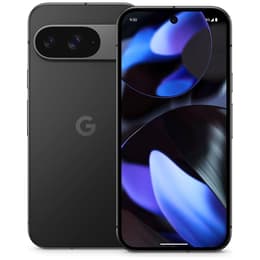
Google Pixel 9
Google Pixel 9
Starting at

Refurbished price:£327.25

Versus £890.22 new

See options
Google Pixel 9a
Google Pixel 9a
Starting at

Refurbished price:£319.00

Versus £499.00 new

See options

Ratings

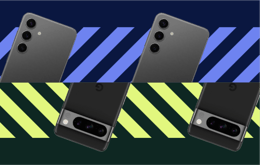
The Google Pixel 9, released in August 2024, and the Google Pixel 9A, launched in March/April 2025, represent different segments within Google's smartphone lineup. While both devices operate on the Android platform and share Google's Tensor G4 processor, they cater to distinct user needs through variations in their build materials, camera systems, and internal specifications.

Scores

Durability

Both the Google Pixel 9 and Pixel 9A are designed for extended usability, offering a commitment to long-term software support.

  • Software Longevity: Both models are promised seven years of major Android operating system upgrades and security patches, ensuring they remain current and secure until 2032. [1, 8, 12, 27, 28, 31, 36] This extended support duration means users can expect a prolonged practical lifespan for either device.
  • Physical Durability: The Pixel 9 features Corning Gorilla Glass Victus 2 on both its front and back, along with a metal frame, contributing to its robust construction. [6, 13, 27, 31] The Pixel 9A, while also featuring a metal frame, utilizes Corning Gorilla Glass 3 for its display and a plastic back. [1, 7, 16, 18, 23, 24, 29, 30, 37, 38] Both devices carry an IP68 rating for dust and water resistance, indicating protection against immersion. [7, 9, 13, 16, 17, 18, 23, 24, 30, 31]
  • Repairability Considerations: While both phones are built to last, some reports indicate that the Pixel 9A's battery replacement can be challenging due to strong adhesive, potentially impacting ease of long-term maintenance. [18, 37]

Year of Release

2024

2025

Compatible with latest Update

Yes

Yes

OS

Android

Android

Foldable

No

No

Performance

Both the Pixel 9 and Pixel 9A are powered by Google's Tensor G4 processor, providing a consistent foundation for performance, though RAM configurations differ.

  • Processing Power: The Tensor G4 chipset in both devices ensures smooth operation for everyday applications, efficient multitasking, and responsive handling of Google's advanced AI features. [1, 6, 12, 16, 30, 36, 40] Users can expect fluid navigation and quick app loading across both models.
  • Multitasking Capability: The Pixel 9 is equipped with 12GB of RAM, offering more headroom for demanding applications and extensive multitasking. [2, 5, 12, 27, 32] The Pixel 9A comes with 8GB of RAM, which is sufficient for most typical smartphone usage, but heavy users frequently switching between many applications might notice a difference. [1, 4, 8, 10, 17, 23, 28, 30, 36]
  • Battery Behavior: The Pixel 9A features a larger 5100 mAh battery, which generally translates to longer usage times between charges. [1, 4, 8, 10, 17, 23, 28, 29, 30, 36] The Pixel 9 has a 4700 mAh battery, offering reliable all-day power for many users, though some reports suggest it is not a standout in terms of endurance compared to some competitors. [2, 5, 11, 12, 21, 22, 25, 32]

Memory (GB)

12 GB

8 GB

Screen quality

The display experience on the Pixel 9 and Pixel 9A shares many similarities, providing vibrant visuals and smooth interactions.

  • Display Technology and Size: Both devices feature a 6.3-inch OLED or pOLED display, offering deep blacks and vibrant colors. [1, 3, 4, 6, 7, 8, 10, 17, 20, 23, 24, 27, 28, 29, 30, 36, 40] This size provides a balanced viewing area for media consumption and daily tasks.
  • Resolution and Brightness: Both screens offer a Full HD+ resolution (around 1080x2424 pixels) with a pixel density of approximately 422 pixels per inch, resulting in clear and sharp images. [1, 3, 4, 6, 10, 17, 20, 23, 24, 27, 28, 29, 36, 40] They also boast high peak brightness levels, reaching up to 2700 nits, which aids visibility in bright outdoor conditions. [1, 6, 10, 20, 27, 28, 36, 40]
  • Smoothness and Protection: Both displays support a variable refresh rate ranging from 60Hz to 120Hz, contributing to smoother scrolling and more fluid animations. [3, 6, 7, 10, 20, 23, 24, 27, 28, 29, 30, 36, 40] A key difference lies in screen protection: the Pixel 9 uses the more advanced Corning Gorilla Glass Victus 2, while the Pixel 9A uses Corning Gorilla Glass 3. [6, 10, 13, 16, 17, 18, 23, 24, 27, 29, 30, 31, 38, 40]

Resolution

1080 x 2424

2424 x 1080

Audiovisual

Google Pixel phones are known for their camera capabilities, and both the Pixel 9 and Pixel 9A continue this trend with capable imaging systems, though with some distinctions.

  • Rear Camera Systems: The Pixel 9 features a dual-camera setup with a 50MP main sensor (f/1.68 aperture) and a 48MP ultrawide sensor (f/1.7 aperture, 123˚ field of view). [3, 5, 6, 12, 22, 26, 32] The Pixel 9A also has a dual-camera system, comprising a 48MP main sensor (f/1.7 aperture) and a 13MP ultrawide sensor (f/2.2 aperture, 120˚ field of view). [1, 4, 7, 8, 10, 14, 15, 17, 19, 23, 24, 29, 30] The Pixel 9's ultrawide camera offers a higher resolution and slightly wider perspective.
  • Photography Performance: Both phones leverage Google's computational photography for impressive results in various lighting conditions. The Pixel 9A's main camera, despite a lower megapixel count than its predecessor, delivers good exposure, color reproduction, and detail in daylight and indoor settings. [1, 7, 14, 19] The Pixel 9's main sensor also includes optical and electronic image stabilization for steady shots. [6] Both support features like Super Res Zoom (digital up to 8x) and various AI-powered editing tools. [6, 15, 26, 32]
  • Front Camera and Video: For selfies, the Pixel 9 has a 10.5MP front camera, while the Pixel 9A features a 13MP front camera. [3, 5, 6, 8, 10, 17, 23, 24, 30, 32] Both devices are capable of recording 4K video at 60 frames per second with their rear cameras. [5, 19, 24] The Pixel 9A also includes Macro Focus, allowing for detailed close-up shots. [14, 15]

Front camera

10.5 megapixels

13 megapixels

Miscellaneous

Beyond core performance and camera, several practical elements differentiate the user experience of the Pixel 9 and Pixel 9A.

  • Connectivity and Ports: Both devices offer modern connectivity options, including 5G, Wi-Fi 6E, and Bluetooth 5.3. [17, 28, 36] They both feature a USB-C port for charging and data transfer. [10, 27]
  • Authentication and Sensors: Both the Pixel 9 and Pixel 9A include an under-display fingerprint sensor for secure unlocking. [10, 27, 28] They also integrate Google's Titan M2 security coprocessor for enhanced security. [2, 10, 27]
  • Design and Handling: The Pixel 9 has dimensions of 152.8 x 72.0 x 8.5mm and weighs 198g. [6, 27] The Pixel 9A measures 154.7 x 73.3 x 8.9mm and weighs 185.9g. [17, 28, 30] The Pixel 9 features a polished glass rear, while the Pixel 9A has a matte plastic back, which some users might find less slippery. [6, 7, 24, 30, 38] The Pixel 9A also has a flatter camera bump compared to the Pixel 9's more pronounced camera bar. [7, 30]

Weight

198 g

186 g

Screen size (in)

6.3

6.3

Mobile network

5G

5G

SIM card

Physical SIM + eSIM

Physical SIM + eSIM

Carrier compatibility

Unlocked

Unlocked

Connector

USB-C

USB-C

The Google Pixel 9 and Pixel 9A both offer compelling Android experiences, each tailored to slightly different user priorities. The Pixel 9 is often praised for its premium build quality, featuring Gorilla Glass Victus 2 on both front and back, and its higher RAM configuration, which benefits intensive multitasking. [6, 12, 13, 27, 31] Users appreciate its refined camera system, particularly the higher-resolution ultrawide lens. [3, 6, 12, 26]

Conversely, the Pixel 9A receives acclaim for its exceptional battery life, often outperforming its more expensive counterpart, and its inclusion of the same powerful Tensor G4 processor. [1, 8, 16, 29, 30, 36] Its display, while protected by an older generation of Gorilla Glass, still offers a vibrant and smooth viewing experience. [7, 24, 28, 36] Some users have noted concerns regarding the Pixel 9A's repairability, specifically the difficulty in replacing its battery. [18, 37]

Users prioritizing a more robust physical build and slightly enhanced multitasking capabilities may find the Pixel 9 well-suited to their needs. Those who value extended battery life and a more accessible entry point into the Pixel ecosystem, without significant compromises on core performance and camera quality, might lean towards the Pixel 9A. Both devices offer the benefit of Google's long-term software support, making them sustainable choices for prolonged use. For those considering either model, exploring quality-assured refurbished options can provide an eco-friendly alternative.

See all articles

Our recent comparisons