
Google Pixel 9a Vs iPhone 14 Pro Max

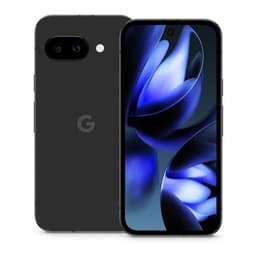
Google Pixel 9a
Google Pixel 9a
Starting at

Refurbished price:£319.00

Versus £499.00 new

See options
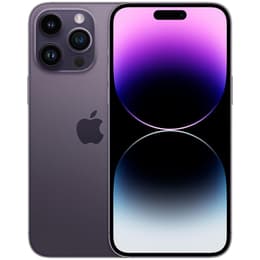
iPhone 14 Pro Max
iPhone 14 Pro Max
Starting at

Refurbished price:£325.00

Versus £1,199.00 new

See options

Ratings

The Google Pixel 9a, released in April 2025, and the Apple iPhone 14 Pro Max, launched in September 2022, represent distinct approaches to smartphone design and functionality. While the Pixel 9a focuses on delivering advanced AI features and a strong camera experience within a more accessible package, the iPhone 14 Pro Max offers a premium, high-performance ecosystem with a robust camera system and a large, immersive display. Both devices operate on their respective proprietary operating systems, Android 15 (upgradable to 16) for the Pixel and iOS 16 (upgradable to 26.3.1) for the iPhone, providing different user experiences and software ecosystems.

Scores

Durability

When considering the long-term usability of these devices, their release timelines and software support policies are key factors.

  • Release Timeline and Software Support: The Google Pixel 9a, released in April 2025, benefits from Google's commitment to seven years of OS, security, and Pixel Drop updates, ensuring extended software longevity. The iPhone 14 Pro Max, released in September 2022, typically receives iOS updates for approximately five to six years from its launch, meaning its software support will conclude sooner than the Pixel 9a's.
  • Durability and Build: Both devices feature IP68 ratings for dust and water resistance, indicating a high level of protection against environmental elements. The iPhone 14 Pro Max incorporates a Ceramic Shield front cover and a stainless steel frame for enhanced durability. The Pixel 9a uses Corning Gorilla Glass 3 for screen protection, which is a less recent generation of glass compared to what is found on more premium devices.
  • Expected Practical Lifespan: Users prioritizing the absolute longest software support and latest security patches will find the Pixel 9a's extended update policy advantageous. The iPhone 14 Pro Max, while still receiving updates, will reach its end-of-life for major iOS versions earlier due to its older release date.

Year of Release

2025

2022

Compatible with latest Update

Yes

Yes

OS

Android

iOS

Foldable

No

No

Performance

The performance of a smartphone is crucial for daily tasks, from app usage to demanding games and multitasking.

  • Processor Capabilities: The Google Pixel 9a is powered by the Google Tensor G4, designed to handle demanding applications and multitasking smoothly, with a focus on AI-driven features and efficient processing. The iPhone 14 Pro Max features the Apple A16 Bionic chip, known for its robust performance in graphics-intensive tasks and overall system responsiveness, making it well-suited for high-end gaming and professional applications.
  • Memory and Storage: The Pixel 9a comes with 8GB of RAM, providing ample capacity for multitasking and running multiple applications simultaneously. It offers storage options of 128GB and 256GB. The iPhone 14 Pro Max is equipped with 6GB of RAM and offers a wider range of storage configurations, including 128GB, 256GB, 512GB, and 1TB, catering to users with extensive storage needs.
  • Battery Behavior: The Pixel 9a houses a 5100 mAh battery, designed to provide over 30 hours of typical use, with fast charging and Qi-certified wireless charging capabilities. The iPhone 14 Pro Max has a 4323 mAh battery, offering up to 29 hours of video playback and 25 hours of streaming video playback, supported by MagSafe and Qi wireless charging.

Memory (GB)

8 GB

6 GB

Screen quality

The display is a primary interface for smartphone interaction, and both devices offer distinct visual experiences.

  • Display Technology and Size: The Google Pixel 9a features a 6.3-inch pOLED Actua display with a resolution of 1080x2424 pixels, providing clear visuals. The iPhone 14 Pro Max boasts a larger 6.7-inch Super Retina XDR OLED display with a higher resolution of 2796x1290 pixels, offering a more expansive and detailed viewing area.
  • Brightness and Refresh Rate: The Pixel 9a's display supports a variable refresh rate from 60Hz to 120Hz for smooth scrolling and can reach up to 2700 nits peak brightness, ensuring good visibility even in bright outdoor conditions. The iPhone 14 Pro Max features ProMotion technology with an adaptive refresh rate ranging from 1Hz to 120Hz, optimizing power efficiency and smoothness, and can achieve up to 2000 nits peak outdoor brightness.
  • Special Features: The iPhone 14 Pro Max includes an Always-On display and the Dynamic Island, which dynamically adapts to show alerts and activities. The Pixel 9a's display is protected by Corning Gorilla Glass 3.

Resolution

2424 x 1080

1290 x 2796

Audiovisual

Both smartphones offer advanced camera systems, though with different strengths and features.

  • Rear Camera System: The Google Pixel 9a features a dual-camera setup with a 48MP wide-angle main sensor (f/1.7 aperture, OIS) and a 13MP ultrawide lens (f/2.2 aperture, 120° field of view). The iPhone 14 Pro Max has a more versatile triple-camera system, including a 48MP main sensor (f/1.78 aperture, 2nd-gen sensor-shift OIS), a 12MP ultrawide lens (f/2.2 aperture, 120° field of view), and a 12MP 3x telephoto lens (f/2.8 aperture, OIS).
  • Photography Features: The Pixel 9a is praised for its computational photography, offering features like Super Res Zoom up to 8x and a macro focus mode, delivering impressive photos in daylight and indoor settings with good color reproduction. The iPhone 14 Pro Max excels with features such as Photonic Engine, Deep Fusion, Smart HDR 4, Night mode, and Portrait mode, leveraging its LiDAR scanner for enhanced depth perception.
  • Video Recording and Front Camera: Both devices support 4K video recording, with the iPhone 14 Pro Max offering more advanced video capabilities like Cinematic mode up to 4K HDR at 30fps, Action mode, and ProRes video recording. For selfies, the Pixel 9a has a 13MP front camera, while the iPhone 14 Pro Max features a 12MP front camera with autofocus.

Front camera

13 megapixels

12 megapixels

Miscellaneous

Beyond core specifications, several practical elements contribute to the overall user experience.

  • Connectivity and Ports: The Google Pixel 9a supports Wi-Fi 6E, Bluetooth 5.3, NFC, and features a USB-C 3.2 port for charging and data transfer. It offers dual SIM capabilities with a Nano SIM and eSIM. The iPhone 14 Pro Max includes Wi-Fi and Bluetooth connectivity, and utilizes a Lightning port. It supports dual eSIM, with some regions not offering a physical SIM tray. The iPhone also features Emergency SOS via satellite for communication in areas without cellular service.
  • Biometrics and Sensors: The Pixel 9a incorporates an under-display optical fingerprint reader for secure unlocking. The iPhone 14 Pro Max relies on Face ID for biometric authentication and includes a LiDAR scanner for enhanced augmented reality experiences and improved low-light photography. Both devices include standard sensors like accelerometers, gyroscopes, and ambient light sensors.
  • Design and Handling: The Pixel 9a measures 154.7 x 73.3 x 8.9 mm and weighs 185.9 grams, offering a compact and manageable form factor. The iPhone 14 Pro Max is larger and heavier at 160.7 x 77.6 x 7.85 mm and 240 grams, providing a more substantial feel in hand. The Pixel 9a features a matte glass back and a brushed metal frame, while the iPhone 14 Pro Max has a stainless steel frame and a textured matte glass back.

Weight

186 g

120 g

Screen size (in)

6.3

6.7

Mobile network

5G

5G

SIM card

Physical SIM + eSIM

Physical SIM + eSIM

Carrier compatibility

Unlocked

Unlocked

Connector

USB-C

Lightning

User sentiment for the Google Pixel 9a often highlights its strong camera performance, particularly in daylight and indoor settings, and its extended software support as significant advantages. Users appreciate its clean Android experience and the integration of Google's AI features. Some criticisms point to the use of older Gorilla Glass 3 for screen protection and the absence of certain advanced features found in its more premium siblings, such as Satellite SOS.

The iPhone 14 Pro Max is frequently praised for its powerful performance, premium build quality, and the versatility of its triple-camera system, especially its video capabilities and the innovative Dynamic Island feature. Common feedback also notes its excellent display brightness and adaptive refresh rate. Some users might find its larger size and weight less comfortable for one-handed use.

For users prioritizing long-term software updates, a compact design, and a strong computational photography experience, the Google Pixel 9a may be a suitable choice. Its focus on AI-driven features and a clean Android interface caters to those who value Google's ecosystem. Conversely, individuals seeking a premium build, a larger and brighter display, advanced video recording capabilities, and a robust performance for demanding tasks might find the iPhone 14 Pro Max more aligned with their needs. Both devices offer compelling features, and considering a quality-assured refurbished option for either model can provide an eco-friendly alternative for making an informed purchasing decision.


See all articles

Our recent comparisons