
Google Pixel 9 Vs iPhone 15 Pro

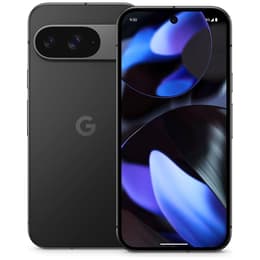
Google Pixel 9
Google Pixel 9
Starting at

Refurbished price:£327.25

Versus £890.22 new

See options
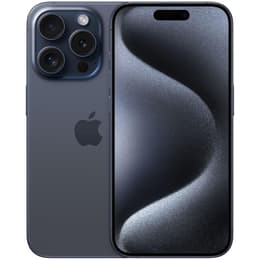
iPhone 15 Pro
iPhone 15 Pro
Starting at

Refurbished price:£399.00

Versus £999.00 new

See options

Ratings

The Google Pixel 9, released in August 2024, and the iPhone 15 Pro, launched in September 2023, represent distinct approaches to the premium smartphone experience. While both devices offer advanced capabilities, they differ significantly in their operating systems, core hardware, and computational philosophies. The Pixel 9 emphasizes artificial intelligence integration and a user-friendly Android experience, whereas the iPhone 15 Pro focuses on a refined iOS ecosystem, robust performance, and a sophisticated camera system.

Scores

Durability

When considering the long-term usability of these devices, their release timelines and software support policies are key factors.

  • Release Timeline: The Google Pixel 9 was released in August 2024, making it nearly a year newer than the iPhone 15 Pro, which launched in September 2023. This difference in release date directly impacts the expected duration of software support.
  • OS Support Duration: Google commits to providing 7 years of OS, security, and Pixel Drop updates for the Pixel 9, extending its software longevity significantly. The iPhone 15 Pro, while known for long-term support, typically receives major iOS updates for a minimum of five years, with security updates often continuing beyond that.
  • Practical Lifespan: Both devices feature durable builds with IP68 water and dust resistance. The iPhone 15 Pro incorporates a Ceramic Shield front cover and an aerospace-grade titanium frame for enhanced resilience. The Pixel 9 utilizes Corning Gorilla Glass Victus 2 for screen protection.

Year of Release

2024

2023

Compatible with latest Update

Yes

Yes

OS

Android

iOS

Foldable

No

No

Performance

Both smartphones are equipped with powerful internal components designed to handle demanding applications and multitasking efficiently, though they achieve this through different hardware and software optimizations.

  • Processor Capabilities: The Google Pixel 9 features a current-generation Google-designed processor, optimized for artificial intelligence tasks and smooth operation across the Android ecosystem. The iPhone 15 Pro is powered by a current-generation Apple-designed processor, known for its strong performance in gaming and intensive applications within the iOS environment.
  • System Responsiveness: Users can expect fluid navigation and quick app loading on both devices. The Pixel 9 comes with 12 GB of RAM, contributing to its multitasking capabilities. The iPhone 15 Pro includes 8 GB of RAM, which, combined with iOS's memory management, provides a responsive user experience.
  • Battery Behavior: The Pixel 9 is equipped with a typical 4700 mAh battery, designed to offer over 24 hours of use and up to 100 hours with its Extreme Battery Saver mode. The iPhone 15 Pro's battery provides up to 23 hours of video playback, offering reliable power for a full day of typical usage. Both support fast charging, with the Pixel 9 reaching 55% in about 30 minutes using a 45W charger, and the iPhone 15 Pro achieving 50% in approximately 30 minutes with a 20W adapter.

Memory (GB)

12 GB

8 GB

Screen quality

The visual experience on both the Google Pixel 9 and the iPhone 15 Pro is characterized by vibrant displays, though with some differences in specifications and features.

  • Display Technology and Clarity: The Pixel 9 features a 6.3-inch FHD+ OLED display with a resolution of 2424 x 1080 pixels, resulting in a pixel density of 422 ppi. The iPhone 15 Pro offers a slightly smaller 6.1-inch Super Retina XDR OLED display with a resolution of 2556 x 1179 pixels, providing a pixel density of 460 ppi. Both displays deliver deep blacks and vibrant colors.
  • Brightness and Refresh Rate: The Pixel 9's display supports a refresh rate of 60-120 Hz and can reach a peak brightness of up to 2700 nits for outdoor visibility. The iPhone 15 Pro features ProMotion technology, offering adaptive refresh rates up to 120Hz, and achieves a peak outdoor brightness of up to 2000 nits. The iPhone 15 Pro also includes an Always-On display and the Dynamic Island feature.
  • Viewing Experience: Both screens are well-suited for media consumption, web browsing, and daily tasks, offering clear and engaging visuals. The iPhone 15 Pro's slightly higher pixel density contributes to a marginally sharper image, while both provide excellent color accuracy.

Resolution

1080 x 2424

1179 x 2556

Screen type

OLED

LTPO Super Retina XDR OLED

Audiovisual

Both devices are equipped with advanced camera systems, each excelling in different aspects of photography and videography, catering to various user preferences.

  • Rear Camera System: The Google Pixel 9 features a dual-camera setup with a 50 MP wide lens and a 48 MP ultrawide lens, which also supports Macro Focus. It is known for its computational photography capabilities and Super Res Zoom up to 8x. The iPhone 15 Pro boasts a Pro camera system with a 48 MP main sensor, a 12 MP ultrawide lens with a 120° field of view, and a 12 MP 3x telephoto lens, offering a 6x optical zoom range.
  • Photography and Video Features: The Pixel 9 supports 4K video recording at various frame rates and leverages AI for enhanced image processing. The iPhone 15 Pro also records 4K video and offers advanced features like ProRes video recording up to 4K at 60 fps with external recording, and a more versatile optical zoom range. Users report the iPhone 15 Pro's 1x camera delivers noticeably more quality at 24 megapixels by default.
  • Front Camera and Audio: The Pixel 9 includes a 10.5 MP ultrawide front camera. The iPhone 15 Pro features a 12 MP TrueDepth front camera with autofocus. Both devices offer quality microphone performance for calls and recording, and stereo speakers for media consumption.

Main camera

50 megapixels

48 megapixels

Front camera

10.5 megapixels

12 megapixels

Miscellaneous

Beyond their core features, both the Google Pixel 9 and iPhone 15 Pro offer a range of practical elements that enhance their overall usability and user experience.

  • Connectivity and Ports: Both phones support 5G connectivity, ensuring fast mobile data speeds. The Pixel 9 features Wi-Fi 7 and Bluetooth 5.3, while the iPhone 15 Pro includes Wi-Fi 6E and Bluetooth 5.3. Both devices have a USB-C port for charging and data transfer. The iPhone 15 Pro's USB-C port supports faster USB 3.2 Gen 2 speeds, which can be beneficial for transferring large files.
  • Security and Navigation: The Pixel 9 incorporates an under-display fingerprint scanner and Face Unlock for biometric security. The iPhone 15 Pro relies on Face ID for secure authentication. Both include essential sensors like accelerometers, gyroscopes, and barometers. The iPhone 15 Pro also features a LiDAR Scanner.
  • Design and Handling: The Pixel 9 measures 152.8 x 72.0 x 8.5 mm and weighs 198 grams. The iPhone 15 Pro is slightly more compact at 146.6 x 70.6 x 8.25 mm and weighs 187 grams, featuring a lightweight titanium frame. The iPhone 15 Pro also introduces a customizable Action Button, replacing the traditional mute switch.

Weight

198 g

187 g

Screen size (in)

6.3

6.1

Mobile network

5G

5G

SIM card

Physical SIM + eSIM

Physical SIM + eSIM

Carrier compatibility

Unlocked

Unlocked

Connector

USB-C

USB-C

User sentiment for the Google Pixel 9 often highlights its strong integration of artificial intelligence, particularly with Gemini features, and its computational photography prowess, which consistently delivers impressive image results. Users appreciate the extended software support commitment from Google, ensuring the device remains current for a longer period. Some common praise points include its clean Android experience and the utility of its AI-driven features for everyday tasks. Criticisms, when present, sometimes revolve around the perceived design changes or specific software quirks that can arise with new Android versions.

The iPhone 15 Pro is frequently praised by users for its robust performance, especially in demanding applications and gaming, attributed to its powerful Apple-designed processor. Its refined iOS ecosystem, consistent camera performance, and premium build quality with the titanium frame are also often cited as major advantages. Users particularly value the seamless integration within Apple's ecosystem and the reliability of Face ID. Some users have noted that while the camera system is excellent, the differences from previous Pro models might be incremental for casual photographers, and the battery life, while solid, may not always outperform larger devices.

Users prioritizing a device with cutting-edge artificial intelligence capabilities, a long software support window, and a clean Android experience may find the Google Pixel 9 well-suited to their needs. Conversely, users who value a highly optimized ecosystem, strong raw performance for creative tasks and gaming, and a premium, compact design may lean toward the iPhone 15 Pro. Both devices offer quality-assured refurbished options, providing an eco-friendly alternative for consumers seeking advanced technology with a reduced environmental footprint.

See all articles

Our recent comparisons