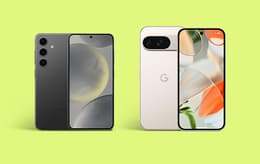
Google Pixel 9 Vs iPhone 16

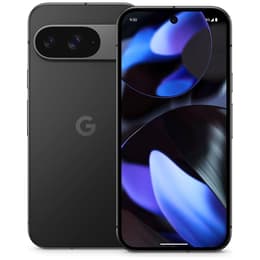
Google Pixel 9
Google Pixel 9
Starting at

Refurbished price:£327.25

Versus £890.22 new

See options
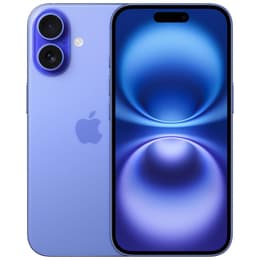
iPhone 16
iPhone 16
Starting at

Refurbished price:£484.00

Versus £699.00 new

See options

Ratings

The Google Pixel 9 and the iPhone 16, both released in late 2024, represent the latest iterations of their respective manufacturers' flagship smartphone lines. While both devices offer a premium smartphone experience, they cater to slightly different user preferences through their distinct operating systems and hardware philosophies. The Pixel 9 emphasizes advanced computational photography and a pure Android experience, whereas the iPhone 16 focuses on a refined iOS ecosystem and robust performance.

Scores

Durability

When considering the long-term usability of a smartphone, software support and physical resilience are key factors.

  • Software Longevity: The Google Pixel 9 stands out with an impressive commitment to software updates, promising seven years of Android OS upgrades, security patches, and Pixel-specific feature drops, extending its support until Android 22. The iPhone 16, running on iOS 18 at launch, typically receives major iOS updates for approximately five to six years from its release date, providing a substantial, though generally shorter, period of software support compared to the Pixel 9.
  • Physical Durability: Both devices are built to withstand daily use. The Pixel 9 features Gorilla Glass Victus 2 for screen protection, offering robust resistance against scratches and drops. The iPhone 16 incorporates Apple's Ceramic Shield on its front display, which is noted for its enhanced toughness and scratch resistance. Both phones also carry an IP68 rating for water and dust resistance, indicating protection against immersion in water.
  • Repairability: The iPhone 16 introduces a new electricity-sensitive battery glue, which is designed to make battery removal and replacement easier, potentially simplifying certain repairs. Information regarding specific repairability scores for the Pixel 9 is less detailed, but Google generally aims for a balance between durability and serviceability.

Year of Release

2024

2024

Compatible with latest Update

Yes

Yes

Foldable

No

No

Performance

The performance of a smartphone is crucial for smooth daily operation, from launching applications to handling demanding tasks.

  • Processing Power: The Google Pixel 9 is powered by Google's Tensor G4 processor, designed to optimize AI and machine learning tasks directly on the device, contributing to efficient app loading and responsive multitasking. The iPhone 16 features Apple's A18 chip, which delivers strong performance for everyday use, gaming, and complex applications, with reviewers noting its speed and efficiency. While the Pixel's chip excels in AI-centric operations, the iPhone's processor is often highlighted for its raw speed across a broad range of tasks.
  • Multitasking and Storage: The Pixel 9 comes with 12GB of RAM, providing ample capacity for running multiple applications simultaneously and switching between them without significant slowdowns. The iPhone 16 is equipped with 8GB of RAM, which, combined with iOS's efficient memory management, ensures smooth multitasking and app retention. Both devices offer various internal storage options, with the iPhone 16 extending to 512GB, while the Pixel 9 is available in 128GB and 256GB configurations.
  • Battery Performance: The Pixel 9 houses a 4700 mAh battery, designed to provide all-day power, with some users reporting over seven hours of screen-on time on Wi-Fi and reliable performance even with heavy 5G usage. The iPhone 16, with a 3561 mAh battery, also aims for extended usage, with reports suggesting it can last up to 22 hours for video playback and potentially two days with lighter use. Both devices support fast charging, allowing for a significant charge in about 30 minutes.

Memory (GB)

12 GB

8 GB

Screen quality

The display is a primary interface for any smartphone, influencing everything from media consumption to daily interactions.

  • Display Technology and Clarity: Both the Google Pixel 9 and iPhone 16 feature vibrant OLED displays, known for their deep blacks and excellent contrast. The Pixel 9 offers a 6.3-inch OLED screen with a resolution of 2424 x 1080 pixels, resulting in a clear visual experience. The iPhone 16 sports a 6.1-inch Super Retina XDR OLED display with a resolution of 2556 x 1179 pixels, providing sharp images and text.
  • Brightness and Refresh Rate: The Pixel 9's display boasts a 120Hz refresh rate, contributing to smoother scrolling and more fluid animations, and can reach a peak brightness of up to 2700 nits for outdoor visibility and 1800 nits for HDR content. In contrast, the iPhone 16 maintains a 60Hz refresh rate on its standard model, while offering a typical maximum brightness of 1000 nits, a peak HDR brightness of 1600 nits, and an outdoor peak brightness of 2000 nits.
  • Additional Display Features: The Pixel 9 includes Adaptive Touch technology, which adjusts screen sensitivity based on environmental factors like wet fingers or screen protectors. The iPhone 16 features Apple's Dynamic Island, an interactive area at the top of the display that adapts to alerts and background activities.

Resolution

1080 x 2424

1179 x 2556

Screen type

OLED

Super Retina XDR OLED

Audiovisual

Camera capabilities are a significant consideration for many users, and both the Pixel 9 and iPhone 16 offer advanced photographic systems.

  • Main Camera Systems: The Google Pixel 9 features a dual-camera setup, including a 50MP main camera and a 48MP ultrawide camera. It is praised for producing vivid yet realistic photos and its Night Sight feature is considered a benchmark for low-light photography. The iPhone 16 also comes with an advanced dual-camera system, featuring a 48MP Fusion main camera and a 12MP ultrawide lens. It performs well in good lighting conditions, capturing detailed and color-accurate images.
  • Zoom and Telephoto: Neither the base Pixel 9 nor the iPhone 16 includes a dedicated telephoto lens. The Pixel 9 relies on digital zoom, which can produce good results up to 8x in bright light, and offers a 10.5MP selfie camera. The iPhone 16 provides 2x optical zoom in and out, with a 4x optical zoom range, and digital zoom up to 10x, alongside a 12MP front-facing camera.
  • Video and Special Features: Both devices offer high-quality video recording capabilities, including 4K Dolby Vision video recording on the iPhone 16. The Pixel 9 introduces unique AI-powered camera features like 'Add Me,' which allows users to insert themselves into group shots. However, some reviewers note that the iPhone 16's low-light indoor performance can be less impressive compared to the Pixel 9.

Main camera

50 megapixels

48 megapixels

Front camera

10.5 megapixels

12 megapixels

Miscellaneous

Beyond core performance and display, several practical elements contribute to the overall user experience of a smartphone.

  • Connectivity and Ports: Both the Google Pixel 9 and iPhone 16 support modern connectivity standards, including 5G for fast cellular data, Wi-Fi 7 for high-speed wireless internet, and Bluetooth 5.3 for efficient accessory pairing. The iPhone 16 has transitioned to a USB-C 2.0 port with DisplayPort capabilities, offering broader compatibility for charging and data transfer.
  • Biometric Security and Sensors: The Pixel 9 incorporates an ultrasonic fingerprint scanner for secure and fast unlocking, alongside face recognition. The iPhone 16 relies on its Face ID system for secure facial recognition and authentication. Both devices also include an Ultra Wideband (UWB) chip for enhanced spatial awareness and precise location services.
  • Design and Handling: The Pixel 9 features a design that reviewers have noted as premium and comfortable to hold, with a recycled aluminum frame. The iPhone 16 maintains a familiar design with an aluminum frame and a new vertical camera layout, and introduces an Action Button and a Camera Control button for quick access to functions. The iPhone 16 measures 147.6 x 71.6 x 7.8 mm and weighs 170 grams.

Weight

198 g

170 g

Screen size (in)

6.3

6.1

Mobile network

5G

5G

SIM card

Physical SIM + eSIM

Physical SIM + eSIM

Carrier compatibility

Unlocked

Unlocked

Connector

USB-C

USB-C (USB 2)

User feedback for the Google Pixel 9 often highlights its exceptional camera quality, particularly its ability to capture vivid and realistic photos, and its benchmark-setting Night Sight capabilities. Users also appreciate its long-term software support, with seven years of updates ensuring the device remains current for an extended period. However, some common criticisms include the absence of a dedicated telephoto camera and its raw processing power not always matching the absolute top-tier rivals. The iPhone 16 receives praise for its robust overall performance, solid battery life, and the integration of new physical controls like the Action Button and Camera Control button, which enhance user interaction. A frequent point of concern for some users is the standard model's 60Hz display refresh rate, which can feel less fluid compared to devices with higher refresh rates, and its low-light camera performance sometimes falls short of the Pixel.

Users who prioritize cutting-edge computational photography, extensive software longevity, and a high-refresh-rate display may find the Google Pixel 9 well-suited to their needs. Its focus on AI-driven features and a pure Android experience makes it a strong contender for those deeply integrated into Google's ecosystem. Conversely, individuals who value a consistently smooth and powerful performance within the iOS ecosystem, coupled with strong build quality and innovative physical controls, may lean towards the iPhone 16. Its reliable battery life and refined user experience make it a dependable choice for a wide range of users.

For those considering either of these devices, exploring a quality-assured refurbished option can be an eco-friendly alternative to purchasing new, offering a sustainable choice without compromising on functionality.
See all articles

Our recent comparisons