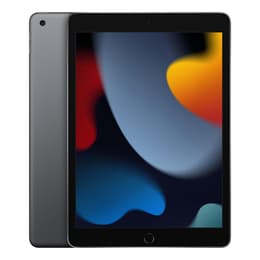
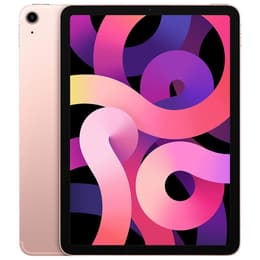

iPad 9 (2021, A13 series) Vs iPad Air 4 (2020, A14 series)

iPad 9 (2021, A13 series)
Starting at

Refurbished price:£157.00

Versus £679.00 new

See options
iPad Air 4 (2020, A14 series)
Starting at

Refurbished price:£215.00

Versus £579.00 new

See options

Ratings

The iPad 2021, also known as the 9th generation iPad, and the iPad Air 2020, or 4th generation iPad Air, are two distinct tablet offerings from Apple, released in September 2021 and October 2020, respectively. While both run on Apple's iPadOS, they cater to different user needs through variations in their design, processing power, and display technology. The iPad Air 2020 features a more modern design and a more advanced processor, while the iPad 2021 maintains a traditional form factor with solid performance for everyday tasks.

Scores

Durability

When considering the practical lifespan of these devices, several factors come into play, including their release dates and expected software support. The iPad Air 2020 was released in October 2020, making it approximately one year older than the iPad 2021, which launched in September 2021. This difference in release year typically translates to a slightly longer period of major iPadOS updates for the newer iPad 2021. The iPad 9th generation was discontinued in May 2024, while the iPad Air 4th generation was discontinued in March 2022.

  • Software Longevity: The iPad 2021 is expected to receive software updates for a slightly longer duration due to its later release, potentially offering an additional year of the latest iPadOS features and security patches compared to the iPad Air 2020.
  • Repairability: Both models generally offer similar repairability, with common components being serviceable. However, the design differences, such as the iPad Air's fully laminated display, can sometimes influence the complexity and cost of specific repairs.
  • Practical Lifespan: Users can expect both tablets to remain functional and capable for several years, handling daily tasks and a wide range of applications. The choice between them for long-term use might depend more on initial feature set preferences than on a significant difference in overall hardware endurance.

Year of Release

2021

2020

Compatible with latest Update

Yes

Yes

OS

iPadOS

iPadOS

Maximum Operating System supported

iPadOS 18

iPadOS 18

Performance

The performance capabilities of these two iPads are influenced by their respective internal components, leading to different experiences in demanding applications and multitasking. The iPad Air 2020 features a more advanced processor, offering a noticeable boost in speed and efficiency compared to the iPad 2021's processor.

  • Processing Power: The iPad Air 2020 handles demanding applications, complex graphics, and intensive multitasking with greater ease and responsiveness. Users engaging in video editing, advanced gaming, or professional creative work may find its performance more fluid. The iPad 2021, while capable for everyday tasks, web browsing, and casual gaming, may exhibit slightly longer loading times or less seamless transitions in very intensive scenarios.
  • Multitasking Efficiency: The iPad Air 2020 generally offers a smoother multitasking experience, allowing users to switch between multiple open applications more quickly without significant slowdowns. This is partly supported by its 4GB of RAM, compared to the iPad 2021's 3GB.
  • Battery Behavior: Both devices are designed to provide up to 10 hours of web surfing on Wi-Fi or video watching. Real-world battery life can vary based on usage patterns, but both offer sufficient power for a full day of moderate use.

Memory (GB)

3 GB

4 GB

Processor

Apple A13 Bionic

Apple A14 Bionic

Screen quality

The visual experience on these two tablets presents notable differences, primarily stemming from their display technology and design. The iPad Air 2020 offers a more modern and expansive screen, enhancing the viewing experience for various content types.

  • Display Technology and Size: The iPad Air 2020 features a 10.9-inch Liquid Retina IPS display, which is fully laminated and includes an anti-reflective coating, making content appear closer to the surface and reducing glare in bright environments. The iPad 2021 has a 10.2-inch Retina IPS display that is not fully laminated and lacks the anti-reflective coating, which can result in a slight gap between the glass and the display panel.
  • Resolution and Clarity: Both tablets offer a pixel density of 264 pixels per inch (ppi), providing sharp text and clear images. The iPad Air 2020 has a resolution of 2360x1640 pixels, while the iPad 2021 has 2160x1620 pixels.
  • Brightness and Color: Both displays achieve 500 nits of brightness and support True Tone technology, which adjusts the screen's color temperature to match ambient lighting for a more comfortable viewing experience. The iPad Air 2020 also supports Wide Color (P3), offering a broader range of colors for more vibrant and accurate visuals, particularly beneficial for creative professionals.

Resolution

2160 x 1620

2360 x 1640

True Tone

Yes

Yes

Pro-Motion

No

No

Screen type

Retina display

Liquid Retina display

Pixel density

264ppp

264ppp

Brightness

500 nits brightness

500 nits brightness

Sound quality

Speakers

Stereo speakers

Stereo speakers

Audiovisual

The camera systems on the iPad 2021 and iPad Air 2020 cater to different priorities, with one excelling in front-facing video calls and the other offering more capable rear photography and video recording.

  • Rear Camera Capabilities: The iPad Air 2020 is equipped with a 12MP Wide rear camera with an f/1.8 aperture, capable of recording 4K video at various frame rates (24, 25, 30, or 60 fps). This allows for more detailed photos and higher-resolution video capture. The iPad 2021 features an 8MP Wide rear camera with an f/2.4 aperture, recording 1080p HD video at 25 or 30 fps.
  • Front Camera and Video Calling: The iPad 2021 stands out with its 12MP Ultra Wide front camera, offering a 122° field of view and the Center Stage feature, which automatically keeps subjects in the frame during video calls. This is particularly useful for virtual meetings and family calls. The iPad Air 2020 has a 7MP FaceTime HD front camera, recording 1080p HD video at 60 fps, but it does not include Center Stage.
  • Audio Experience: Both devices feature stereo speakers, providing a decent audio experience for media consumption. The iPad Air 2020's speakers are noted for offering a landscape stereo effect. Both also include dual microphones for clear audio input during calls and recordings.

Miscellaneous

Beyond core performance and display, several practical elements differentiate the iPad 2021 and iPad Air 2020, impacting daily usability and accessory compatibility.

  • Connectivity and Ports: The iPad Air 2020 features a versatile USB-C port, enabling faster data transfer speeds and compatibility with a wider range of external accessories, including monitors and storage devices. It also supports Wi-Fi 6 (802.11ax) and Bluetooth 5.0. The iPad 2021 retains the Lightning connector and a 3.5mm headphone jack, offering compatibility with older accessories. It supports Wi-Fi 5 (802.11ac) and Bluetooth 4.2.
  • Security and Biometrics: Both models utilize Touch ID for secure authentication. The iPad 2021 integrates Touch ID into its traditional Home button. The iPad Air 2020 moves Touch ID to the top button, allowing for a more expansive, all-screen display.
  • Design and Accessories: The iPad Air 2020 boasts a more modern, squared-off design with thinner bezels, resembling the iPad Pro line. It supports the second-generation Apple Pencil, which magnetically attaches and charges, and is compatible with the Magic Keyboard. The iPad 2021 maintains the classic iPad design and supports the first-generation Apple Pencil and the Smart Keyboard. The iPad Air 2020 is also slightly thinner and lighter.

Weight

498 g

458 g

Width

17.41 cm

17.85 cm

Height

25.06 cm

24.76 cm

Depth

0.75 cm

0.61 cm

Screen size (in)

10.2

10.9

Network

Wi-Fi + 4G

Wi-Fi

Carrier compatibility

Unlocked

Without SIM Port

Wi-Fi technology

Wi-Fi 6 802.11a/b/g/n/ac

Wi-Fi 6 802.11ax

Bluetooth Version

Bluetooth 4.2

Bluetooth 5.0

Face ID

No

No

Touch ID

Yes

Yes

Connector

Lightning connector

USB Type-C

User sentiment for both the iPad 2021 and iPad Air 2020 generally highlights their strengths within their respective categories. The iPad 2021 is frequently praised for its solid performance for everyday tasks, its reliable battery life, and the inclusion of the Center Stage feature for video calls, making it a strong contender for students and general users. Criticisms often point to its older design, including thicker bezels and the non-laminated display, which some users find less immersive.

The iPad Air 2020 receives commendation for its modern, all-screen design, the more powerful processor, and the versatile USB-C port, which expands its utility for creative work and connecting external accessories. Users appreciate its compatibility with the second-generation Apple Pencil and Magic Keyboard, enhancing its appeal for productivity. Some users, however, note the absence of Center Stage on its front camera as a drawback compared to newer models.

Users prioritizing a more contemporary design, enhanced performance for demanding applications, and broader accessory compatibility via USB-C may find the iPad Air 2020 well-suited to their needs. This device is particularly beneficial for creative professionals, power users, or those who frequently connect external peripherals. Conversely, users seeking a dependable tablet for general use, educational purposes, or frequent video calls with Center Stage, and who prefer the traditional Home button, may lean toward the iPad 2021. Both models offer a robust tablet experience, and considering a quality-assured refurbished option for either can provide an eco-friendly alternative to purchasing new.

See all articles

Our recent comparisons