Galaxy Tab S8 Ultra (14.6", 2022) Vs iPad Pro (2024, M4 series)

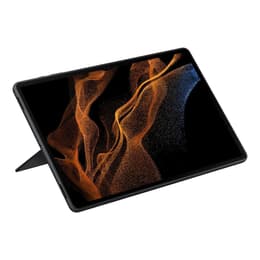
Galaxy Tab S8 Ultra (14.6", 2022)
Starting at

Refurbished price:£419.00

Versus £1,249.00 new

See options
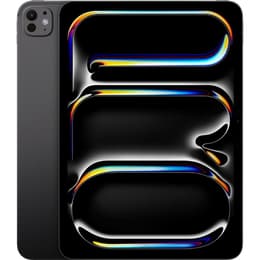
iPad Pro (2024, M4 series)
Starting at

Refurbished price:£642.00

Versus £999.00 new

See options

Ratings

The Samsung Galaxy Tab S8 Ultra, released in February 2022, and the Apple iPad Pro M4 Series, launched in May 2024, represent high-end tablets from their respective ecosystems. While both offer expansive displays and powerful performance for demanding tasks, they differ significantly in their operating systems and overall design philosophy. The Galaxy Tab S8 Ultra runs on Android, offering a larger screen and a more open software environment, whereas the iPad Pro M4 operates on iPadOS, known for its optimized applications and tight integration within the Apple ecosystem.

Scores

Durability

When considering the long-term usability of these tablets, several factors contribute to their expected lifespan, including software support and physical durability.

  • Software Longevity: The Galaxy Tab S8 Ultra, launched with Android 12, is expected to receive four major Android updates and five years of security updates, with major OS updates likely concluding around early 2026 and security updates extending to early 2027. The iPad Pro M4, running iPadOS 17 at launch, typically receives software updates for 5-7 years, suggesting support well into the early 2030s.
  • Physical Durability: The Galaxy Tab S8 Ultra features an Armor Aluminum build, which has demonstrated surprising resilience in bend tests despite its large and thin profile. The iPad Pro M4, while exceptionally thin at 5.1mm, also utilizes an aerospace-grade aluminum chassis.
  • Repairability: The Galaxy Tab S8 Ultra received a repairability score of 5.5 out of 10, with some components being challenging to access. The iPad Pro M4 has shown improvements in battery replacement accessibility compared to previous iPad models, though accessing the display remains a delicate process.

Year of Release

2022

2024

Compatible with latest Update

Yes

Yes

OS

Android

iPadOS

Performance

Both tablets are designed for demanding workloads, but their approaches to performance and multitasking differ based on their underlying architectures.

  • Processing Power: The Galaxy Tab S8 Ultra, with its 2022-era processor, handles demanding applications and multitasking smoothly, providing a responsive experience for productivity and entertainment. The iPad Pro M4, featuring a more recent and efficient processor, offers substantial performance gains, particularly noticeable in professional creative applications, complex workflows, and advanced multitasking scenarios.
  • Multitasking and Responsiveness: The Galaxy Tab S8 Ultra supports enhanced multi-window features, allowing up to three apps on screen simultaneously, and offers a desktop-like experience with Samsung DeX. The iPad Pro M4, running iPadOS, is optimized for fluid multitasking with features like Stage Manager, providing a refined experience for managing multiple applications.
  • Storage and RAM: The Galaxy Tab S8 Ultra offers configurations with up to 16GB of RAM and 512GB of internal storage, expandable via microSD. The iPad Pro M4 provides up to 16GB of RAM (in higher storage configurations) and up to 2TB of internal storage, without microSD expansion.

Memory (GB)

8 GB

8 GB

Screen quality

The visual experience on both tablets is a key highlight, with each offering a large, high-quality display tailored to different preferences.

  • Display Technology and Size: The Galaxy Tab S8 Ultra features a 14.6-inch Super AMOLED display, known for its deep blacks and vibrant colors, with a resolution of 2960 x 1848 pixels. The iPad Pro M4 (13-inch model) utilizes a Tandem OLED (Ultra Retina XDR) display, offering exceptional color accuracy, high contrast, and true blacks, with a resolution of 2752 x 2064 pixels.
  • Brightness and Clarity: The Galaxy Tab S8 Ultra's display provides good brightness for various lighting conditions, making it suitable for both indoor and some outdoor use. The iPad Pro M4's Tandem OLED panel offers a full-screen brightness of 1000 nits for SDR content and up to 1600 nits for HDR content, providing superior visibility in bright environments and for HDR media.
  • Refresh Rate and Smoothness: Both tablets feature a 120Hz refresh rate, contributing to smooth scrolling and responsive interactions. Users report that the high refresh rate on both devices enhances the overall fluidity of the user interface.

Resolution

1848 x 2960

2420 x 1668

Screen type

Super AMOLED

Ultra Retina XDR display

Pixel density

240ppp

264ppp

Audiovisual

While tablets are not typically primary photography devices, both models offer capable camera systems for video calls, document scanning, and casual photography.

  • Rear Camera System: The Galaxy Tab S8 Ultra includes a dual-camera setup on the rear with a 13MP wide lens and a 6MP ultrawide lens. The iPad Pro M4 features a single 12MP wide camera on the rear, accompanied by a LiDAR Scanner for enhanced depth sensing.
  • Front Camera System: The Galaxy Tab S8 Ultra boasts dual 12MP front cameras (wide and ultrawide), which are well-suited for high-quality video calls and selfies. The iPad Pro M4 also has a 12MP ultrawide front-facing camera, notably positioned on the landscape edge, which is beneficial for video conferencing in a horizontal orientation.
  • Audio Experience: Both tablets are equipped with quad stereo speakers, offering rich and clear audio output for media consumption. The Galaxy Tab S8 Ultra includes three microphones for clear audio recording, while the iPad Pro M4 also provides quality microphone performance for calls and recordings.

Miscellaneous

Beyond core performance and display, several practical features contribute to the overall user experience and versatility of these tablets.

  • Connectivity: Both devices support Wi-Fi 6E and Bluetooth 5.2 (Tab S8 Ultra) or 5.3 (iPad Pro M4), with optional 5G connectivity for cellular models, ensuring fast wireless communication.
  • Ports and Accessories: The Galaxy Tab S8 Ultra features a USB-C 3.2 port and includes the S Pen stylus in the box. The iPad Pro M4 comes with a USB-C port that supports Thunderbolt / USB 4, offering high-speed data transfer, but the Apple Pencil Pro is sold separately.
  • Dimensions and Handling: The Galaxy Tab S8 Ultra is a larger device at 326.4 x 208.6 x 5.5 mm and weighs 726g (Wi-Fi), which some users find less portable but excellent for screen real estate. The 13-inch iPad Pro M4 is thinner and lighter at 281.6 x 215.5 x 5.1 mm and 579g (Wi-Fi), making it more manageable for extended handheld use.

Weight

726 g

444 g

Screen size (in)

14.6

11

Network

Wi-Fi + 5G

Wi-Fi

Carrier compatibility

Unlocked

Without SIM Port

User sentiment for the Galaxy Tab S8 Ultra often highlights its expansive 14.6-inch Super AMOLED display as a major draw, providing an immersive experience for media consumption and multitasking. Many appreciate the inclusion of the S Pen, making it a strong contender for note-taking and creative work. Criticisms sometimes point to its large size impacting portability and, for some, the battery life being average despite its large capacity. The Android ecosystem, while offering flexibility, can sometimes present challenges with app optimization for such a large tablet form factor.

The iPad Pro M4 receives praise for its cutting-edge Tandem OLED display, offering vibrant colors and deep blacks that enhance any visual task. Its powerful processor is consistently lauded for handling demanding professional applications with ease, making it a favorite among creative professionals. Users also frequently commend its thin and light design, which contributes to comfortable handling. Some common concerns revolve around iPadOS limitations for certain desktop-class workflows and the separate purchase of essential accessories like the Apple Pencil Pro.

Users prioritizing a vast display for media consumption, extensive note-taking with an included stylus, and the flexibility of the Android ecosystem may find the Galaxy Tab S8 Ultra well-suited to their needs. Conversely, users who prioritize a highly optimized software experience, exceptional processing power for creative and professional applications, and a slightly more portable design will likely lean towards the iPad Pro M4. Both devices offer robust performance for their respective user bases, and considering a quality-assured refurbished option for either can be an eco-friendly alternative.


See all articles

Our recent comparisons