Compare models
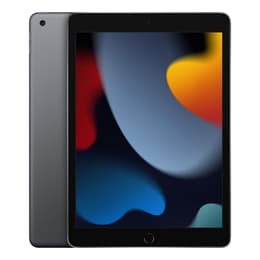
iPad 9 (2021, A13 series) Vs iPad Pro (2024, M4 series)
- 1-year minimum warranty
- Free delivery on all items
- Free 30-day returns
Differences at a glance
The iPad 9 (2021) and the iPad Pro (2024) represent two very different approaches to tablet design within Apple's ecosystem, bridging a significant generational gap in technology, performance, and purpose. While the entry-level iPad 9 serves as a straightforward, accessible tool for everyday tasks, the iPad Pro (2024) functions as a powerhouse designed for intensive creative workflows and advanced productivity. The primary differentiators between these two models center on raw processing capabilities, display technology, and overall hardware sophistication. Both devices operate on iPadOS, ensuring access to a vast library of applications, though the hardware driving that software differs substantially in speed and feature support.
Available Models
Colour
Storage
Scores
Durability
Evaluating the lifecycle and durability of these two tablets reveals distinct differences driven by their respective release years and internal engineering.
- Software support timeline: The iPad Pro (2024) benefits from a newer launch date, meaning it will receive software updates and security patches for several more years compared to the iPad 9 (2021).
- Build and repairability: Both models feature durable aluminum enclosures designed for regular daily transport, though repair options and longevity often favor quality-assured refurbished options that extend device utility sustainably.
- Expected practical lifespan: The iPad Pro's advanced internal architecture provides a larger performance buffer for future software demands, whereas the iPad 9 suits users looking for reliable performance over a standard medium-term upgrade cycle.
Year of Release
2021
2024
Compatible with latest Update
Yes
Yes
OS
iPadOS
iPadOS
Maximum Operating System supported
iPadOS 18
iPadOS 18
Performance
Performance stands out as the most dramatic divergence between these two tablets, impacting everything from app loading times to complex multitasking.
- Processing speed and responsiveness: The iPad Pro handles demanding professional software, 3D rendering, and heavy gaming effortlessly, while the iPad 9 manages everyday tasks, web browsing, and streaming smoothly with occasional loading pauses during heavy operations.
- Multitasking and memory: The iPad Pro accommodates intensive multi-window workflows and heavy background processes seamlessly thanks to its generous memory configuration, whereas the iPad 9 is better optimized for single-app focus or light split-screen use.
- Battery behavior: Both devices generally provide enough battery capacity for a standard day of mixed use, though intensive tasks on the iPad Pro draw power more rapidly due to its high-performance architecture.
Processor
Apple A13 Bionic
Apple M4
Screen quality
The viewing experience on each tablet caters to different visual expectations, ranging from standard media consumption to professional-grade color accuracy.
- Display technology: The iPad Pro features an advanced tandem OLED screen delivering deep blacks, exceptional contrast, and high peak brightness, while the iPad 9 utilizes a traditional LCD panel with standard brightness levels suitable for indoor environments.
- Refresh rate and fluidity: The iPad Pro incorporates high refresh rate technology for exceptionally smooth scrolling and responsive stylus interaction, whereas the iPad 9 uses a standard refresh rate adequate for general navigation and reading.
- Size and visual immersion: The iPad Pro offers larger screen configurations with minimal bezels for expanded workspace, while the iPad 9 maintains a compact form factor with traditional borders and a physical home button.
Resolution
2160 x 1620
2420 x 1668
True Tone
Yes
Yes
Pro-Motion
No
Yes
Screen type
Retina display
Ultra Retina XDR display
Pixel density
264ppp
264ppp
Brightness
500 nits brightness
1000 nits brightness max
Sound quality
Speakers
Stereo speakers
Four speaker audio
Audiovisual
Audio-visual capabilities vary widely, reflecting the different intended use cases for an entry-level device versus a professional workstation.
- Camera systems: The iPad Pro includes a versatile multi-lens rear array paired with a LiDAR scanner for spatial tasks and advanced photography, while the iPad 9 features a single, basic rear camera suited for casual snapshots and document scanning.
- Front-facing camera and video calls: Both tablets include ultra-wide front cameras with center-stage framing capabilities, though the iPad Pro positions its lens on the landscape edge for natural eye contact during video conferences.
- Audio output and speakers: The iPad Pro delivers a rich, multi-speaker audio experience with wide soundstages for media enjoyment, whereas the iPad 9 relies on a simpler stereo speaker setup located at the bottom edge.
Miscellaneous
Practical daily usability is shaped by connectivity standards, physical dimensions, and accessory compatibility across both models.
- Connectivity and ports: The iPad Pro utilizes a versatile USB-C port supporting high-speed data transfer and external displays, while the iPad 9 relies on the older Lightning connector for charging and wired accessories.
- Biometrics and sensors: The iPad Pro features secure facial recognition technology for quick unlocking, whereas the iPad 9 retains a fingerprint sensor integrated into the physical home button.
- Physical handling: The iPad Pro offers an exceptionally thin and lightweight profile for its screen size, while the iPad 9 has a slightly heavier, traditional build that remains comfortable for handheld reading and media viewing.
Weight
498 g
444 g
Width
17.41 cm
17.7 cm
Height
25.06 cm
24.9 cm
Depth
0.75 cm
0.5 cm
Screen size (in)
10.2
11
Network
Wi-Fi + 4G
Wi-Fi
Carrier compatibility
Unlocked
Without SIM Port
Wi-Fi technology
Wi-Fi 6 802.11a/b/g/n/ac
Wi-Fi 6E 802.11ax
Bluetooth Version
Bluetooth 4.2
Bluetooth 5.3
Face ID
No
Yes
Touch ID
Yes
No
Connector
Lightning connector
USB Type-C
What the community thinks
User feedback highlights distinct patterns of satisfaction for both devices. Owners of the iPad 9 frequently praise its straightforward reliability, familiar interface, and dependability for basic educational and household tasks. Conversely, iPad Pro users commonly emphasize the remarkable display clarity, rapid processing speeds, and versatility as a laptop replacement, though some note the high investment required for new units. For those mindful of environmental impact, choosing a quality-assured refurbished option provides a sustainable way to access advanced technology without purchasing newly manufactured hardware.
Users prioritizing budget-friendly simplicity, web browsing, and casual media consumption will find the iPad 9 well-suited to their needs. Meanwhile, professionals, digital artists, and power users requiring expansive workspaces, high-end creative software support, and advanced display technology will lean toward the iPad Pro. Selecting the right device ultimately depends on aligning these core capabilities with individual daily usage requirements and workflow intensity.