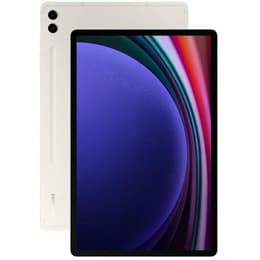
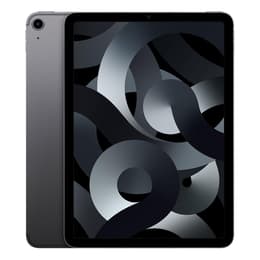

Galaxy Tab S9+ (12.4", 2023) Vs iPad Air 5 (2022, M1 series)

Galaxy Tab S9+ (12.4", 2023)
Starting at

Refurbished price:£444.84

Versus £868.13 new

See options
iPad Air 5 (2022, M1 series)
Starting at

Refurbished price:£275.00

Versus £669.00 new

See options

Ratings

The Samsung Galaxy Tab S9+ (released in August 2023) and the Apple iPad Air (5th generation, released in March 2022) are both prominent tablet devices, offering distinct experiences within their respective ecosystems. While the Galaxy Tab S9+ operates on Android, the iPad Air runs on iPadOS. Key differentiators include their display technologies, processing power, and accessory ecosystems, catering to varied user preferences.

Scores

Durability

When considering the long-term usability of these tablets, their release timelines and software support are important factors.

  • Release and Software Support: The Galaxy Tab S9+, launched in August 2023, benefits from a more recent release, typically implying a longer period of major Android operating system updates from Samsung. It initially shipped with Android 13 and has since been updated to Android 15. The iPad Air (5th generation), released in March 2022, started with iPadOS 15.4 and currently runs iPadOS 26.3.1(a). Apple is known for providing extended software support for its devices, often spanning five to six years or more for major OS versions.
  • Physical Durability: The Galaxy Tab S9+ features an IP68 rating for dust and water resistance, offering a degree of protection against environmental elements. The iPad Air (5th generation) has an aluminum case with flat sides, but Apple does not specify an IP rating for this model, suggesting it lacks official water and dust resistance. Both devices are constructed with durable materials, but the Tab S9+ offers an added layer of certified protection.
  • Practical Lifespan: Given their respective release dates, the Galaxy Tab S9+ is likely to receive software updates for a slightly longer duration into the future compared to the iPad Air. However, both devices are built to last, with their robust hardware capable of handling demanding tasks for several years. Users can expect a practical lifespan of at least 4-5 years for both, with the Tab S9+ potentially extending further due to its newer launch.

Year of Release

2023

2022

Compatible with latest Update

Yes

Yes

OS

Android

iPadOS

Performance

The performance of a tablet is crucial for multitasking, demanding applications, and overall user experience. Both devices offer robust capabilities, but approach performance from different architectural standpoints.

  • Processing Power: The Galaxy Tab S9+ is equipped with a current-generation processor designed for high-performance Android devices, enabling it to handle demanding applications, complex multitasking, and graphic-intensive games with fluidity. The iPad Air (5th generation) features a powerful chip that delivers significant performance, making it highly capable for professional-grade creative tasks, advanced gaming, and seamless navigation across various applications.
  • Multitasking and Responsiveness: The Galaxy Tab S9+ typically comes with 12GB of RAM, which supports extensive multitasking and allows users to switch between numerous applications without noticeable slowdowns. The iPad Air (5th generation) is equipped with 8GB of RAM. While the raw RAM figures differ, iPadOS is optimized to manage resources efficiently, providing a smooth and responsive experience even with multiple applications running simultaneously.
  • Storage and Battery: The Galaxy Tab S9+ offers storage options of 256GB or 512GB, with the added flexibility of microSD card expansion up to 1TB, which is beneficial for users with large media libraries or extensive document needs. It houses a 10,090 mAh battery, supporting extended usage. The iPad Air (5th generation) is available with 64GB or 256GB of internal storage, without expansion options. Its 28.6 watt-hour battery is designed to provide up to 10 hours of web browsing or video playback on Wi-Fi.

Memory (GB)

12 GB

8 GB

Screen quality

The visual experience on a tablet is largely defined by its display, and both devices offer high-quality screens with distinct characteristics.

  • Display Technology and Size: The Galaxy Tab S9+ features a 12.4-inch Dynamic AMOLED 2X display, known for its deep blacks, vibrant colors, and excellent contrast. This larger screen size provides an expansive canvas for productivity and media consumption. The iPad Air (5th generation) comes with a 10.9-inch Liquid Retina IPS display, which offers accurate color reproduction and wide viewing angles.
  • Resolution and Clarity: The Galaxy Tab S9+ boasts a resolution of 2800 x 1752 pixels, resulting in sharp images and text. The iPad Air (5th generation) has a resolution of 2360 x 1640 pixels, providing clear and detailed visuals. Both resolutions contribute to a crisp viewing experience for various content types.
  • Brightness and Refresh Rate: The Galaxy Tab S9+ supports a dynamic refresh rate of up to 120Hz, which contributes to smoother scrolling and more fluid animations, particularly noticeable in gaming and fast-paced content. It also features HDR10+ for enhanced dynamic range. The iPad Air (5th generation) offers a brightness of 500 nits and includes True Tone technology for adaptive white balance, but it operates at a standard 60Hz refresh rate.

Resolution

1752 x 2800

2360 x 1640

Screen type

Dynamic AMOLED 2X

Liquid Retina display

Pixel density

270ppp

264ppp

Audiovisual

While tablets are not typically primary photography devices, their camera systems are increasingly important for video calls, document scanning, and casual photography.

  • Rear Camera System: The Galaxy Tab S9+ features a dual rear camera setup, including a 13MP main sensor and an 8MP ultra-wide lens, offering versatility for different shooting scenarios. This allows for capturing broader scenes or more detailed shots. The iPad Air (5th generation) is equipped with a single 12MP wide rear camera, capable of capturing sharp photos and 4K video.
  • Front Camera and Video Conferencing: Both tablets excel in front-facing camera capabilities, crucial for video calls. The Galaxy Tab S9+ has a 12MP ultra-wide front camera. The iPad Air (5th generation) also features a 12MP ultra-wide front camera with Center Stage, a feature that automatically keeps the user in the frame during video calls, even as they move around.
  • Audio Experience: The Galaxy Tab S9+ incorporates quad stereo speakers tuned by AKG with Dolby Atmos support, providing a rich and immersive audio experience for media consumption. The iPad Air (5th generation) features stereo speakers, which deliver clear audio for video playback and calls. Both devices offer good microphone quality for clear communication during calls.

Miscellaneous

Beyond core specifications, several practical elements contribute to the overall user experience and device utility.

  • Connectivity and Ports: The Galaxy Tab S9+ supports Wi-Fi 6E and Bluetooth 5.3, along with optional 5G connectivity, ensuring fast and reliable wireless connections. It features a USB-C 3.2 port for data transfer and charging. The iPad Air (5th generation) supports Wi-Fi 6 and Bluetooth 5.0, with optional 5G on cellular models. Its USB-C port offers data transfer speeds up to 10 Gbps.
  • Biometrics and Accessories: The Galaxy Tab S9+ includes an in-display fingerprint sensor for secure authentication. It comes with an IP68-rated S Pen in the box, enhancing its utility for note-taking and creative tasks. The iPad Air (5th generation) features Touch ID integrated into the top button for secure unlocking. It supports the Apple Pencil 2nd generation, which attaches magnetically and charges wirelessly, and is compatible with Apple's Magic Keyboard.
  • Design and Handling: The Galaxy Tab S9+ measures 285.4 x 185.4 x 5.7 mm and weighs around 581g for the Wi-Fi model, offering a large yet slim profile. The iPad Air (5th generation) is more compact at 247.6 x 178.5 x 6.1 mm and lighter at approximately 461g for the Wi-Fi model, making it highly portable. Both devices feature premium aluminum builds.

Weight

129 g

461 g

Screen size (in)

12.4

10.9

Network

Wi-Fi

Wi-Fi

Carrier compatibility

Unlocked

Without SIM Port

User sentiment for the Samsung Galaxy Tab S9+ often highlights its vibrant AMOLED display, the inclusion of the S Pen, and its robust performance for productivity and entertainment. Users appreciate the expansive screen for media consumption and multitasking, and the flexibility offered by Android's open ecosystem and expandable storage. Some common criticisms might revolve around the Android tablet app ecosystem not always being as optimized as iPadOS for certain professional applications, or the device's larger size making it less portable for some users.

For the iPad Air (5th generation), common praise points include its powerful performance, attributed to its efficient chip, and the seamless integration within the Apple ecosystem. Users frequently commend its reliable software updates, the quality of its display, and the strong accessory support, particularly the Apple Pencil and Magic Keyboard, which enhance its utility for creative and academic work. Potential concerns sometimes mentioned by users include the base storage option being limited and the absence of expandable storage.

Users prioritizing a larger, vibrant AMOLED display, an included stylus, and the flexibility of the Android operating system with expandable storage may find the Galaxy Tab S9+ well-suited to their needs. This could include professionals who require a larger screen for detailed work or individuals who consume a lot of media and prefer the customization options of Android. Conversely, users who value a highly optimized software experience, a slightly more compact and lighter design, and a strong ecosystem of creative and productivity applications might lean toward the iPad Air (5th generation). This device is often favored by students, artists, and those deeply integrated into Apple's services.

Both tablets offer compelling features for different user profiles. Exploring quality-assured refurbished options for either device can provide an eco-friendly alternative, allowing users to access these advanced technologies while making a sustainable choice.
See all articles

Our recent comparisons