Galaxy Tab S9+ (12.4", 2023) Vs iPad 8 (2020, A12 series)

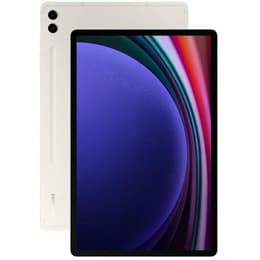
Galaxy Tab S9+ (12.4", 2023)
Starting at

Refurbished price:£444.84

Versus £868.13 new

See options
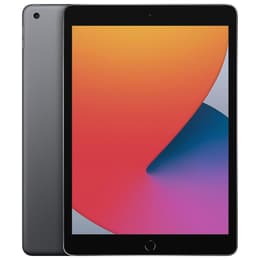
iPad 8 (2020, A12 series)
Starting at

Refurbished price:£90.00

Versus £329.00 new

See options

Ratings

The Samsung Galaxy Tab S9 Plus, released in August 2023, and the Apple iPad 8th Generation, launched in September 2020, represent distinct approaches to the tablet experience. While both devices offer portable computing, they cater to different user ecosystems and priorities. The Galaxy Tab S9 Plus operates on Android, emphasizing a larger, more vibrant display and advanced multitasking capabilities, whereas the iPad 8th Generation runs on iPadOS, focusing on a streamlined user experience and a vast app library. These differences extend to their core specifications and design philosophies.

Scores

Durability

The longevity of a tablet is influenced by its release timeline, software support, and physical resilience. These two devices, separated by three years, offer different expectations in these areas.

  • Release Timeline: The Galaxy Tab S9 Plus is a more recent device, released in August 2023, giving it a newer starting point for software updates and hardware relevance. The iPad 8th Generation, released in September 2020, has been on the market for a longer period.
  • Software Support: Samsung typically provides several years of major Android updates for its flagship tablets, with the Tab S9 series expected to receive four major Android updates. The iPad 8th Generation, initially running iPadOS 14, has received updates and is currently compatible with iPadOS 26.3.1, demonstrating Apple's consistent long-term software support for its devices.
  • Physical Durability: The Galaxy Tab S9 Plus features an Armor Aluminum build and boasts an IP68 rating for water and dust resistance, offering enhanced protection against environmental elements. The iPad 8th Generation has a curved metal back and a flat glass front, but lacks an official IP rating for water and dust resistance.

Year of Release

2023

2020

Compatible with latest Update

Yes

Yes

OS

Android

iPadOS

Performance

Performance is a key differentiator, impacting how smoothly applications run, how quickly tasks are completed, and the overall responsiveness of the user interface.

  • Processing Power: The Galaxy Tab S9 Plus is equipped with a current-generation processor designed for demanding tasks, ensuring smooth operation for heavy multitasking, complex applications, and graphics-intensive gaming. The iPad 8th Generation features a capable processor that provides a significant performance boost over its predecessors, handling routine web browsing, productivity apps, and casual gaming with ease.
  • Multitasking and Responsiveness: With a substantial amount of RAM, the Galaxy Tab S9 Plus excels at running multiple applications simultaneously and switching between them without noticeable slowdowns, further enhanced by its DeX desktop environment. The iPad 8th Generation, with its optimized iPadOS, offers a fluid experience for everyday tasks and supports split-screen multitasking, though its RAM capacity is more modest.
  • Storage Options: The Galaxy Tab S9 Plus offers generous internal storage options, starting at 256GB and going up to 512GB, with the added flexibility of expandable storage via a microSD card. The iPad 8th Generation comes with 32GB or 128GB of internal storage, without an option for expansion.

Memory (GB)

12 GB

3 GB

Screen quality

The display is the primary interface for interaction, and differences in screen technology, size, and resolution significantly affect the viewing experience.

  • Display Technology and Size: The Galaxy Tab S9 Plus features a 12.4-inch Dynamic AMOLED 2X display, known for its deep blacks, vibrant colors, and high contrast. The iPad 8th Generation has a 10.2-inch Retina IPS LCD, which provides good color accuracy and wide viewing angles.
  • Resolution and Refresh Rate: The Galaxy Tab S9 Plus offers a higher resolution of 1752 x 2800 pixels and a 120Hz refresh rate, resulting in sharper images and smoother scrolling and animations. The iPad 8th Generation features a 2160 x 1620 pixel resolution and a standard 60Hz refresh rate, which is clear for most content but less fluid than a high refresh rate display.
  • Brightness and Clarity: Both tablets offer good brightness levels for indoor use. The Galaxy Tab S9 Plus's AMOLED display is noted for being incredibly bright and easily viewable outdoors. The iPad 8th Generation provides 500 nits of brightness, which is suitable for most lighting conditions, though its non-laminated display can be prone to reflections.

Resolution

1752 x 2800

2160 x 1620

Screen type

Dynamic AMOLED 2X

Retina display

Pixel density

270ppp

264ppp

Audiovisual

While tablets are not typically primary photography devices, their cameras are important for video calls, scanning documents, and casual photography.

  • Rear Camera System: The Galaxy Tab S9 Plus includes a dual-camera setup on the rear, featuring a 13MP main sensor and an 8MP ultrawide sensor, offering more versatility for different shots. The iPad 8th Generation has an 8MP rear camera, which is competent for general use and document scanning.
  • Front Camera and Video Calls: For video conferencing, the Galaxy Tab S9 Plus features a 12MP ultrawide front camera, providing a wider field of view for group calls. The iPad 8th Generation is equipped with a 1.2MP front-facing camera, which is functional for basic video calls but offers lower resolution compared to modern standards.
  • Audio Experience: The Galaxy Tab S9 Plus features quad speakers tuned by AKG, providing a rich and immersive audio experience for media consumption. The iPad 8th Generation has stereo speakers, which are located on one side, offering clear audio for general use.

Miscellaneous

Beyond the core specifications, several practical features contribute to the overall user experience and device utility.

  • Connectivity and Ports: The Galaxy Tab S9 Plus supports modern connectivity standards including Wi-Fi 6E and Bluetooth 5.3, and offers a versatile USB Type-C 3.2 port. The iPad 8th Generation uses Wi-Fi (802.11ac) and Bluetooth 4.2, and features a Lightning port for charging and accessories.
  • Biometric Security and Accessories: The Galaxy Tab S9 Plus incorporates an in-display fingerprint scanner for secure unlocking. It also includes an S Pen in the box, enhancing its utility for note-taking and drawing. The iPad 8th Generation features a Touch ID fingerprint reader integrated into its Home button and supports the first-generation Apple Pencil and Smart Keyboard, which are sold separately.
  • Design and Handling: The Galaxy Tab S9 Plus is a larger device with a slim profile and a weight of around 581-586 grams, offering a substantial screen area for productivity and entertainment. The iPad 8th Generation is more compact and lighter, weighing approximately 490-495 grams, making it highly portable and comfortable for extended handheld use.

Weight

129 g

490 g

Screen size (in)

12.4

10.2

Network

Wi-Fi

Wi-Fi

Carrier compatibility

Unlocked

Without SIM Port

Choosing between the Samsung Galaxy Tab S9 Plus and the Apple iPad 8th Generation involves weighing their distinct strengths against individual user needs. User feedback for the Galaxy Tab S9 Plus often highlights its exceptional display, robust performance for demanding applications and gaming, and the included S Pen as significant advantages, making it a strong contender for creative professionals and power users. Some users appreciate its perfect size for portability while still offering ample screen real estate.

Conversely, the iPad 8th Generation is frequently praised for its reliable performance for everyday tasks, the extensive and optimized app ecosystem, and its long-standing software support, making it a popular choice for students and casual users. Common criticisms for the iPad include its dated design with larger bezels, a lower-resolution front camera for video calls, and the non-laminated display which can be reflective.

Users prioritizing a large, high-refresh-rate AMOLED display, expandable storage, and a versatile S Pen for productivity and creative work may find the Galaxy Tab S9 Plus well-suited to their needs. Those who value a streamlined operating system, a vast selection of tablet-optimized apps, and a more compact form factor for general use and education might lean towards the iPad 8th Generation. Both devices offer compelling experiences, and considering a quality-assured refurbished option for either can be an eco-friendly alternative to purchasing new.

See all articles

Our recent comparisons