
iPad 8 (2020, A12 series) Vs iPad Air 4 (2020, A14 series)

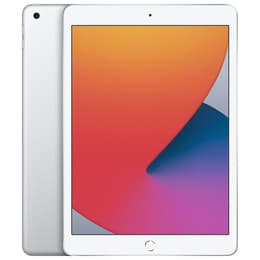
iPad 8 (2020, A12 series)
Starting at

Refurbished price:£90.00

Versus £329.00 new

See options
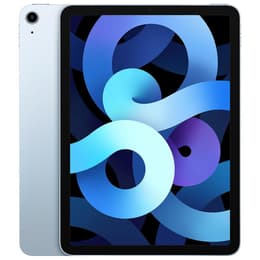
iPad Air 4 (2020, A14 series)
Starting at

Refurbished price:£215.00

Versus £579.00 new

See options

Ratings

The iPad 2020, also known as the 8th generation iPad, and the iPad Air 2020, or 4th generation iPad Air, are both tablets released by Apple in the same year. While they share the foundational iPadOS operating system, they cater to different user needs through distinct design philosophies and internal specifications. The iPad Air 2020 introduces a more modern design and a more advanced processor, setting it apart from the more traditional iPad 2020.

Scores

Durability

When considering the longevity of these tablets, several factors come into play, including their release timelines, software support, and physical design.

  • Release Timeline: The iPad 2020 was released in September 2020, while the iPad Air 2020 followed in October 2020. This means the iPad Air 2020 has a slightly newer launch date, potentially extending its software support by a few months.
  • Software Longevity: Apple typically provides major iPadOS updates for approximately 5 to 7 years after an iPad's release. Both devices launched with iPadOS 14. Given the current date (March 2026), both are still receiving active iPadOS updates. The iPad Air, with its more advanced processor, may receive full feature updates for a slightly longer period than the standard iPad.
  • Repairability: Both the iPad 2020 and iPad Air 2020 are generally considered challenging to repair due to the extensive use of adhesive and integrated components. The iPad Air 4th generation specifically received a low repairability score from some experts, indicating that self-repair can be difficult.

Year of Release

2020

2020

Compatible with latest Update

Yes

Yes

OS

iPadOS

iPadOS

Maximum Operating System supported

iPadOS 18

iPadOS 18

Performance

The performance of these two tablets is a key differentiator, primarily due to their internal processing capabilities and available memory configurations.

  • Processing Power: The iPad 2020 is equipped with a capable processor that handles everyday tasks, web browsing, and most applications smoothly. The iPad Air 2020 features a more advanced processor, offering a noticeable improvement in speed and efficiency, particularly for demanding applications, complex multitasking, and graphically intensive games.
  • System Responsiveness: For general use, both devices offer a responsive experience. However, the iPad Air 2020 provides a snappier feel when launching apps, switching between multiple applications, and performing intensive creative tasks like video editing or advanced graphic design.
  • Storage and RAM: The iPad 2020 was available with 32GB or 128GB of internal storage and 3GB of RAM. The iPad Air 2020 offers more generous base storage options of 64GB or 256GB and comes with 4GB of RAM, which contributes to smoother multitasking and better handling of larger files and applications.

Memory (GB)

3 GB

4 GB

Processor

Apple A12 Bionic

Apple A14 Bionic

Screen quality

The visual experience on these tablets differs significantly, mainly due to their display technologies and design.

  • Display Technology and Size: The iPad 2020 features a 10.2-inch Retina IPS LCD display. The iPad Air 2020 upgrades to a larger 10.9-inch Liquid Retina IPS display. The Air's display is fully laminated, meaning there is no air gap between the glass and the display panel, which can enhance the visual experience and make it feel closer to the surface when interacting with a stylus.
  • Resolution and Clarity: Both tablets offer sharp and clear visuals suitable for reading, streaming, and general productivity. The iPad 2020 has a resolution of 2160 x 1620 pixels, while the iPad Air 2020 has a slightly higher resolution of 2360 x 1640 pixels, resulting in a similar pixel density.
  • Advanced Display Features: The iPad Air 2020's Liquid Retina display includes features like True Tone for automatic white balance adjustment and P3 wide color support, offering more accurate and vibrant colors, which is beneficial for creative work. The iPad 2020's display lacks these advanced color features and can be more reflective in bright conditions.

Resolution

2160 x 1620

2360 x 1640

True Tone

No

Yes

Pro-Motion

No

No

Screen type

Retina display

Liquid Retina display

Pixel density

264ppp

264ppp

Brightness

500 nits brightness

500 nits brightness

Sound quality

Speakers

Stereo speakers

Stereo speakers

Audiovisual

While tablets are not typically primary photography devices, their camera systems are important for video calls, scanning documents, and occasional photo capture.

  • Rear Camera System: The iPad 2020 is equipped with an 8-megapixel rear camera, suitable for basic photography and document scanning. The iPad Air 2020 features a more advanced 12-megapixel rear camera, capable of capturing higher-resolution photos and 4K video recording, offering more detail and flexibility for creative projects.
  • Front Camera Performance: For video conferencing and selfies, the iPad 2020 has a 1.2-megapixel front-facing camera. The iPad Air 2020 significantly upgrades this to a 7-megapixel FaceTime HD camera, providing clearer and more detailed video calls and self-portraits.
  • Audio Quality: Both tablets offer stereo speakers for media consumption. The iPad Air 2020's speakers are generally perceived to be louder and offer a more immersive audio experience, especially when held in landscape orientation.

Miscellaneous

Beyond core specifications, several practical elements contribute to the overall user experience and versatility of these tablets.

  • Connectivity and Ports: The iPad 2020 retains the Lightning port for charging and accessories, along with Bluetooth 4.2 and Wi-Fi 802.11ac. The iPad Air 2020 adopts a more versatile USB-C port, allowing for broader compatibility with external accessories, displays, and faster data transfer. It also features Bluetooth 5.0 and Wi-Fi 6 (802.11ax) for improved wireless performance.
  • Biometric Security: The iPad 2020 uses Touch ID integrated into the traditional home button. The iPad Air 2020 moves Touch ID to the top power button, enabling a more modern, all-screen design without a physical home button on the front.
  • Design and Handling: The iPad 2020 maintains a classic iPad design with thicker bezels and a 10.2-inch display. The iPad Air 2020 features a more contemporary design with slimmer bezels, a larger 10.9-inch display, and a slightly thinner and lighter profile (460g vs 495g for Wi-Fi models), making it feel more premium and easier to handle for extended periods.

Weight

490 g

458 g

Width

17.41 cm

17.85 cm

Height

25.06 cm

24.76 cm

Depth

0.75 cm

0.61 cm

Screen size (in)

10.2

10.9

Network

Wi-Fi

Wi-Fi

Carrier compatibility

Without SIM Port

Without SIM Port

Wi-Fi technology

Wi-Fi 6 802.11a/b/g/n/ac

Wi-Fi 6 802.11ax

Bluetooth Version

Bluetooth 4.2

Bluetooth 5.0

Face ID

No

No

Touch ID

Yes

Yes

Connector

Lightning connector

USB Type-C

The iPad 2020 and iPad Air 2020, while released in the same year, target different user expectations. Users often praise the iPad 2020 for its reliable performance for everyday tasks and its familiar design, making it a straightforward choice for general use, media consumption, and basic productivity. Common criticisms sometimes point to its older design with thicker bezels and the non-laminated display, which some users find less immersive.

Conversely, the iPad Air 2020 is frequently lauded for its modern, sleek design, more vibrant display, and significantly enhanced performance, making it a strong contender for creative professionals, students, and those who require more power for demanding applications. Users appreciate the USB-C port for its versatility and the improved camera system. Some discussions highlight that while its performance is superior, the practical difference for light users might not be immediately apparent.

Users prioritizing a familiar interface and solid performance for general tasks like web browsing, email, and light content creation may find the iPad 2020 well-suited to their needs. Those who require more processing power for advanced applications, appreciate a modern design with a larger, higher-quality display, and benefit from versatile connectivity options like USB-C, will likely lean towards the iPad Air 2020. Both models offer a robust iPadOS experience, and choosing between them often comes down to balancing performance and design preferences with specific usage requirements. Opting for a quality-assured refurbished option for either model can be an eco-friendly alternative, providing access to these capable devices while extending their lifecycle.


See all articles

Our recent comparisons