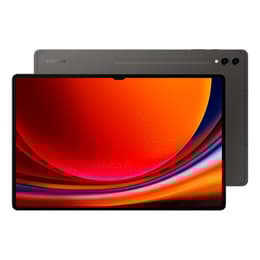
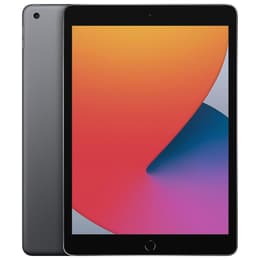

Galaxy Tab S9 Ultra (14.6", 2023) Vs iPad 8 (2020, A12 series)

Galaxy Tab S9 Ultra (14.6", 2023)
Starting at

Refurbished price:£493.00

Versus £1,364.76 new

See options
iPad 8 (2020, A12 series)
Starting at

Refurbished price:£90.00

Versus £329.00 new

See options

Ratings

The Samsung Galaxy Tab S9 Ultra, released in 2023, and the Apple iPad (8th Generation), launched in 2020, represent distinct approaches to tablet computing. While both devices offer a portable digital experience, they differ significantly in their design philosophy, operating systems, and target user experiences. The Galaxy Tab S9 Ultra is a large, premium Android tablet designed for productivity and immersive media consumption, whereas the iPad (8th Generation) is a more compact, entry-level device running Apple's iPadOS, focusing on accessibility and a broad app ecosystem.

Scores

Durability

The longevity of a tablet is influenced by its release date and the manufacturer's commitment to software updates. These two devices have different timelines and update policies.

  • Release Timeline: The Galaxy Tab S9 Ultra was released in August 2023, making it a more recent device compared to the iPad (8th Generation), which launched in September 2020. This difference in age directly impacts their remaining software support.
  • Software Support: Samsung typically provides four generations of Android OS updates and five years of security updates for its flagship S-series tablets. The Galaxy Tab S9 Ultra, being a 2023 model, benefits from this policy, ensuring several more years of current software and security patches. Apple generally offers 5-7 years of major iPadOS updates for its devices, with security updates often extending beyond that. The iPad (8th Generation) launched with iPadOS 14 and is upgradeable to iPadOS 17.2 as of the current date. However, users anticipate that major OS support for the iPad (8th Generation) may conclude around 2027 or 2028, with app compatibility potentially following suit.
  • Practical Lifespan: The newer Galaxy Tab S9 Ultra is expected to offer a longer period of receiving the latest OS features and security updates. The iPad (8th Generation), while still functional, is nearing the end of its major OS update cycle, which could affect its compatibility with future applications and features.

Year of Release

2023

2020

Compatible with latest Update

Yes

Yes

OS

Android

iPadOS

Performance

Performance in tablets is crucial for handling applications, multitasking, and overall responsiveness. These devices offer different levels of processing power and storage flexibility.

  • Processing Capabilities: The Galaxy Tab S9 Ultra is equipped with a current-generation processor, allowing it to handle demanding applications, intensive multitasking, and graphic-heavy games with smooth performance. The iPad (8th Generation) features a capable processor that provides a responsive experience for everyday tasks, web browsing, media consumption, and light gaming.
  • Multitasking and Responsiveness: The Galaxy Tab S9 Ultra offers higher RAM configurations, which contributes to its ability to manage numerous applications simultaneously without slowdowns, providing a fluid user experience for complex workflows. The iPad (8th Generation) with its 3GB of RAM is well-suited for typical tablet usage, offering smooth transitions between apps and consistent performance for most users.
  • Storage Options: The Galaxy Tab S9 Ultra provides generous internal storage options, starting from 256GB and going up to 1TB, with some models offering expandable storage via microSD. The iPad (8th Generation) comes with fixed storage options of 32GB or 128GB, which can be a limiting factor for users with extensive media libraries or numerous large applications.

Memory (GB)

12 GB

3 GB

Screen quality

The display is a primary interaction point for tablets, and both devices offer distinct visual experiences tailored to their design and purpose.

  • Display Technology and Size: The Galaxy Tab S9 Ultra features a large 14.6-inch Dynamic AMOLED 2X display, known for its deep blacks, vibrant colors, and high contrast. The iPad (8th Generation) has a 10.2-inch Retina IPS LCD, which provides good color accuracy and wide viewing angles.
  • Resolution and Clarity: With a resolution of 1848 x 2960 pixels, the Tab S9 Ultra offers a sharp and detailed image, suitable for high-resolution content. The iPad (8th Generation)'s 2160 x 1620 pixel resolution on its smaller screen results in a clear display with a pixel density of 264 ppi.
  • Brightness and Smoothness: The Galaxy Tab S9 Ultra's display can reach high brightness levels, improving visibility in various lighting conditions, and features a 120Hz refresh rate for smoother scrolling and more fluid animations. The iPad (8th Generation) offers a typical brightness of 500 nits and a standard 60Hz refresh rate, which is adequate for most indoor and outdoor viewing.

Resolution

1848 x 2960

2160 x 1620

Screen type

Dynamic AMOLED 2X

Retina display

Pixel density

240ppp

264ppp

Audiovisual

While tablets are not typically primary photography devices, their camera systems and audio capabilities are important for video calls, content creation, and media consumption.

  • Camera System Versatility: The Galaxy Tab S9 Ultra features a more comprehensive camera setup, including dual rear cameras (13MP main and 8MP ultrawide) and dual front cameras (12MP main and 12MP ultrawide), offering more flexibility for photography and video conferencing. The iPad (8th Generation) includes an 8MP rear camera and a 1.2MP front-facing camera, suitable for basic photography and video calls.
  • Video Recording and Quality: The Tab S9 Ultra supports higher resolution video recording and offers advanced features, making it suitable for more demanding video capture needs. The iPad (8th Generation) can record 1080p HD video at up to 30 frames per second, which is sufficient for casual video recording.
  • Audio Experience: The Galaxy Tab S9 Ultra provides an immersive audio experience with its quad speakers tuned by AKG and Dolby Atmos support, delivering rich and clear sound for media consumption. The iPad (8th Generation) features stereo speakers, offering a clear audio output for videos and music.

Miscellaneous

Beyond core performance and display, several practical features contribute to the overall user experience and device utility.

  • Connectivity Standards: The Galaxy Tab S9 Ultra supports modern connectivity options, including Wi-Fi 802.11 tri-band and Bluetooth 5.3, ensuring fast and reliable wireless connections. The iPad (8th Generation) uses Wi-Fi 802.11ac and Bluetooth 4.2, which provide stable connections for most wireless needs.
  • Ports and Biometrics: The Tab S9 Ultra utilizes a versatile USB Type-C 3.2 port for charging and data transfer, and features an in-screen fingerprint sensor for secure unlocking. The iPad (8th Generation) uses a Lightning port and incorporates Touch ID, a fingerprint sensor integrated into the home button, for security.
  • Design and Portability: The Galaxy Tab S9 Ultra is a larger and heavier device, measuring 326.4 x 208.6 x 5.5mm and weighing 732g, which provides an expansive workspace but impacts portability. The iPad (8th Generation) is more compact and lighter at 250.6 x 174.1 x 7.5mm and 490g, making it easier to carry and handle for extended periods.

Weight

129 g

490 g

Screen size (in)

14.6

10.2

Network

Wi-Fi + 5G

Wi-Fi

Carrier compatibility

Unlocked

Without SIM Port

User feedback for the Samsung Galaxy Tab S9 Ultra often highlights its expansive and vibrant display, powerful performance for demanding tasks, and the included S Pen as significant advantages, particularly for artists and professionals seeking a laptop-like experience. Some users find its large size less convenient for portability and note that the Android tablet app ecosystem, while improving, may not always match the optimization found on iPadOS for certain applications.

The iPad (8th Generation) is frequently praised for its consistent performance for everyday use, the robust iPadOS app library, and its reliability. Users appreciate its suitability for general tasks, note-taking, and media consumption. Common criticisms include its older design, the limited base storage option of 32GB, and the use of the Lightning port instead of USB-C. Concerns about its long-term software support are also present due to its release year.

Users prioritizing a large, high-performance tablet for creative work, extensive multitasking, or an immersive media experience may find the Galaxy Tab S9 Ultra well-suited to their needs. Conversely, users seeking a more compact, user-friendly tablet for general productivity, education, or casual entertainment, especially those already integrated into the Apple ecosystem, may lean toward the iPad (8th Generation). Both devices offer quality-assured refurbished options, providing an eco-friendly alternative for consumers.

See all articles

Our recent comparisons