
Compare models
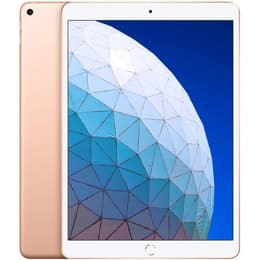
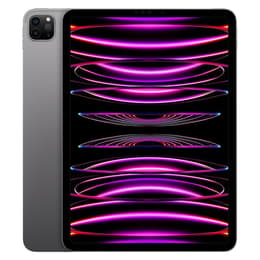
iPad Air 3 (2019, A12 series) Vs iPad Pro (2022, M2 series)
- 1-year minimum warranty
- Free delivery on all items
- Free 30-day returns
Differences at a glance
The iPad Air 3 (2019) and the iPad Pro 2022 represent different eras and tiers within Apple's tablet ecosystem. While the iPad Air 3 focuses on delivering core tablet capabilities for everyday tasks, the 2022 iPad Pro provides advanced computing power and professional-grade features. Both devices run on iPadOS, though the generation gap introduces notable differences in hardware capability and long-term feature support.
Available Models
Colour
Storage (GB)
Scores
Durability
The iPad Air 3 (2019) and iPad Pro (2022) span a three-year release gap, influencing their remaining software support cycles and expected hardware longevity.
- Software support timeline: The iPad Pro benefits from a newer launch date, granting it a longer window of future operating system updates compared to the older iPad Air 3.
- Repairability and build: Both tablets feature sealed aluminum constructions that score similarly regarding professional repair complexity, requiring specialized component replacement.
- Expected lifespan: Users tracking long-term utility will find that the iPad Pro retains performance headroom for future software demands, whereas the iPad Air 3 suits stable, less intensive daily routines.
Year of Release
2019
2022
Compatible with latest Update
Yes
Yes
OS
iPadOS
iPadOS
Maximum Operating System supported
iPadOS 18
iPadOS 18
Performance
Processing power and multitasking capabilities differ significantly between these two generations, affecting how each handles demanding software workflows.
- System responsiveness: The iPad Pro handles resource-heavy applications, multi-window multitasking, and complex gaming smoothly, while the iPad Air 3 manages standard web browsing, streaming, and office tasks reliably.
- Storage configurations: The iPad Pro offers broader storage tiers scaling up to high capacities for large media files, whereas the iPad Air 3 is typically found in standard lower-to-mid storage configurations.
- Battery behavior: Both tablets target roughly a full day of mixed use, though intensive tasks drain the iPad Pro's larger energy capacity more efficiently thanks to optimized power scaling.
Processor
Apple A12 Bionic
Apple M2
Screen quality
Display technologies vary between the two models, impacting visual smoothness, peak illumination, and overall clarity during media consumption.
- Refresh rate technology: The iPad Pro features a high refresh rate display for smoother scrolling and responsive stylus interaction, whereas the iPad Air 3 utilizes a standard refresh rate panel.
- Brightness and outdoor use: The iPad Pro reaches higher maximum luminance levels, making it easier to view content in bright outdoor environments compared to the iPad Air 3.
- Panel specifications: Both models deliver sharp pixel densities and accurate color reproduction suitable for viewing photos and video content.
Resolution
2224 x 1668
2388 x 1668
True Tone
Yes
Yes
Pro-Motion
No
Yes
Screen type
Retina display
Liquid Retina XDR
Pixel density
264ppp
264ppp
Brightness
500 nits brightness
600 nits brightness max
Sound quality
Speakers
Stereo speakers
Four speaker audio
Audiovisual
Optics and audio systems reflect the distinct positioning of each device, catering to casual communication versus multimedia creation.
- Camera capabilities: The iPad Pro incorporates multi-lens camera arrays with advanced scanning sensors and high-resolution video recording, while the iPad Air 3 relies on a simpler single-camera setup for basic snapshots and document scanning.
- Audio output: The iPad Pro utilizes a four-speaker audio arrangement that adjusts sound orientation automatically, whereas the iPad Air 3 features a standard dual-speaker setup.
- Microphone performance: Studio-quality microphones on the iPad Pro capture clearer audio for calls and recording compared to the standard microphones on the iPad Air 3.
Miscellaneous
Physical connectivity, security features, and peripheral compatibility define the daily usability and accessory ecosystem for each tablet.
- Biometric security: The iPad Air 3 utilizes a traditional fingerprint sensor embedded in the home button, while the iPad Pro relies on face recognition technology.
- Port connectivity: The iPad Pro features a versatile universal port supporting high-speed accessories and external displays, whereas the iPad Air 3 relies on an older proprietary connector format.
- Accessory support: The iPad Pro supports magnetic wireless charging for modern active styluses and connects to floating keyboard cases, while the Air 3 supports legacy generation input accessories.
Weight
456 g
466 g
Width
17.41 cm
17.85 cm
Height
25.06 cm
24.76 cm
Depth
0.61 cm
0.59 cm
Screen size (in)
10.5
11
Network
Wi-Fi
Wi-Fi
Carrier compatibility
Without SIM Port
Without SIM Port
Wi-Fi technology
Wi-Fi 6 802.11a/b/g/n/ac
Wi-Fi 6 802.11ax
Bluetooth Version
Bluetooth 5.0
Bluetooth 5.3
Face ID
No
Yes
Touch ID
Yes
No
Connector
Lightning connector
USB Type-C
What the community thinks
User discussions across community forums frequently highlight the iPad Pro (2022) for its fluid high-refresh display, robust multitasking capability, and modern port versatility. Common points of discussion center on its substantial processing power, though some users note that the advanced software features of iPadOS can feel constrained even on top-tier hardware. Conversely, the iPad Air 3 (2019) receives praise for maintaining reliable performance in everyday reading, media streaming, and note-taking tasks, while users occasionally mention its limited storage tiers and older connector type as minor constraints.
Users prioritizing high-refresh visuals, advanced creative workflows, and maximum processing power may prefer the iPad Pro (2022), while users focusing on casual media consumption, reading, and web browsing will find the iPad Air 3 a practical fit. For those seeking a quality-assured refurbished option, exploring sustainable choices on Back Market provides access to both models with verified performance standards.