
iPad 7 (2019, A10 series) Vs iPad Pro (2022, M2 series)

iPad 7 (2019, A10 series)
Starting at

Refurbished price:£78.00

Versus £349.00 new

See options
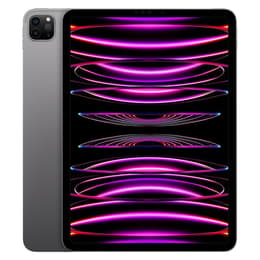
iPad Pro (2022, M2 series)
Starting at

Refurbished price:£441.00

Versus £899.00 new

See options

Ratings

The iPad 2019, also known as the 7th generation iPad, was released in September 2019, offering a 10.2-inch Retina display powered by the A10 Fusion chip. In contrast, the iPad Pro 2022, featuring Apple's M2 chip, arrived in October 2022 with options for an 11-inch Liquid Retina or a 12.9-inch Liquid Retina XDR display. These two tablets represent different tiers within Apple's iPad lineup, with the iPad Pro 2022 delivering significantly enhanced performance and advanced display technology compared to its 2019 counterpart. Both devices operate on iPadOS, but their capabilities and expected software longevity differ considerably.

Scores

Durability

The practical lifespan of a tablet is often influenced by its release timeline, software support, and the demands of modern applications. The iPad 2019 and iPad Pro 2022 offer distinct expectations in this regard.

  • Software Longevity: The iPad 2019, equipped with the A10 Fusion chip, launched with iPadOS 13 and is expected to receive major iPadOS updates up to iPadOS 17 or potentially iPadOS 18, meaning it is nearing the end of its major software support cycle. The iPad Pro 2022, powered by the M2 chip, launched with iPadOS 16 and is anticipated to receive updates for many more years, likely extending its support well beyond 2026, potentially up to iPadOS 21 or 22.
  • Practical Lifespan: Users seeking a device with the longest possible software support and future-proofing for new applications will find the iPad Pro 2022 a more suitable option. The iPad 2019 remains functional for current tasks but will gradually see fewer new features and performance optimizations.
  • Repairability: While specific repairability scores can vary, iPads generally present challenges for user repairs. Both models are designed with integrated components, making professional servicing typically necessary for significant hardware issues.

Year of Release

2019

2022

Compatible with latest Update

Yes

Yes

OS

iPadOS

iPadOS

Maximum Operating System supported

iPadOS 18

iPadOS 18

Performance

The performance capabilities of these two iPads are a primary differentiator, impacting how smoothly they handle various tasks, from everyday browsing to demanding professional applications.

  • Processing Power: The iPad 2019, with its A10 Fusion chip, provides sufficient power for general use such as web browsing, email, streaming media, and light productivity tasks. Users have found it capable for schoolwork and note-taking. The iPad Pro 2022, featuring the M2 chip, offers a substantial leap in processing power, enabling seamless handling of intensive applications like professional video editing, complex graphic design, and advanced multitasking without noticeable slowdowns.
  • Multitasking and Responsiveness: The iPad 2019, with 3GB of RAM, manages basic multitasking adequately. The iPad Pro 2022, available with 8GB or 16GB of RAM, excels at running multiple demanding applications simultaneously, providing a highly responsive user experience even under heavy loads.
  • Storage Options: The iPad 2019 was available with 32GB or 128GB of internal storage. The iPad Pro 2022 offers a wider range of storage configurations, starting from 128GB and extending up to 2TB, catering to users with extensive storage needs for large files and applications.

Memory (GB)

3 GB

8 GB

Processor

Apple A10 Fusion

Apple M2

Screen quality

The visual experience on a tablet is largely defined by its display, and here the iPad 2019 and iPad Pro 2022 offer distinct technologies and features.

  • Display Technology and Clarity: The iPad 2019 features a 10.2-inch Retina IPS LCD with a resolution of 2160 x 1620 pixels, resulting in a pixel density of 264 pixels per inch (ppi). This display offers clear visuals for general content consumption. The iPad Pro 2022 comes with either an 11-inch Liquid Retina IPS LCD (2388 x 1668 pixels) or a 12.9-inch Liquid Retina XDR mini-LED display (2732 x 2048 pixels), both maintaining 264 ppi. The Liquid Retina XDR display, in particular, uses mini-LED technology for enhanced contrast and deeper blacks.
  • Brightness and Smoothness: The iPad 2019's display reaches up to 500 nits of brightness. The iPad Pro 2022's 11-inch model offers up to 600 nits, while the 12.9-inch Liquid Retina XDR display can achieve 1000 nits of full-screen brightness and a peak of 1600 nits for HDR content. Both iPad Pro models also feature ProMotion technology, which provides an adaptive refresh rate up to 120Hz for smoother scrolling and more fluid motion, a feature absent on the iPad 2019.
  • Additional Display Features: The iPad Pro 2022 displays include True Tone for automatic color temperature adjustment and a wide color (P3) gamut for more accurate color reproduction, along with an anti-reflective coating. The iPad 2019 lacks these advanced display features.

Resolution

2160 x 1620

2388 x 1668

True Tone

No

Yes

Pro-Motion

No

Yes

Screen type

Retina display

Liquid Retina XDR

Pixel density

264ppp

264ppp

Brightness

500 nits brightness

600 nits brightness max

Sound quality

Speakers

Stereo speakers

Four speaker audio

Audiovisual

While tablets are not typically primary photography devices, their camera systems serve various practical purposes, from video calls to document scanning and augmented reality applications.

  • Rear Camera System: The iPad 2019 is equipped with an 8-megapixel rear camera, suitable for basic photography and scanning documents. The iPad Pro 2022 features a more advanced 'Pro camera system' on the rear, including a 12-megapixel Wide camera, a 10-megapixel Ultra Wide camera, and a LiDAR Scanner. This setup supports 4K video recording and offers enhanced capabilities for photography and augmented reality.
  • Front Camera and Video Calls: For video conferencing, the iPad 2019 has a 1.2-megapixel front-facing camera. The iPad Pro 2022 significantly upgrades this with a 12-megapixel Ultra Wide front camera that supports Center Stage, a feature that keeps users automatically framed during video calls.
  • User Experience: While the iPad Pro 2022's camera system is considerably more capable than the iPad 2019's, user feedback suggests that even the Pro model's camera quality, particularly for general photography, may not match the performance of dedicated smartphone cameras. The LiDAR Scanner on the iPad Pro 2022 enhances its utility for 3D scanning and AR applications.

Miscellaneous

Beyond core performance and display, several other features contribute to the overall user experience and versatility of these tablets.

  • Connectivity: The iPad 2019 supports Wi-Fi 802.11ac and Bluetooth 4.2. The iPad Pro 2022 offers more advanced connectivity with Wi-Fi 6E, Bluetooth 5.3, and optional 5G cellular capabilities, providing faster wireless speeds and more reliable connections.
  • Ports and Accessories: The iPad 2019 uses a Lightning port for charging and data transfer and includes a 3.5mm headphone jack. It supports the 1st generation Apple Pencil and the Smart Keyboard. The iPad Pro 2022 features a versatile USB-C port with Thunderbolt/USB 4 support, allowing for faster data transfer and connection to a wider range of peripherals. It supports the 2nd generation Apple Pencil, which offers magnetic attachment and charging, and the Magic Keyboard.
  • Biometrics and Design: The iPad 2019 utilizes Touch ID for secure authentication, integrated into its home button. The iPad Pro 2022 employs Face ID for facial recognition and has a more modern, all-screen design with thinner bezels. The iPad 2019 is 7.5 mm thick and weighs around 483 grams (Wi-Fi model), while the 11-inch iPad Pro 2022 is 5.9 mm thick and weighs 466 grams, and the 12.9-inch model is 6.4 mm thick and weighs 682 grams.

Weight

483 g

466 g

Width

17.41 cm

17.85 cm

Height

25.06 cm

24.76 cm

Depth

0.75 cm

0.59 cm

Screen size (in)

10.2

11

Network

Wi-Fi

Wi-Fi

Carrier compatibility

Without SIM Port

Without SIM Port

Wi-Fi technology

Wi-Fi 6 802.11a/b/g/n/ac

Wi-Fi 6 802.11ax

Bluetooth Version

Bluetooth 4.2

Bluetooth 5.3

Face ID

No

Yes

Touch ID

Yes

No

Connector

Lightning connector

USB Type-C

Choosing between the iPad 2019 and the iPad Pro 2022 involves evaluating individual needs against their distinct capabilities. The iPad 2019 is often praised by users for being a reliable and capable device for everyday tasks, media consumption, and basic productivity, particularly for students or those seeking a straightforward tablet experience. However, common criticisms include its somewhat dated design with thicker bezels, a non-laminated display that can be more reflective, and cameras that are considered mediocre for modern standards.

The iPad Pro 2022, on the other hand, receives significant acclaim for its exceptional performance, driven by the M2 chip, and its stunning Liquid Retina or Liquid Retina XDR display. Users highlight its suitability for demanding creative and professional workflows, making it a powerful tool for those who might otherwise use a laptop. Criticisms sometimes point to its battery life, which some heavy users report as inconsistent, and while its cameras are advanced for a tablet, they may not fully satisfy users accustomed to high-end smartphone photography.

Users prioritizing a highly responsive device for intensive applications, advanced display features like ProMotion, and a longer period of software support will find the iPad Pro 2022 well-suited to their needs. This includes creative professionals, power users, and those who require a tablet for complex multitasking or augmented reality. Conversely, users who primarily need a tablet for web browsing, email, streaming, light gaming, and note-taking, and who value a more accessible entry point into the iPad ecosystem, may find the iPad 2019 to be a practical choice. For those considering either model, exploring quality-assured refurbished options can provide an eco-friendly alternative.

See all articles

Our recent comparisons