
Compare models
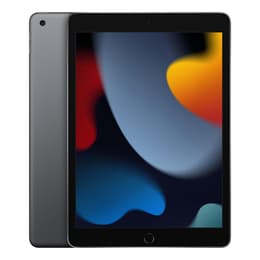
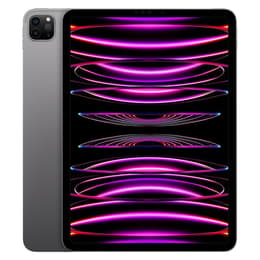
iPad 9 (2021, A13 series) Vs iPad Pro (2022, M2 series)
- 1-year minimum warranty
- Free delivery on all items
- Free 30-day returns
Differences at a glance
The iPad 2021, also known as the 9th generation iPad, released in September 2021, represents Apple's foundational tablet offering. In contrast, the iPad Pro 2022, featuring the M2 series chip and launched in October 2022, is positioned as a high-performance device for demanding tasks. While both devices operate on Apple's iPadOS, they cater to different user needs, primarily distinguished by their processing power and display technology.
Available Models
Colour
Storage (GB)
Scores
Durability
When considering the practical lifespan of these tablets, several factors come into play, including their release timeline, software support, and overall build quality. The iPad 2021 was released in September 2021, making it an established model, while the iPad Pro 2022, launched in October 2022, benefits from a more recent introduction.
- Software Longevity: Apple typically provides major iPadOS updates for 5-8 years for its devices, followed by several years of security updates. The iPad Pro 2022, with its more advanced processor, is expected to receive major software updates for a longer duration than the iPad 2021, potentially extending its functional life by at least a year or two in terms of new features and optimizations.
- Practical Lifespan: Both models are constructed with durable aluminum frames and glass fronts. However, the iPad Pro's more powerful internal components mean it can handle more intensive applications and future software advancements for a longer period before performance limitations become noticeable.
- Repairability: iPads, in general, are known for being challenging to repair due to the extensive use of adhesives in their construction, often resulting in low repairability scores from independent evaluators. This characteristic applies to both the iPad 2021 and the iPad Pro 2022, meaning professional assistance is typically required for most repairs.
Year of Release
2021
2022
Compatible with latest Update
Yes
Yes
OS
iPadOS
iPadOS
Maximum Operating System supported
iPadOS 18
iPadOS 18
Performance
The performance capabilities of the iPad 2021 and iPad Pro 2022 differ significantly, largely due to their respective internal processing units and memory configurations. These differences impact how smoothly applications run, the efficiency of multitasking, and the overall responsiveness of the system.
- Processing Power: The iPad 2021 is equipped with a capable processor that handles everyday tasks, web browsing, and most applications smoothly. The iPad Pro 2022, however, features a significantly more powerful processor, designed for demanding professional applications, complex graphic rendering, and intensive multitasking, offering a substantial performance advantage.
- Multitasking and Responsiveness: The iPad 2021 comes with 3GB of RAM, which is sufficient for general use but can lead to apps reloading more frequently when switching between many applications. The iPad Pro 2022 offers 8GB or 16GB of RAM, enabling seamless multitasking with numerous applications open simultaneously and providing a highly responsive user experience, even with resource-intensive workflows.
- Storage Options: The iPad 2021 is available with 64GB or 256GB of internal storage. The iPad Pro 2022 offers a wider range of storage capacities, from 128GB up to 2TB, catering to users with extensive storage needs for large files, projects, and media.
Processor
Apple A13 Bionic
Apple M2
Screen quality
The visual experience on these two tablets presents a clear distinction, primarily driven by their display technologies and features. Both offer clear visuals, but the iPad Pro 2022 introduces advanced capabilities.
- Display Technology and Clarity: The iPad 2021 features a 10.2-inch Retina IPS LCD display with a resolution of 2160 x 1620 pixels, providing sharp images and good color reproduction for general viewing. The iPad Pro 2022 offers two sizes: an 11-inch Liquid Retina IPS LCD and a 12.9-inch Liquid Retina XDR mini-LED display. Both Pro models boast higher resolutions and offer enhanced clarity, with the 12.9-inch model providing superior contrast and deeper blacks due to its mini-LED technology.
- Brightness and Color: The iPad 2021's display reaches 500 nits of brightness, suitable for indoor and most outdoor conditions. The iPad Pro 2022's 11-inch model achieves 600 nits, while the 12.9-inch Liquid Retina XDR display can reach 1000 nits of full-screen brightness and up to 1600 nits for HDR content, making it exceptionally vibrant for media consumption and professional creative work. Both models include True Tone technology for automatic white balance adjustment.
- Refresh Rate: A key differentiator is the refresh rate. The iPad 2021 has a standard 60Hz refresh rate. The iPad Pro 2022 features ProMotion technology, offering an adaptive refresh rate up to 120Hz, which results in noticeably smoother scrolling, more fluid animations, and a more responsive feel during tasks like drawing with a stylus or gaming.
Resolution
2160 x 1620
2388 x 1668
True Tone
Yes
Yes
Pro-Motion
No
Yes
Screen type
Retina display
Liquid Retina XDR
Pixel density
264ppp
264ppp
Brightness
500 nits brightness
600 nits brightness max
Sound quality
Speakers
Stereo speakers
Four speaker audio
Audiovisual
The camera systems on the iPad 2021 and iPad Pro 2022 are designed for different levels of functionality, ranging from everyday use to more advanced photography and augmented reality applications.
- Rear Camera System: The iPad 2021 includes an 8 MP wide rear camera, capable of capturing decent photos and 1080p HD video. The iPad Pro 2022 features a more versatile dual-camera setup on the rear, consisting of a 12 MP wide camera and a 10 MP ultra-wide camera, along with a LiDAR Scanner. This advanced system allows for higher-quality photography, improved low-light performance, and enhanced augmented reality experiences.
- Front Camera and Video: Both tablets are equipped with a 12 MP ultra-wide front camera that supports Center Stage, a feature that keeps the user in the frame during video calls. The iPad Pro 2022's front camera, however, benefits from the more powerful processor for potentially better image processing and video capabilities. The iPad Pro 2022 also supports ProRes video capture, which is beneficial for professional video workflows.
- Audio Experience: The iPad 2021 features stereo speakers, providing a clear audio experience for media consumption. The iPad Pro 2022 elevates this with a four-speaker audio system, delivering a richer, more immersive sound profile, particularly noticeable when watching movies or playing games. Both models include multiple microphones for clear audio input during calls and recordings.
Miscellaneous
Beyond the core performance and display, several practical elements differentiate the iPad 2021 and iPad Pro 2022, influencing their usability and compatibility with accessories.
- Connectivity: The iPad 2021 supports Wi-Fi 5 (802.11ac) and Bluetooth 4.2, with an optional LTE cellular model. The iPad Pro 2022 offers more advanced connectivity with Wi-Fi 6E (802.11ax) and Bluetooth 5.3, alongside optional 5G cellular capabilities, providing faster wireless speeds and more reliable connections.
- Ports and Biometrics: The iPad 2021 utilizes a Lightning port for charging and data transfer and includes a 3.5mm headphone jack. It features Touch ID for secure authentication, integrated into the home button. The iPad Pro 2022 adopts a Thunderbolt/USB 4 (USB-C) port, offering significantly faster data transfer speeds and broader compatibility with external accessories. It uses Face ID for biometric security.
- Accessories and Design: The iPad 2021 is compatible with the 1st generation Apple Pencil and the Smart Keyboard. Its design includes more prominent bezels and a physical home button. The iPad Pro 2022 supports the 2nd generation Apple Pencil, which attaches magnetically and charges wirelessly, and is compatible with the Magic Keyboard and Smart Keyboard Folio. Its design features slimmer bezels and an all-screen front. The 11-inch iPad Pro 2022 weighs around 466g, while the 12.9-inch model is heavier at approximately 682g, compared to the iPad 2021's 487g.
Weight
487 g
466 g
Width
17.41 cm
17.85 cm
Height
25.06 cm
24.76 cm
Depth
0.75 cm
0.59 cm
Screen size (in)
10.2
11
Network
Wi-Fi
Wi-Fi
Carrier compatibility
Without SIM Port
Without SIM Port
Wi-Fi technology
Wi-Fi 6 802.11a/b/g/n/ac
Wi-Fi 6 802.11ax
Bluetooth Version
Bluetooth 4.2
Bluetooth 5.3
Face ID
No
Yes
Touch ID
Yes
No
Connector
Lightning connector
USB Type-C
What the community thinks
User feedback for the iPad 2021 often highlights its reliability and suitability for general tasks such as web browsing, media consumption, and basic productivity. Many users find it to be a capable device for everyday use, especially for students or those seeking a straightforward tablet experience. However, some users have noted that its performance can feel less fluid with heavy multitasking or more demanding applications, occasionally experiencing app reloads due to its memory configuration.
In contrast, the iPad Pro 2022 is frequently praised for its exceptional power and advanced display, making it a preferred choice for creative professionals and power users. Its ability to handle intensive tasks like video editing, graphic design, and advanced gaming is consistently highlighted. Despite its capabilities, some users suggest that its immense power might be more than what the average user requires, and some discussions point to battery life concerns under sustained heavy workloads.
Users prioritizing a dependable tablet for everyday tasks, media consumption, and light productivity will find the iPad 2021 well-suited to their needs. Its established design and ecosystem integration offer a familiar and accessible experience. Conversely, users who require top-tier performance for professional creative work, advanced multitasking, or who value the latest display and connectivity technologies will likely lean towards the iPad Pro 2022. It offers a more future-proof experience for demanding applications and workflows.
For those considering either model, exploring quality-assured refurbished options can provide an eco-friendly alternative, extending the life cycle of these devices while offering a reliable product.