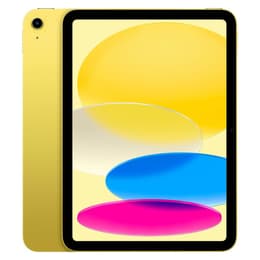
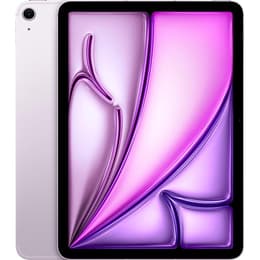

iPad 10 (2022, A14 series) Vs iPad Air 7 (2025, M3 series)

iPad 10 (2022, A14 series)
Starting at

Refurbished price:£223.00

Versus £349.00 new

See options
iPad Air 7 (2025, M3 series)
Starting at

Refurbished price:£457.00

Versus £599.00 new

See options

Ratings

The iPad 2022, released in October 2022, represents Apple's tenth-generation entry-level tablet, featuring a refreshed design and the A14 Bionic chip. In contrast, the anticipated iPad Air 2025, expected to launch with the M3 chip, aims to deliver a more powerful and refined experience. Both devices operate on iPadOS, but the iPad Air 2025 is designed for users requiring greater performance and advanced capabilities, while the iPad 2022 offers a solid foundation for everyday tasks.

Scores

Durability

When considering the longevity of these tablets, their release timelines and the typical duration of software support are key factors.

  • Release Timeline: The iPad 2022 was released in October 2022, making it a more established model. The iPad Air 2025, as its name suggests, is a newer device, benefiting from a later release date.
  • Software Longevity: Apple typically provides 5 to 7 years of iPadOS updates for its devices. The iPad 2022, with its 2022 release, can reasonably expect software support until around 2027-2029. The iPad Air 2025, being a newer model, will naturally receive a longer period of software updates, extending its functional lifespan further into the future.
  • Repairability: Both models are designed with Apple's standard repairability considerations for tablets. While specific scores can vary, the general expectation is that parts and service will be available for several years post-release, supporting a practical lifespan that aligns with their software support.

Year of Release

2022

2025

Compatible with latest Update

Yes

Yes

OS

iPadOS

iPadOS

Maximum Operating System supported

iPadOS 18

iPadOS 18

Performance

The performance capabilities of these two iPads are a primary differentiator, largely due to their respective processors.

  • Processor Capabilities: The iPad 2022 is equipped with a capable processor that handles everyday applications, web browsing, and light gaming smoothly. The iPad Air 2025, featuring a more advanced processor, offers significantly higher performance, enabling smoother operation for demanding applications, complex multitasking, and graphics-intensive tasks like advanced video editing or high-fidelity gaming.
  • System Responsiveness: For general use, both devices provide a responsive experience. However, users engaging in more intensive workflows will notice the newer iPad Air's enhanced speed and efficiency, particularly when switching between multiple applications or processing large files.
  • Storage Options: The iPad 2022 is available with 64GB or 256GB of internal storage. The iPad Air 2025 offers a wider range of storage configurations, typically starting at 128GB and extending to higher capacities, providing more flexibility for users with extensive digital libraries or large project files.

Memory (GB)

4 GB

8 GB

Processor

Apple A14 Bionic

Apple M3

Screen quality

Both tablets offer vibrant displays, but there are distinctions in their underlying technology and features that impact the viewing experience.

  • Display Technology: Both the iPad 2022 and the iPad Air 2025 feature Liquid Retina IPS LCD displays. The iPad 2022's display offers good clarity and color reproduction for general use. The iPad Air 2025's display, while also Liquid Retina, may offer subtle enhancements in color accuracy or brightness, and typically includes a wider color gamut (P3) for more vivid and true-to-life colors.
  • Resolution and Clarity: The iPad 2022 has a 10.9-inch display with a resolution of 2360 x 1640 pixels. The iPad Air 2025, often available in 11-inch and potentially 13-inch sizes, maintains a similar pixel density, ensuring sharp text and detailed images across its display options.
  • Brightness and Refresh Rate: The iPad 2022 offers 500 nits of brightness, suitable for most indoor and outdoor conditions. The iPad Air 2025 typically matches or slightly exceeds this brightness, with the 13-inch variant of the M2 Air offering 600 nits, which would likely carry over to the M3 Air. Both models generally feature a 60Hz refresh rate, providing a smooth experience for most content, though not the ultra-smooth motion found on devices with higher refresh rates.

Resolution

2360 x 1640

2360 x 1640

True Tone

Yes

Yes

Pro-Motion

No

No

Screen type

Liquid Retina display

Liquid Retina display

Pixel density

264ppp

264ppp

Brightness

500 nits brightness

500 nits brightness

Sound quality

Speakers

Stereo speakers

Stereo speakers (landscape)

Audiovisual

The camera systems on both iPads are designed for versatility, catering to video calls, document scanning, and casual photography.

  • Camera System Capabilities: Both the iPad 2022 and the iPad Air 2025 feature a 12MP wide camera on the rear, capable of recording 4K video at up to 60 frames per second. The front-facing cameras on both are 12MP ultrawide lenses, positioned on the longer, landscape edge, which is beneficial for video conferencing.
  • Photography Performance: The iPad 2022's camera includes Smart HDR 3 for improved dynamic range. The iPad Air 2025, with its newer processor, benefits from Smart HDR 4, which can produce more accurate images, especially in challenging lighting conditions. Both are well-suited for capturing clear photos and scanning documents.
  • Video and Audio: Both tablets offer good video recording quality and feature Center Stage, which keeps subjects automatically framed during video calls. For audio, both provide stereo speakers, enhancing the media consumption experience.

Miscellaneous

Beyond core performance and display, several practical elements differentiate these two iPad models.

  • Connectivity Options: The iPad 2022 supports Wi-Fi 6 and Bluetooth 5.2, with optional 5G for cellular models. The iPad Air 2025 steps up connectivity with Wi-Fi 6E and Bluetooth 5.3, offering faster wireless speeds and improved efficiency.
  • Port Types: Both devices utilize a USB-C port for charging and accessories. However, the iPad 2022's USB-C port operates at USB 2.0 speeds. The iPad Air 2025, with its more powerful processor, is expected to feature a USB-C port with Thunderbolt/USB 4 capabilities, allowing for much faster data transfer and support for a wider range of external peripherals.
  • Sensors and Biometrics: Both tablets integrate Touch ID for secure authentication, conveniently located in the top button.
  • Weight and Dimensions: The iPad 2022 measures 248.6 x 179.5 x 7 mm and weighs around 477g for the Wi-Fi model. The iPad Air 2025, typically thinner and lighter, measures approximately 247.6 x 178.5 x 6.1 mm and weighs around 462g for the 11-inch Wi-Fi model, offering a slightly more portable design.

Weight

477 g

460 g

Width

17.95 cm

178.5 cm

Height

24.86 cm

247.6 cm

Depth

0.7 cm

6.1 cm

Screen size (in)

10.9

11

Network

Wi-Fi

Wi-Fi

Carrier compatibility

Without SIM Port

Without SIM Port

Wi-Fi technology

Wi-Fi 6 802.11ax

Wi-Fi 6 802.11ax

Bluetooth Version

Bluetooth 5.2

Bluetooth 5.3

Face ID

No

No

Touch ID

Yes

Yes

Connector

USB Type-C

USB Type-C

The iPad 2022 and the iPad Air 2025 cater to different user needs, with each offering distinct advantages. User feedback for the iPad 2022 often praises its modern design, capable performance for everyday tasks, and improved camera placement for video calls. Common criticisms have sometimes focused on its initial pricing and the slower USB-C data transfer speeds. For the iPad Air series, users frequently highlight the powerful performance for demanding applications and the availability of larger screen sizes. Some M2 Air users have noted concerns regarding battery drain during heavy use.

Users prioritizing a solid, reliable tablet for general productivity, media consumption, and casual gaming will find the iPad 2022 well-suited to their needs. Its performance is ample for these tasks, and its design offers a contemporary feel. Conversely, users who require significant processing power for professional applications, advanced multitasking, or intensive creative work will likely lean towards the iPad Air 2025. Its more powerful processor and faster connectivity options make it a more future-proof choice for demanding workflows.

Ultimately, the decision hinges on the balance between performance requirements and intended use. Both models offer a quality experience within the Apple ecosystem, and considering a quality-assured refurbished option for either device can be an eco-friendly alternative to purchasing new.


See all articles

Our recent comparisons