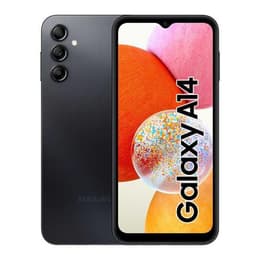


Galaxy A14 5G Vs Google Pixel 7

Galaxy A14 5G
Galaxy A14 5G
Starting at

Refurbished price:£80.00

Versus £289.00 new

See options
Google Pixel 7
Google Pixel 7
Starting at

Refurbished price:£140.99

Versus £649.99 new

See options

Ratings

The Samsung Galaxy A14 5G, released in January 2023, and the Google Pixel 7, launched in October 2022, represent distinct approaches to the Android smartphone experience. While both devices operate on the Android platform, the Galaxy A14 5G focuses on delivering essential features with 5G connectivity, whereas the Pixel 7 emphasizes advanced computational photography and a streamlined software experience. These differences cater to varying user priorities, from everyday communication to more demanding tasks like photography and gaming.

Scores

Durability

The longevity of a smartphone is influenced by its initial release, software support, and physical build. These factors determine how long a device remains functional and secure for daily use.

  • Release Timeline: The Google Pixel 7 was released in October 2022, preceding the Samsung Galaxy A14 5G, which launched in January 2023. This difference in release dates means the Pixel 7 has been available for a slightly longer period.
  • Software Support: The Pixel 7 is guaranteed to receive five years of both OS and security updates from its release date, extending its support until October 2027. In contrast, the Galaxy A14 5G is expected to receive two major Android OS upgrades (up to Android 15) and four years of security updates, with security patches continuing until 2027. This indicates a longer period of major OS updates for the Pixel 7.
  • Physical Durability: The Pixel 7 features Corning Gorilla Glass Victus for display protection and an IP68 rating for dust and water resistance, offering robust protection against environmental elements. The Galaxy A14 5G, while featuring a sturdy build, does not carry an official IP rating for water and dust resistance, and its display protection is not specified as Gorilla Glass Victus.

Year of Release

2023

2022

Compatible with latest Update

Yes

Yes

OS

Android

Android

Foldable

No

No

Performance

Performance in smartphones is about how smoothly the device handles daily tasks, from opening applications to managing multiple processes simultaneously. The underlying hardware plays a significant role in this experience.

  • System Responsiveness: The Pixel 7 is equipped with a processor designed for efficient handling of demanding applications and advanced AI features, resulting in a consistently smooth and responsive user experience. The Galaxy A14 5G's processor is suitable for general daily tasks, but users may notice occasional lags or stutters when running multiple applications or more intensive processes.
  • Multitasking Capabilities: With 8GB of RAM, the Pixel 7 offers ample memory for seamless multitasking, allowing users to switch between numerous applications without significant slowdowns. The Galaxy A14 5G typically comes with 4GB or 6GB of RAM, which is sufficient for basic multitasking but may show limitations with a higher number of open applications.
  • Battery Behavior: The Galaxy A14 5G features a larger 5000 mAh battery, often providing extended usage that can last through a full day of moderate to heavy use, and potentially longer with lighter usage. The Pixel 7, with its 4355 mAh battery, generally offers solid all-day battery life for most users, though some heavy users might find themselves needing to charge before the end of a very long day.
  • Storage Options: The Pixel 7 offers internal storage options of 128GB or 256GB, without the possibility of expansion. The Galaxy A14 5G comes with 64GB or 128GB of internal storage, but includes a microSD card slot for expandable storage up to 1TB, providing flexibility for users who need more space for media and files.

Memory (GB)

4 GB

8 GB

Screen quality

The display is a primary interface for smartphone interaction, and its quality significantly impacts the viewing experience, from clarity to color reproduction and smoothness.

  • Display Technology and Clarity: The Pixel 7 features a 6.3-inch AMOLED display, known for its vibrant colors, deep blacks, and excellent contrast. It has a resolution of 1080 x 2400 pixels, resulting in sharp visuals with approximately 416 pixels per inch. The Galaxy A14 5G utilizes a 6.6-inch PLS LCD display with a resolution of 1080 x 2408 pixels, offering good clarity for its class, with around 399 pixels per inch.
  • Brightness and Outdoor Visibility: The Pixel 7's AMOLED display can reach peak brightness levels of up to 1400 nits, ensuring good visibility even in bright outdoor conditions. The Galaxy A14 5G's LCD panel has a peak brightness of around 480 nits, which is adequate for indoor use but may struggle more under direct sunlight.
  • Refresh Rate and Smoothness: Both devices offer a 90Hz refresh rate, which provides a smoother scrolling experience and more fluid animations compared to standard 60Hz displays. This enhances the overall responsiveness of the user interface on both phones.

Resolution

1080 x 2408

1080 x 2400

Screen type

PLS LCD

AMOLED

Audiovisual

Camera capabilities are a key differentiator for many smartphone users, impacting the quality of photos and videos captured in various conditions.

  • Main Camera Performance: The Pixel 7 features a 50MP main camera that excels in computational photography, producing images with excellent detail, dynamic range, and color accuracy, particularly in challenging lighting conditions. The Galaxy A14 5G also has a 50MP main camera that performs well in good lighting, capturing decent details and vibrant colors, though its performance in low-light scenarios is more modest.
  • Versatility and Additional Lenses: The Pixel 7 includes a 12MP ultrawide camera, offering a broader perspective for landscapes and group shots. The Galaxy A14 5G features a triple camera setup with a 50MP main, a 2MP macro, and a 2MP depth sensor. The macro and depth sensors offer limited utility compared to the main lens.
  • Video Recording and Front Camera: The Pixel 7 supports video recording up to 4K at 60 frames per second and has a 10.8MP front camera capable of 4K video, delivering high-quality video and sharp selfies. The Galaxy A14 5G records video at 1080p at 30 frames per second from both its 50MP main and 13MP front cameras, which is suitable for casual video capture.

Main camera

50 megapixels

50 megapixels

Front camera

13 megapixels

10.8 megapixels

Miscellaneous

Beyond core features, several practical elements contribute to the overall user experience, including connectivity, physical design, and additional functionalities.

  • Connectivity and Ports: Both devices support 5G connectivity and feature USB-C ports. The Pixel 7 uses USB Type-C 3.2 Gen 2, offering faster data transfer speeds, and supports Wi-Fi 6E. The Galaxy A14 5G uses USB Type-C 2.0 and supports Wi-Fi 802.11 a/b/g/n/ac (dual-band). The Galaxy A14 5G retains a 3.5mm headphone jack, which is absent on the Pixel 7.
  • Biometric Security: The Pixel 7 incorporates an under-display optical fingerprint scanner and also offers face recognition for unlocking. The Galaxy A14 5G features a side-mounted fingerprint sensor integrated into the power button.
  • Design and Handling: The Pixel 7 has dimensions of 155.6 x 73.2 x 8.7mm and weighs 197g, offering a more compact and slightly lighter feel. The Galaxy A14 5G is larger and slightly heavier at 167.7 x 78 x 9.1mm and 202g, with a design that some users find chunky but comfortable to hold due to rounded edges.

Weight

201 g

197 g

Screen size (in)

6.6

6.3

Mobile network

5G

5G

SIM card

Dual Physical SIM

Physical SIM + eSIM

Carrier compatibility

Unlocked

Unlocked

User feedback for the Google Pixel 7 often praises its exceptional camera performance, particularly its ability to capture high-quality images in various conditions, and its clean, responsive software experience. Some users have noted that while battery life is generally solid for a day, it might not be as long-lasting as some competitors for very heavy usage. The Pixel 7 is frequently highlighted for its strong overall performance and the integration of Google's AI features.

The Samsung Galaxy A14 5G receives positive remarks for its impressive battery life, often lasting well over a day for many users, and its inclusion of 5G connectivity at its segment. Its main camera is generally considered capable in good lighting. However, common criticisms point to its performance, with some users experiencing lags and stutters, especially when multitasking. The LCD display, while decent, does not offer the same vibrancy or deep blacks as AMOLED panels.

Users prioritizing a premium camera experience, a compact design, and a streamlined software interface with longer major OS updates will find the Google Pixel 7 well-suited to their needs. Its robust build with IP68 rating and Gorilla Glass Victus also appeals to those seeking enhanced durability. Conversely, users who prioritize extended battery life, expandable storage, and the presence of a traditional headphone jack, and who primarily engage in everyday tasks without heavy multitasking, may lean toward the Samsung Galaxy A14 5G. Both devices offer distinct advantages, catering to different user profiles. For those considering either model, exploring quality-assured refurbished options can provide an eco-friendly alternative.


See all articles

Our recent comparisons