
Google Pixel 7 Vs iPhone 14

Google Pixel 7
Google Pixel 7
Starting at

Refurbished price:£136.00

Versus £729.00 new

See options
iPhone 14
iPhone 14
Starting at

Refurbished price:£229.00

Versus £599.00 new

See options

Ratings

The Google Pixel 7 and the iPhone 14, both released in late 2022, represent two distinct philosophies in the smartphone market. While the Pixel 7 showcases Google’s vision of a helpful, AI-integrated Android experience, the iPhone 14 offers the familiar, reliable performance of Apple’s iOS ecosystem. These devices were launched as the standard flagship options for their respective brands, catering to users who want high-end features without the larger dimensions of larger professional models. Choosing between them often comes down to a preference for software flexibility versus ecosystem integration.

Scores

Durability

Both the Google Pixel 7 and the iPhone 14 are built with high-quality glass and aluminium, but their long-term software support paths differ significantly as we look at them from a 2026 perspective.

  • Software Longevity: The iPhone 14 typically follows a trend of providing six to seven years of operating system updates, meaning it remains current with the latest features and security patches well into the late 2020s. In contrast, the Pixel 7 was launched with a commitment to three years of major Android version updates and five years of security updates. By 2026, the Pixel 7 may have received its final major version update, though it continues to receive essential security support.
  • Physical Resilience and Repair: Both devices feature high water and dust resistance ratings, protecting them against accidental submersions. For those looking to extend the life of their device, the iPhone 14 saw internal design changes that made the back glass easier to replace compared to previous generations. The Pixel 7 also maintains a standard repairability profile, and choosing a quality-assured refurbished option is an effective way to ensure these durable materials stay in use for longer.

Year of Release

2022

2022

Compatible with latest Update

Yes

Yes

OS

Android

iOS

Foldable

No

No

Performance

In daily use, both smartphones provide a responsive experience, though they handle demanding tasks and background processes with different technical approaches.

  • System Responsiveness: The iPhone 14 is known for its consistent fluidity when switching between apps or editing high-resolution video. Its internal hardware is highly efficient, allowing it to maintain high performance levels without significant heat buildup during extended gaming sessions. The Pixel 7 focuses on intelligent performance, using its custom-designed hardware to power features like real-time voice translation and automated call screening, which feel snappy and integrated into the user interface.
  • Battery and Multitasking: The Pixel 7 houses a physically larger battery, which users find helpful for getting through a full day of mixed usage involving navigation and photography. The iPhone 14, while having a smaller battery capacity on paper, benefits from deep software optimization that preserves power during standby. Both devices offer sufficient memory for multitasking, though the iPhone 14 tends to keep background apps suspended in a ready state for longer periods, while the Pixel 7 prioritises active AI-driven tasks.

Memory (GB)

8 GB

6 GB

Screen quality

The viewing experience on these two devices is defined by their display technology and how smoothly they render motion during scrolling or animations.

  • Display Fluidity: One of the most noticeable differences is the refresh rate. The Pixel 7 features a 90Hz display, which makes scrolling through social media feeds or system menus appear smoother than the standard 60Hz screen found on the iPhone 14. This higher refresh rate provides a more modern feel to the interface, though the iPhone 14 counters this with excellent colour accuracy and a very bright panel that remains legible even under direct sunlight.
  • Visual Clarity and Size: The Pixel 7 offers a slightly larger 6.3-inch screen compared to the 6.1-inch display on the iPhone 14. Both use OLED technology, which ensures deep blacks and high contrast for watching movies or viewing photos. The iPhone 14 uses a display with a high pixel density that makes text look sharp, while the Pixel 7 provides a slightly more expansive canvas for users who prefer a bit more room for reading or watching videos without moving to a much larger handset.

Resolution

1080 x 2400

1170 x 2532

Screen type

AMOLED

Super Retina XDR OLED

Audiovisual

The camera systems on these devices reflect the different priorities of Google and Apple, with one focusing on still photography and the other on video excellence.

  • Photography and Image Processing: The Pixel 7 is frequently praised for its ability to capture still images with high dynamic range and accurate skin tones. Its software-heavy approach to photography allows users to take clear photos in challenging lighting conditions and use tools to remove unwanted objects from the background. The iPhone 14 provides a more naturalistic look to its photos, with a focus on fast shutter speeds and consistent results across both its main and ultra-wide lenses.
  • Video and Audio Output: For users who record a lot of video, the iPhone 14 is often the preferred choice due to its superior stabilization and the ability to record in high-quality formats that are easy to edit. Its microphones are also tuned to capture clear, directional audio. Both phones feature stereo speakers that provide a balanced soundstage for media consumption, though the iPhone 14 is often noted for having a slightly fuller sound with more noticeable bass at higher volumes.

Main camera

50 megapixels

12 megapixels

Front camera

10.8 megapixels

12 megapixels

Miscellaneous

Practical daily interactions, such as how you unlock the phone or connect it to other devices, vary between these two models.

  • Connectivity and Ports: The Pixel 7 uses the universal USB-C port, which is compatible with a wide range of modern accessories and charging cables. The iPhone 14 uses the proprietary Lightning port, which may require specific cables if you are not already in the Apple ecosystem. Both devices support 5G for fast mobile data and include modern Wi-Fi standards, though the Pixel 7 supports a slightly newer Wi-Fi version that can offer better performance on compatible home networks.
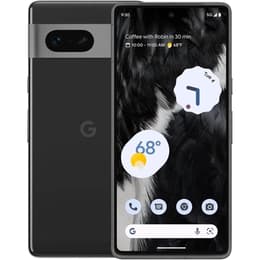
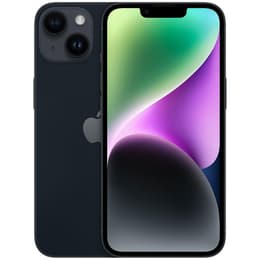
  • Biometrics and Handling: The iPhone 14 relies exclusively on facial recognition for security, which is fast and works well in the dark. The Pixel 7 offers both an under-display fingerprint sensor and facial recognition, giving users more flexibility in how they unlock their device. In terms of physical handling, the iPhone 14 is lighter and more compact, making it easier to use with one hand, whereas the Pixel 7 has a distinct horizontal camera bar that prevents the phone from wobbling when placed flat on a table.

Weight

197 g

172 g

Screen size (in)

6.3

6.1

Mobile network

5G

5G

SIM card

Physical SIM + eSIM

Physical SIM + eSIM

Carrier compatibility

Unlocked

Unlocked

Connector

USB-C + Jack 3.5mm

Lightning

When looking at user feedback from 2026, the consensus remains that both the Google Pixel 7 and the iPhone 14 are highly capable devices that have aged gracefully. Users on community forums often praise the Pixel 7 for its smart features, such as its ability to transcribe voice notes with high accuracy and its unique photographic style. However, some users have noted that the battery life can be inconsistent depending on mobile signal strength. The iPhone 14 is frequently lauded for its reliability and the seamless way it connects with other products like tablets and smartwatches, though some users find the 60Hz screen feels dated compared to newer models.

Users who prioritise a smooth, high-refresh-rate screen and advanced photo editing tools will likely find the Google Pixel 7 better suited to their needs. Conversely, those who value long-term software support, superior video recording, and a compact, lightweight design will lean toward the iPhone 14. Both smartphones represent an eco-friendly alternative through a refurbished model, allowing users to access flagship-level technology while reducing their environmental impact. Ultimately, the decision rests on whether you prefer the customisable, AI-forward nature of Google's ecosystem or the consistent, integrated experience offered by Apple.
See all articles

Our recent comparisons