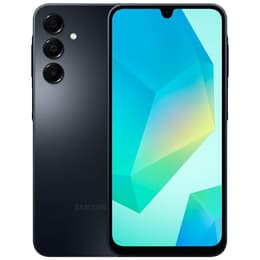
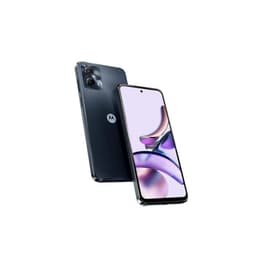

Galaxy A16 Vs Motorola Moto G13

Galaxy A16
Galaxy A16
Starting at

Refurbished price:£100.62

Versus £206.96 new

See options
Motorola Moto G13
Motorola Moto G13
Starting at

Refurbished price:£99.00

Versus £166.76 new

See options

Ratings

The Samsung Galaxy A16 5G (released in late 2024) and the Motorola Moto G13 (released in early 2023) are both smartphones designed for everyday use. While they share a focus on essential features, the Galaxy A16 5G offers a more advanced display and a longer software support commitment, whereas the Moto G13 provides a straightforward Android experience. Both devices operate on the Android platform, but with different manufacturer-specific interfaces and update policies.

Scores

Durability

When considering the long-term usability of these devices, their release timelines and software support policies are key factors.

  • Release Timeline: The Samsung Galaxy A16 5G was introduced in late 2024, making it a more recent device compared to the Motorola Moto G13, which launched in early 2023. This difference in release year means the Galaxy A16 5G inherently has a longer potential lifespan for receiving the latest software features and security updates.
  • Software Longevity: Samsung has committed to providing six generations of Android operating system upgrades and six years of security updates for the Galaxy A16 5G, extending its support until at least October 2030. The Moto G13, typically following Motorola's update schedule, generally receives fewer major OS updates, with its original operating system being Android 13. This makes the Galaxy A16 5G a more future-proof option for users who prioritize extended software support.
  • Practical Lifespan: Both devices feature plastic builds for their backs and frames. The Galaxy A16 5G comes with an IP54 rating for dust and splash resistance, while the Moto G13 offers a water-repellent design, which provides a similar level of protection against light splashes. Users seeking a device that remains current with software for an extended period will find the Galaxy A16 5G more aligned with their needs.

Year of Release

2024

2023

Compatible with latest Update

Yes

No

OS

Android

Android

Foldable

No

No

Performance

The performance of both smartphones is tailored for general daily tasks, with differences emerging in handling more demanding applications and multitasking.

  • Processor Capabilities: The Samsung Galaxy A16 5G is equipped with a current-generation processor, such as the Exynos 1330 or Dimensity 6300, depending on the region. The Motorola Moto G13 uses a MediaTek Helio G85 processor. While the Galaxy A16 5G's processor generally offers more capable performance on paper, some users have reported occasional stutters and slowdowns in real-world usage, particularly with the 4GB RAM variant.
  • Multitasking and Storage: The Galaxy A16 5G is available with 4GB, 6GB, or 8GB of RAM, alongside 128GB or 256GB of internal storage. The Moto G13 typically comes with 4GB of RAM and storage options of 64GB or 128GB. Both devices support expandable storage via a microSDXC card, with the Galaxy A16 5G supporting up to 1.5TB. Users who frequently switch between multiple applications or engage in light gaming may find the higher RAM options of the Galaxy A16 5G beneficial, though reported performance can vary.
  • Battery Behavior: Both smartphones are powered by a 5000mAh battery, designed to provide a full day of use for many users. The Galaxy A16 5G supports 25W fast charging, allowing for quicker replenishment of the battery, while the Moto G13 supports 10W or 20W wired charging.

Memory (GB)

4 GB

4 GB

Screen quality

The visual experience on these devices differs significantly due to their display technologies and resolutions.

  • Display Technology and Clarity: The Samsung Galaxy A16 5G features a 6.7-inch Super AMOLED display with Full HD+ resolution (2340x1080 pixels). This technology delivers vibrant colors and deep blacks, enhancing the viewing experience for media consumption. The Motorola Moto G13, on the other hand, has a 6.5-inch IPS LCD screen with HD+ resolution (720x1600 pixels). While still offering a clear picture, IPS LCD panels generally do not achieve the same contrast levels as Super AMOLED.
  • Refresh Rate and Smoothness: Both devices offer a 90Hz refresh rate, which contributes to smoother scrolling and a more fluid visual experience compared to standard 60Hz displays. This feature is particularly noticeable during web browsing and navigating user interfaces.
  • Brightness and Viewing Experience: The Super AMOLED display of the Galaxy A16 5G typically provides better outdoor visibility due to higher peak brightness capabilities. The larger screen size of the Galaxy A16 5G also offers a more expansive canvas for content, which can be a factor for users who frequently watch videos or read on their device.

Resolution

1080 x 2340

720 x 1600

Screen type

Super AMOLED

IPS LCD

Audiovisual

Both smartphones are equipped with multi-camera systems, offering different capabilities for photography and video recording.

  • Main Camera Performance: The Samsung Galaxy A16 5G includes a 50-megapixel main camera, a 5-megapixel ultrawide lens, and a 2-megapixel macro lens. The Motorola Moto G13 also features a 50-megapixel main camera, complemented by a 2-megapixel macro lens and a 2-megapixel depth sensor. In well-lit conditions, both main cameras are capable of capturing detailed images.
  • Low-Light and Everyday Photography: User feedback for the Galaxy A16 5G's camera performance is mixed, with some reporting solid main camera quality in photos and videos, while others express dissatisfaction, particularly in low-light conditions. The Moto G13's camera is generally considered acceptable for everyday shots, but may not excel in challenging lighting.
  • Front Camera and Audio: For selfies and video calls, the Galaxy A16 5G has a 13-megapixel front-facing camera, while the Moto G13 features an 8-megapixel front camera. The Moto G13 also includes dual stereo speakers with Dolby Atmos support, which can enhance the audio experience for media consumption.

Main camera

50 megapixels

50 megapixels

Front camera

13 megapixels

8 megapixels

Miscellaneous

Beyond core specifications, several practical elements contribute to the overall user experience of these devices.

  • Connectivity and Ports: The Samsung Galaxy A16 5G supports 5G connectivity, offering faster mobile data speeds where available, along with Wi-Fi and Bluetooth. The Motorola Moto G13 is a 4G device, also featuring Wi-Fi and Bluetooth connectivity. Both phones include a USB-C port for charging and data transfer.
  • Sensors and Security: Both devices typically offer fingerprint sensors for secure unlocking. The Moto G13 also supports face unlock.
  • Dimensions and Handling: The Galaxy A16 5G has a 6.7-inch display, resulting in a slightly larger form factor compared to the Moto G13's 6.5-inch screen. The physical dimensions and weight of each device will influence how they feel in hand and pocket. The Moto G13 weighs 183 grams, while the Galaxy A16 weighs 200 grams.

Weight

200 g

183 g

Screen size (in)

6.7

6.5

Mobile network

4G

4G

SIM card

Dual Physical SIM

Dual Physical SIM

Carrier compatibility

Unlocked

Unlocked

The Samsung Galaxy A16 5G and Motorola Moto G13 cater to users with varying priorities, reflecting their different release timelines and feature sets. The Galaxy A16 5G is often praised for its vibrant Super AMOLED display and Samsung's commitment to extended software updates, promising support until 2030. However, some users have expressed concerns regarding its real-world performance, citing occasional lag and camera quality issues, particularly with lower RAM configurations.

The Motorola Moto G13, released earlier, is generally well-regarded by users for its reliable performance in basic daily tasks and its solid battery life. Its straightforward Android experience is often appreciated, though its IPS LCD display and shorter software support window are points of distinction. Criticisms for the Moto G13 are less frequent but typically revolve around its lower display resolution and fewer guaranteed OS updates compared to newer devices.

Users prioritizing a device with a more modern, high-resolution display, 5G connectivity, and a significantly longer software support period may find the Samsung Galaxy A16 5G to be a suitable choice. Conversely, individuals seeking a dependable smartphone for essential communication and media consumption, who value a simpler Android interface and a slightly lighter build, might lean towards the Motorola Moto G13. Both devices represent quality-assured refurbished options, providing an eco-friendly alternative for consumers.


See all articles

Our recent comparisons