
Compare models
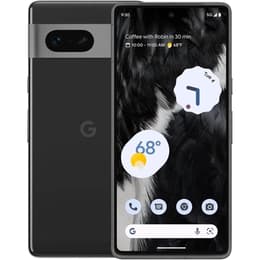
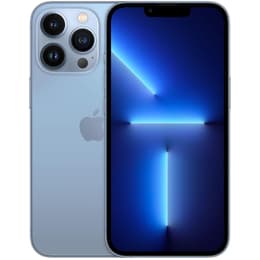
Google Pixel 7 Vs iPhone 13 Pro
- 1-year minimum warranty
- Free delivery on all items
- Free 30-day returns
Differences at a glance
The Google Pixel 7, released in October 2022, and the iPhone 13 Pro, launched in September 2021, represent distinct approaches to high-end smartphones from two major manufacturers. While both offer premium experiences, they differ significantly in their operating systems, camera philosophies, and display technologies. The Pixel 7 runs on Google's Android, emphasizing AI-driven features, whereas the iPhone 13 Pro operates within Apple's iOS ecosystem, known for its seamless integration and robust performance.
Available Models
Colour
Storage (GB)
Scores
Durability
When considering the longevity of these devices, their release timelines and software support policies are key factors.
- Release Timeline: The iPhone 13 Pro was released in September 2021, while the Pixel 7 followed in October 2022. This difference in launch dates means the iPhone 13 Pro has been available for a longer period.
- Software Support: The iPhone 13 Pro typically receives iOS updates for approximately 5-6 years from its release, offering a longer period of new features and security patches. The Pixel 7 generally receives 3 years of OS updates and 5 years of security updates from its launch.
- Physical Durability: Both phones feature an IP68 rating for dust and water resistance. The iPhone 13 Pro incorporates Apple's Ceramic Shield front cover for enhanced drop protection, while the Pixel 7 uses Gorilla Glass Victus on both its front and back.
Year of Release
2022
2021
Compatible with latest Update
Yes
Yes
OS
Android
iOS
Foldable
No
No
Performance
Both the Pixel 7 and iPhone 13 Pro deliver strong performance for daily tasks and demanding applications, though their underlying architectures differ.
- Everyday Responsiveness: The iPhone 13 Pro handles demanding apps, complex games, and extensive multitasking with smoothness and efficiency. The Pixel 7 also provides a very responsive experience for daily tasks and app switching.
- Multitasking and Storage: The Pixel 7 comes with 8GB of RAM, while the iPhone 13 Pro has 6GB of RAM. Both offer various storage options, with the iPhone 13 Pro having a wider range up to 1TB, compared to the Pixel 7's maximum of 256GB.
- Battery Behavior: The Pixel 7 features a 4355 mAh battery, while the iPhone 13 Pro has a 3095 mAh battery. Both devices offer good, above-average battery life for typical daily use.
Screen quality
The display experience on these two devices offers distinct characteristics that cater to different preferences.
- Display Technology and Size: The Pixel 7 features a 6.3-inch OLED display, while the iPhone 13 Pro has a 6.1-inch Super Retina XDR OLED display. Both technologies provide vibrant colors and deep blacks.
- Resolution and Clarity: The Pixel 7 offers a 2400 x 1080 pixel resolution, resulting in 416 pixels per inch (ppi). The iPhone 13 Pro has a higher resolution of 2532 x 1170 pixels at 460 ppi.
- Refresh Rate and Brightness: The iPhone 13 Pro boasts a ProMotion display with an adaptive refresh rate that can scale from 10Hz to 120Hz, resulting in smooth scrolling and fluid animations. The Pixel 7 offers a 90Hz refresh rate, which also provides a noticeably smoother experience compared to standard 60Hz displays. Both phones offer high brightness levels, making them comfortable to view in various lighting conditions.
Resolution
1080 x 2400
1170 x 2532
Screen type
AMOLED
Super Retina XDR OLED
Audiovisual
Both smartphones are celebrated for their camera capabilities, but they approach photography with different strengths and features.
- Camera System: The iPhone 13 Pro features a versatile triple-camera system, including a main, ultrawide, and a dedicated telephoto lens for optical zoom. The Pixel 7 relies on a dual-camera setup with a high-resolution 50-megapixel main sensor and a 12-megapixel ultrawide lens, leveraging advanced computational photography.
- Photography Performance: The Pixel 7 is known for its natural colors, sharp details, and excellent low-light performance, often pulling more detail from shadows. The iPhone 13 Pro provides detailed images with warmer tones and strong low-light capabilities, especially with its larger sensor and improved aperture. The iPhone 13 Pro also offers a 3x optical zoom and a macro mode.
- Video Recording and Audio: The iPhone 13 Pro generally offers better video recording quality, including features like Cinematic mode and ProRes video recording. Both devices include stereo speakers that provide clear and loud audio without notable distortion at higher volumes.
Main camera
50 megapixels
12 megapixels
Front camera
10.8 megapixels
12 megapixels
Miscellaneous
Beyond core performance, several practical features and design elements differentiate these two devices.
- Connectivity Options: Both phones support 5G cellular networks. The Pixel 7 includes Wi-Fi 6E and Bluetooth 5.2, offering slightly newer wireless standards compared to the iPhone 13 Pro's Wi-Fi 6 and Bluetooth 5.0.
- Charging Port: The Pixel 7 uses a universal USB-C port for charging and data transfer. The iPhone 13 Pro utilizes Apple's proprietary Lightning port. Neither phone includes a charger in the box.
- Biometric Security and Design: The iPhone 13 Pro relies exclusively on Face ID for secure facial recognition. The Pixel 7 offers both an under-display optical fingerprint scanner and face unlock. The Pixel 7 is slightly taller, wider, and thicker than the iPhone 13 Pro, though the iPhone 13 Pro is slightly heavier.
Weight
197 g
203 g
Screen size (in)
6.3
6.1
Mobile network
5G
5G
SIM card
Physical SIM + eSIM
Physical SIM + eSIM
Carrier compatibility
Unlocked
Unlocked
What the community thinks
The Google Pixel 7 and iPhone 13 Pro cater to different user priorities, each excelling in distinct areas. Users often praise the Pixel 7 for its exceptional camera performance, particularly its computational photography and low-light capabilities, often considered a strong point for its price. Some users have noted that the Pixel 7's modem performance can be inconsistent in certain areas.
The iPhone 13 Pro is frequently lauded for its robust overall performance, the fluidity of its iOS operating system, and its versatile triple-camera system, including optical zoom and advanced video features like Cinematic mode. Common feedback for the iPhone 13 Pro often highlights its strong ecosystem integration and consistent user experience.
Users prioritizing advanced computational photography, a pure Android experience, and a slightly larger display may find the Google Pixel 7 well-suited to their needs. Conversely, users who value a highly integrated ecosystem, a telephoto camera lens, and a longer software update commitment may lean toward the iPhone 13 Pro. Both devices offer a quality-assured refurbished option, providing an eco-friendly alternative for consumers.