iPhone 13 Pro Vs iPhone 15

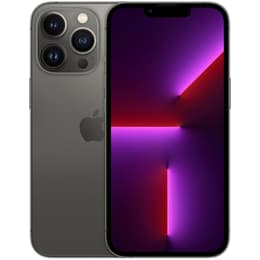
iPhone 13 Pro
iPhone 13 Pro
Starting at

Refurbished price:£232.00

Versus £949.00 new

See options
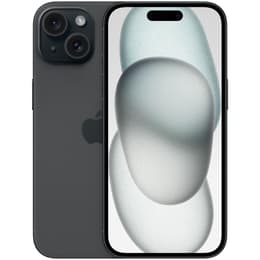
iPhone 15
iPhone 15
Starting at

Refurbished price:£325.00

Versus £699.00 new

See options

Ratings

The iPhone 13 Pro, released in September 2021, and the iPhone 15, launched in September 2023, represent different generations within Apple's smartphone lineup. While both devices operate on Apple's iOS platform, the iPhone 15 introduces a refreshed design, an updated camera system, and a shift in connectivity, distinguishing it from its Pro-level predecessor.

Scores

Durability

When considering the long-term usability of these devices, several factors come into play, including their release timelines, software support, and physical resilience.

  • Release Timeline: The iPhone 13 Pro was released in September 2021, while the iPhone 15 followed two years later in September 2023. This difference in launch date means the iPhone 15 will likely receive software updates for a longer period, extending its functional lifespan.
  • Software Longevity: Both devices benefit from Apple's consistent software support, typically receiving major iOS updates for several years. The iPhone 15, being a newer model, is expected to receive these updates for approximately one to two years longer than the iPhone 13 Pro.
  • Physical Durability: Both the iPhone 13 Pro and iPhone 15 feature a Ceramic Shield front cover, designed to offer enhanced drop performance. They also share an IP68 rating for water and dust resistance, meaning they can withstand submersion in water up to 6 meters for 30 minutes. User experiences suggest both models are robust, though a protective case is generally recommended for added security.

Year of Release

2021

2023

Compatible with latest Update

Yes

Yes

OS

iOS

iOS

Foldable

No

No

Performance

The performance of a smartphone is crucial for daily tasks, from launching applications to handling demanding games and multitasking.

  • Processing Power: The iPhone 15 features a newer generation processor compared to the iPhone 13 Pro. This translates to slightly faster app loading times and more efficient handling of complex computations.
  • System Responsiveness: Users will experience smooth navigation and quick responses on both devices. However, the newer processor in the iPhone 15 provides a marginal advantage in sustained performance for very intensive tasks and future-proofs the device for upcoming software demands.
  • Multitasking and Storage: Both models offer various storage configurations, allowing users to choose based on their needs for apps, photos, and videos. The underlying architecture in both devices ensures efficient multitasking, allowing several applications to run concurrently without significant slowdowns.

Memory (GB)

6 GB

6 GB

Screen quality

The display is a primary interface for any smartphone, and both the iPhone 13 Pro and iPhone 15 offer high-quality viewing experiences with distinct characteristics.

  • Display Technology and Size: Both devices feature a 6.1-inch Super Retina XDR OLED display, providing vibrant colors and deep blacks. The iPhone 13 Pro's display has a resolution of 2532 x 1170 pixels at 460 ppi, while the iPhone 15 has a slightly higher resolution of 2556 x 1179 pixels at 460 ppi.
  • Refresh Rate and Smoothness: A key difference lies in the refresh rate. The iPhone 13 Pro features ProMotion technology, offering an adaptive refresh rate that can go up to 120Hz, resulting in exceptionally smooth scrolling and more fluid animations. The iPhone 15, on the other hand, has a standard 60Hz refresh rate.
  • Brightness and Features: The iPhone 15 offers higher peak outdoor brightness, reaching up to 2000 nits, compared to the iPhone 13 Pro's 1200 nits peak HDR brightness. Additionally, the iPhone 15 replaces the traditional notch with the Dynamic Island, an interactive area that displays alerts and background activities.

Resolution

1170 x 2532

1179 x 2556

Screen type

Super Retina XDR OLED

Super Retina XDR OLED

Audiovisual

Both the iPhone 13 Pro and iPhone 15 offer advanced camera systems capable of capturing high-quality photos and videos, though they approach imaging with different strengths.

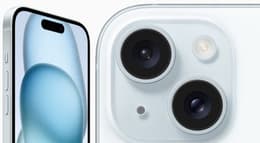
  • Rear Camera System: The iPhone 13 Pro features a triple 12MP camera system, including Wide, Ultra Wide, and Telephoto lenses, offering 3x optical zoom in and 2x optical zoom out, for a 6x optical zoom range. The iPhone 15 comes with an advanced dual-camera system, featuring a 48MP Main camera and a 12MP Ultra Wide camera. It also provides a 2x telephoto option enabled by its quad-pixel sensor.
  • Photography Features: The iPhone 13 Pro introduced features like Cinematic Mode for video (1080p at 30fps) and ProRes video recording for professional workflows. The iPhone 15 enhances photography with the Photonic Engine and Smart HDR 5, improving low-light performance and dynamic range. Its Cinematic Mode supports up to 4K HDR at 30fps, and it includes Action Mode for stabilized video.
  • Front Camera: Both devices are equipped with a 12MP TrueDepth front camera, capable of capturing detailed selfies and supporting Face ID. The iPhone 15's front camera benefits from Smart HDR 5 and Photonic Engine for improved image quality.

Main camera

12 megapixels

48 megapixels

Front camera

12 megapixels

12 megapixels

Miscellaneous

Beyond core features, several practical elements contribute to the overall user experience and differentiate these two iPhone models.

  • Connectivity and Ports: The iPhone 13 Pro utilizes the Lightning port for charging and data transfer, supporting Wi-Fi 6 and Bluetooth 5.0. The iPhone 15 marks a significant change by adopting a USB-C port, aligning with a more universal standard. However, the USB-C port on the standard iPhone 15 operates at USB 2.0 speeds, similar to the Lightning port. It supports Wi-Fi 6 and Bluetooth 5.3.
  • Biometric Security: Both models rely on Face ID for secure authentication and unlocking, utilizing the TrueDepth camera system.
  • Design and Build: The iPhone 13 Pro features a stainless steel frame and a matte glass back, giving it a distinct feel. The iPhone 15 has an aluminum design with a color-infused glass back, offering a slightly different aesthetic. The iPhone 13 Pro retains the traditional notch, while the iPhone 15 incorporates the Dynamic Island.
  • Weight and Dimensions: The iPhone 13 Pro weighs 204 grams, while the iPhone 15 is lighter at 171 grams, making it slightly more comfortable for extended one-handed use.

Weight

203 g

171 g

Screen size (in)

6.1

6.1

Mobile network

5G

5G

SIM card

Physical SIM + eSIM

Physical SIM + eSIM

Carrier compatibility

Unlocked

Unlocked

Connector

Lightning

USB-C (USB 2)

User feedback for the iPhone 13 Pro often praises its robust build, the versatility of its triple camera system with optical zoom, and the fluid experience provided by its ProMotion display. Many users appreciate its performance for demanding applications and its solid battery life for a Pro model of its generation. Common criticisms, however, sometimes point to its weight and the presence of the notch, which takes up screen space.

The iPhone 15, on the other hand, receives positive remarks for its modern design, including the Dynamic Island, which offers a fresh interactive experience. Its upgraded main camera, capable of capturing 48MP images and offering 2x telephoto through sensor cropping, is also a frequently highlighted improvement. Users generally find its battery life to be reliable for daily use. Some users, particularly those accustomed to Pro models, might note the absence of a high refresh rate display and the USB 2.0 data transfer speeds of its USB-C port as areas where it doesn't match the premium features of its Pro counterparts.

Users prioritizing a consistently smooth visual experience and a dedicated telephoto lens for photography may find the iPhone 13 Pro well-suited to their needs. Its ProMotion display and stainless steel build offer a premium feel. Conversely, users who value a more modern design with the Dynamic Island, an updated main camera with higher megapixel count, and the universal convenience of a USB-C port will likely lean towards the iPhone 15. Both devices offer a quality-assured refurbished option, providing an eco-friendly alternative for consumers seeking reliable technology.
See all articles

Our recent comparisons