
Galaxy S25+ Vs Google Pixel 8a

Galaxy S25+
Galaxy S25+
Starting at

Refurbished price:£550.00

Versus £958.39 new

See options
Google Pixel 8a
Google Pixel 8a
Starting at

Refurbished price:£214.00

Versus £467.97 new

See options

Ratings

The Samsung Galaxy S25 Plus, released in February 2025, and the Google Pixel 8a, launched in May 2024, represent distinct approaches to the modern smartphone experience. While both operate on the Android platform, the Galaxy S25 Plus emphasizes premium hardware and a comprehensive camera system, whereas the Pixel 8a focuses on Google's advanced computational photography and long-term software commitment. These differences cater to varying user priorities, from raw performance to integrated AI features.

Scores

Durability

When considering the long-term usability of these devices, their release timelines and software support policies are key factors.

  • Release Timeline: The Galaxy S25 Plus, launched in February 2025, is a newer device compared to the Pixel 8a, which was released in May 2024. This difference in launch dates inherently provides the Galaxy S25 Plus with a slightly longer period before it reaches its end-of-life for software updates.
  • OS Support Duration: Both devices offer extensive software support. The Google Pixel 8a is notable for its commitment to seven years of OS updates, security patches, and Feature Drops from its release date. Samsung's recent flagship policy also extends to seven years of updates for its premium devices, meaning the Galaxy S25 Plus is expected to receive a similar duration of software support.
  • Repairability and Durability: The Galaxy S25 Plus features an Armor Aluminum frame and Gorilla Glass Victus 2 on both the front and back, contributing to its robust build and IP68 dust and water resistance. It has also received a high repairability score, with improvements like an easier-to-remove battery. The Pixel 8a, while also offering IP67 dust and water resistance, uses Corning Gorilla Glass 3 for its display and has a plastic back with metal sides.

Year of Release

2025

2024

OS

Android

Android

Foldable

No

No

Performance

The performance of a smartphone is largely determined by its internal components and how efficiently they handle daily tasks and demanding applications.

  • Processing Power: The Galaxy S25 Plus is equipped with a current-generation flagship processor, offering significant improvements in CPU, GPU, and NPU performance. This translates to very smooth operation for intensive gaming, complex multitasking, and advanced AI features. The Pixel 8a utilizes Google's Tensor G3 processor, which provides a responsive experience for everyday use and excels in AI-driven tasks and computational photography.
  • Multitasking and Storage: The Galaxy S25 Plus typically comes with 12GB of RAM, facilitating seamless transitions between numerous open applications and heavy multitasking. It offers storage options of 256GB and 512GB. The Pixel 8a includes 8GB of LPDDR5X RAM, which is sufficient for most users' multitasking needs, and is available with 128GB or 256GB of UFS 3.1 storage.
  • Battery Behavior: The Galaxy S25 Plus houses a larger 4900 mAh battery, supporting faster 45W wired charging and 15W wireless charging. The Pixel 8a has a 4492 mAh battery, generally providing all-day power for typical usage, with 18W wired and 7.5W wireless charging capabilities.

Memory (GB)

12 GB

8 GB

Screen quality

The visual experience on a smartphone is heavily influenced by its display technology, resolution, and brightness capabilities.

  • Display Technology and Size: The Galaxy S25 Plus features a larger 6.7-inch Dynamic AMOLED 2X display, providing an expansive viewing area. The Pixel 8a has a more compact 6.1-inch Actua OLED display. Both technologies offer vibrant colors and deep blacks.
  • Resolution and Clarity: The Galaxy S25 Plus boasts a QHD+ resolution (3120 x 1440 pixels), resulting in a very sharp image with a pixel density of 513 ppi. The Pixel 8a offers a Full HD+ resolution (2400 x 1080 pixels) with a pixel density of 430 ppi, which provides clear visuals for its size.
  • Brightness and Refresh Rate: Both devices feature a 120Hz adaptive refresh rate for smooth scrolling and animations. The Galaxy S25 Plus can reach a peak brightness of 2600 nits, making it highly visible in bright outdoor conditions. The Pixel 8a also offers a bright display, with a peak brightness of up to 2000 nits, ensuring good outdoor readability.

Resolution

1440x3120

1080 x 2400

Audiovisual

The camera systems on both smartphones offer distinct capabilities for capturing photos and videos.

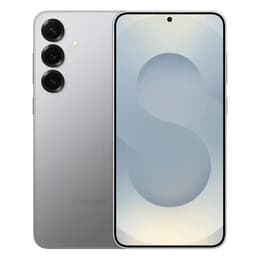
  • Rear Camera Systems: The Galaxy S25 Plus features a versatile triple-camera setup, including a 50 MP main sensor with optical image stabilization (OIS), a 12 MP ultrawide lens, and a 10 MP telephoto lens with 3x optical zoom and OIS. This telephoto lens allows for clear zoomed-in shots without significant loss of detail. The Pixel 8a comes with a dual-camera system, comprising a 64 MP main sensor with OIS and a 13 MP ultrawide lens. It relies on computational photography for zoom and enhanced image processing.
  • Photography Performance: The Galaxy S25 Plus delivers sharp and vibrant photos across various lighting conditions, with its Pro Visual Engine enhancing object recognition and color reproduction. The Pixel 8a is known for its strong computational photography, producing rich in color and detailed images, especially with features like Night Sight for low-light scenarios.
  • Video Recording and Front Camera: The Galaxy S25 Plus supports video recording up to 8K at 30 frames per second (fps) and features a 12 MP autofocus front camera capable of 4K 60fps video. The Pixel 8a records video up to 4K at 60fps with its rear cameras and 4K at 30fps with its 13 MP fixed-focus front camera. Both include electronic image stabilization for smoother video.

Miscellaneous

Beyond core performance and display, several practical features contribute to the overall user experience of these devices.

  • Connectivity and Ports: Both smartphones support 5G connectivity for fast mobile data. The Galaxy S25 Plus and Pixel 8a both feature a USB Type-C port for charging and data transfer, and neither includes a traditional 3.5mm headphone jack. The Pixel 8a supports Wi-Fi 6E and Bluetooth 5.3.
  • Biometric Security: For secure unlocking, both devices incorporate an in-display fingerprint sensor. The Pixel 8a also offers face unlock functionality.
  • Design and Handling: The Galaxy S25 Plus has a sleek design with flat sides, measuring 158.4 x 75.8 x 7.3mm and weighing 190g. The Pixel 8a is slightly more compact and lighter at 152.1 x 72.7 x 8.9 mm and 188g, with a velvety smooth plastic back and metal sides.

Weight

190 g

188 g

Screen size (in)

6.7

6.1

Mobile network

5G

5G

SIM card

Dual Physical SIM

Physical SIM + eSIM

Carrier compatibility

Unlocked

Unlocked

The Samsung Galaxy S25 Plus and Google Pixel 8a cater to different segments of the smartphone market, each with its own set of strengths. Users often praise the Galaxy S25 Plus for its cutting-edge hardware, including a vibrant, high-resolution display, a powerful processor, and a versatile camera system with optical zoom. Its premium build quality and faster charging are also frequently highlighted. Some criticisms might revolve around its larger size for those preferring a more compact device.

Conversely, the Google Pixel 8a receives acclaim for its exceptional computational photography, delivering consistent image quality, particularly in challenging conditions. Its long-term software support and integrated AI features are significant advantages for users who value a smart, evolving software experience. Common feedback sometimes points to its less premium build materials and slower charging speeds compared to higher-end devices.

Users prioritizing top-tier performance, a large, immersive display, and a comprehensive camera system with dedicated optical zoom capabilities may find the Samsung Galaxy S25 Plus better suited to their needs. This device is ideal for those who engage in demanding applications, mobile gaming, or extensive photography and videography. On the other hand, individuals who value a more compact form factor, a clean Android experience with extensive software longevity, and Google's unique AI-driven features, especially in photography, might lean towards the Google Pixel 8a. Both devices offer a quality-assured refurbished option, providing an eco-friendly alternative for consumers.


See all articles

Our recent comparisons