
Google Pixel 8 Vs Google Pixel 8a

Google Pixel 8
Google Pixel 8
Starting at

Refurbished price:£187.00

Versus £699.99 new

See options
Google Pixel 8a
Google Pixel 8a
Starting at

Refurbished price:£216.00

Versus £467.97 new

See options

Ratings

The Google Pixel 8, released in October 2023, and the Google Pixel 8a, launched in May 2024, are both Android smartphones from Google's Pixel lineup. While sharing the same core operating system and many software-driven features, the Pixel 8 is positioned as the standard flagship model, while the Pixel 8a serves as a more accessible variant. Key differentiators lie in their display technology, camera hardware, and overall build materials, influencing their practical use and durability.

Scores

Durability

When considering the long-term usability of a smartphone, factors like software support, physical durability, and ease of repair are important. Both the Pixel 8 and Pixel 8a offer extensive software support, ensuring they remain functional and secure for many years.

  • Software Longevity: Both the Google Pixel 8 and Pixel 8a are committed to receiving seven years of Android OS upgrades, security updates, and Feature Drops from their respective release dates. This means the Pixel 8 will be supported until at least October 2030, and the Pixel 8a until at least May 2031, providing a long practical lifespan for both devices.
  • Physical Durability: The Pixel 8 features Gorilla Glass Victus on its display for enhanced scratch and drop resistance, along with an IP68 rating for dust and water resistance, allowing submersion in up to 1.5 meters of water. The Pixel 8a uses Gorilla Glass 3 for its display and has an IP67 rating, meaning it can withstand submersion in up to 1 meter of water.
  • Repairability: The Pixel 8 generally receives a higher repairability score, with some assessments giving it a 7 out of 10, indicating that self-repairs are possible for those with some technical skill. The Pixel 8a, while having improving parts availability, has been noted to have a lower repairability score, around 4.5 out of 10, due to factors like strong adhesives and soldered components, making repairs more challenging.

Year of Release

2023

2024

Compatible with latest Update

Yes

Yes

OS

Android

Android

Foldable

No

No

Performance

Both Pixel devices are equipped with the same core processing unit, leading to similar performance capabilities for daily tasks and demanding applications. However, subtle differences in their overall design and thermal management can influence sustained performance.

  • Processing Power: Both the Pixel 8 and Pixel 8a are powered by Google's Tensor G3 processor, which enables smooth operation for everyday apps, efficient multitasking, and capable handling of graphically intensive games. Users can expect a responsive experience across the Android interface and within applications.
  • Memory and Storage: Each device comes with 8GB of LPDDR5X RAM, which contributes to efficient multitasking and quick app switching. Both models offer storage options of 128GB and 256GB, utilizing UFS 3.1 storage technology for fast data access.
  • Battery Behavior: The Pixel 8 has a 4575mAh battery, while the Pixel 8a has a slightly smaller 4492mAh battery. Despite this, some user reports and tests indicate that the Pixel 8a can sometimes offer comparable or even slightly better battery endurance in certain usage scenarios, likely due to its slightly smaller display. Both phones are generally capable of lasting a full day for most users.

Memory (GB)

8 GB

8 GB

Screen quality

The visual experience on both Pixel phones is vibrant, but there are distinctions in their display technology and physical characteristics that affect clarity, brightness, and overall viewing comfort.

  • Display Technology and Clarity: Both devices feature OLED displays with Full HD+ resolution (2400 x 1080 pixels), providing deep blacks and vibrant colors. The Pixel 8 has a 6.2-inch display, while the Pixel 8a has a slightly smaller 6.1-inch display.
  • Brightness and Refresh Rate: Both screens offer a peak brightness of up to 2000 nits, which aids visibility in bright outdoor conditions. The Pixel 8 features an LTPO panel with a variable refresh rate ranging from 1Hz to 120Hz, allowing for more efficient power consumption by adjusting the refresh rate based on content. The Pixel 8a also has a 120Hz refresh rate, but it is adaptive between 60Hz and 120Hz, without the lower 1Hz capability.
  • Screen Protection: The Pixel 8's display is protected by Gorilla Glass Victus, offering a higher level of resistance against scratches and drops. The Pixel 8a uses Gorilla Glass 3 for its display protection.

Resolution

1080 x 2400

1080 x 2400

Screen type

OLED

OLED

Audiovisual

Google Pixel phones are known for their camera capabilities, and both the Pixel 8 and Pixel 8a deliver strong photographic performance, though with some hardware differences that impact specific shooting scenarios.

  • Rear Camera System: The Pixel 8 features a 50MP main camera with a larger sensor (1/1.31”) and a wider aperture (f/1.68), paired with a 12MP ultrawide camera. The Pixel 8a has a 64MP main camera (f/1.89) and a 13MP ultrawide camera. While the Pixel 8a has a higher megapixel count on its main sensor, the Pixel 8's larger sensor and wider aperture generally allow it to capture more light, potentially leading to better low-light performance and overall image quality. The Pixel 8 also includes laser detect autofocus and a macro focus mode, which are absent on the Pixel 8a.
  • Front Camera and Video: For selfies, the Pixel 8 has a 10.5MP front camera, while the Pixel 8a features a 13MP front camera. Both offer fixed focus. The Pixel 8 is capable of recording 4K video at 60 frames per second (FPS) with its front camera, whereas the Pixel 8a's front camera is limited to 4K 30FPS. Both devices offer strong video recording capabilities with their rear cameras, including 4K at various frame rates.
  • Audio Experience: Both phones provide stereo speakers for media consumption. While the Pixel 8 supports Spatial Audio for a more immersive sound experience, the Pixel 8a does not include this feature. User reports for the Pixel 8a sometimes mention its speaker output being less loud or slightly muffled at full volume.

Main camera

50 megapixels

64 megapixels

Front camera

10.5 megapixels

13 megapixels

Miscellaneous

Beyond the core components, several practical features and design elements differentiate the Pixel 8 and Pixel 8a, impacting daily convenience and handling.

  • Connectivity and Ports: Both devices support 5G connectivity, Wi-Fi (Pixel 8 supports Wi-Fi 7, Pixel 8a supports Wi-Fi 6E), and Bluetooth 5.3. They both feature a USB-C port for charging and data transfer, though the Pixel 8's port is USB 3.2, offering faster data speeds compared to the Pixel 8a's likely USB 2.0 port. Neither phone includes a traditional 3.5mm headphone jack.
  • Sensors and Security: Both models incorporate an in-display fingerprint sensor and support face unlock for biometric security. The Pixel 8 also includes Battery Share, allowing it to wirelessly charge other compatible accessories, a feature not present on the Pixel 8a.
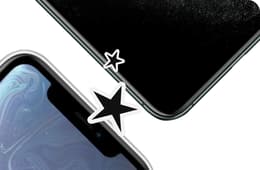
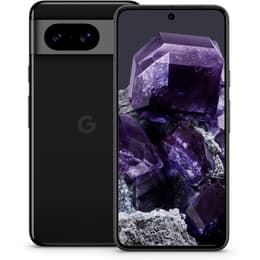
  • Design and Build Materials: The Pixel 8 features a more premium design with a glass back and slimmer, more uniform display bezels. It measures 150.5 x 70.8 x 8.9mm and weighs 187g. The Pixel 8a has a matte composite (plastic) back and more rounded corners, with slightly thicker bezels. It measures 152.1 x 72.7 x 8.9mm and weighs 188g, making it marginally taller, wider, and heavier despite its smaller screen.

Weight

187 g

188 g

Screen size (in)

6.2

6.1

Mobile network

5G

5G

SIM card

Physical SIM + eSIM

Physical SIM + eSIM

Carrier compatibility

Unlocked

Unlocked

User feedback for both the Google Pixel 8 and Pixel 8a generally praises their camera performance, software experience, and the inclusion of Google's AI features. The Pixel 8 is often lauded for its more premium build, brighter and more advanced display, and slightly more capable camera system, particularly in challenging lighting conditions or for specific features like macro photography. Some users appreciate its faster charging and the added convenience of Battery Share. Criticisms for the Pixel 8 are less common but sometimes point to its battery life not always outperforming its predecessor despite a larger capacity.

The Pixel 8a receives strong positive remarks for bringing many flagship-level features, including the Tensor G3 chip and the extended software support, to a more accessible package. Its camera is still considered excellent for its category, and its battery life is often reported as reliable for a full day's use. Common criticisms for the Pixel 8a include its thicker display bezels, the use of Gorilla Glass 3 instead of Victus, slower charging speeds, and a less premium-feeling plastic back. Some users also note that its speakers could be louder or clearer.

Users prioritizing a more robust build, a slightly larger and more advanced display with a wider adaptive refresh rate range, and a camera system with additional hardware capabilities like macro focus may find the Google Pixel 8 better suited to their needs. Conversely, individuals who value a slightly more compact form factor, are content with a durable but less premium build, and seek a device that offers excellent core performance and camera quality without all the advanced extras, will likely find the Pixel 8a to be a compelling choice. Both devices offer a long software support window, making them suitable for users looking for a smartphone that will remain updated for many years. For those considering a sustainable choice, both models are available as quality-assured refurbished options, providing an eco-friendly alternative to purchasing new.


See all articles

Our recent comparisons