
Compare models
Google Pixel 8a Vs iPhone 14 Plus
- 1-year minimum warranty
- Free delivery on all items
- Free 30-day returns
Differences at a glance
The Google Pixel 8a, released in May 2024, and the iPhone 14 Plus, launched in October 2022, represent distinct approaches to the smartphone experience. While both offer robust performance and capable cameras, they differ significantly in their operating systems, display technologies, and overall design philosophies. The Pixel 8a runs on Android, emphasizing AI-driven features and a compact form factor, whereas the iPhone 14 Plus operates on iOS, focusing on a larger display and a streamlined user experience.
Available Models
Colour
Storage (GB)
Scores
Durability
When considering the longevity of these devices, several factors come into play, including software support, physical durability, and ease of repair.
- Software Updates: The Google Pixel 8a is notable for its commitment to extended software support, offering seven years of Android updates from its release. The iPhone 14 Plus, running iOS, typically receives 5-6 years of major OS updates from its launch date. This means the Pixel 8a is projected to receive software support for a longer duration.
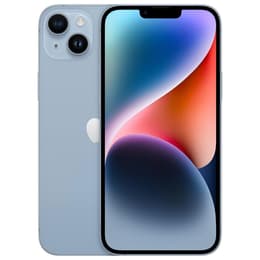
- Physical Durability: The iPhone 14 Plus features a Ceramic Shield front cover and an IP68 rating for water and dust resistance, indicating a high level of protection against environmental elements. The Pixel 8a uses Corning Gorilla Glass 3 for its display and has an IP67 rating, offering good, though slightly less extensive, protection against dust and water.
- Build Materials: The iPhone 14 Plus has a glass back and an aluminum design, contributing to a premium feel. The Pixel 8a features a plastic back with a matte finish and an aluminum frame, which some users find comfortable to hold and less prone to fingerprints. Both devices incorporate recycled materials in their construction.
Year of Release
2024
2022
Compatible with latest Update
Yes
Yes
OS
Android
iOS
Foldable
No
No
Performance
Both smartphones are equipped with powerful processors designed to handle daily tasks and demanding applications, though their approaches to performance differ.
- Processing Power: The Google Pixel 8a is powered by a current-generation processor, enabling smooth operation across various apps and multitasking scenarios. The iPhone 14 Plus utilizes a capable processor from the previous year's Pro models, providing strong performance for everyday use and gaming.
- Multitasking and Responsiveness: The Pixel 8a comes with 8GB of RAM, which contributes to efficient multitasking and app management. The iPhone 14 Plus features 6GB of RAM, offering a responsive experience for most users. Both devices are designed to launch apps quickly and maintain fluidity during navigation.
- Storage Options: The Pixel 8a is available with 128GB or 256GB of internal storage. The iPhone 14 Plus offers more flexibility with 128GB, 256GB, and 512GB storage configurations, catering to users with higher storage needs.
Screen quality
The visual experience on both devices is delivered through high-quality displays, each with distinct characteristics that cater to different preferences.
- Display Technology and Size: The Google Pixel 8a features a 6.1-inch OLED display, offering vibrant colors and deep blacks in a more compact form factor. The iPhone 14 Plus boasts a larger 6.7-inch Super Retina XDR OLED display, providing an expansive viewing area.
- Resolution and Brightness: Both phones offer sharp resolutions, with the Pixel 8a at 2400 x 1080 pixels and the iPhone 14 Plus at 2778 x 1284 pixels, resulting in clear visuals. The Pixel 8a can reach a peak brightness of 2000 nits, while the iPhone 14 Plus achieves a peak HDR brightness of 1200 nits, making both suitable for outdoor visibility.
- Refresh Rate: The Pixel 8a features an adaptive refresh rate of up to 120Hz, contributing to smoother scrolling and more fluid animations. The iPhone 14 Plus has a standard 60Hz refresh rate.
Resolution
1080 x 2400
1284 x 2778
Screen type
OLED
Super Retina XDR OLED
Audiovisual
Both smartphones offer capable camera systems, designed to capture high-quality photos and videos in various conditions.
- Rear Camera System: The Google Pixel 8a includes a dual-camera setup with a 64MP main sensor and a 13MP ultrawide lens. The iPhone 14 Plus also features a dual-camera system, consisting of a 12MP main camera and a 12MP ultrawide camera. Both are known for their ability to produce detailed images.
- Photography Features: The Pixel 8a leverages its software for features like Night Sight and Astrophotography, and offers consistent color treatment across its lenses. The iPhone 14 Plus includes features such as Photonic Engine, Deep Fusion, and Smart HDR 4, enhancing image quality, particularly in challenging lighting.
- Video Recording and Front Camera: Both devices support 4K video recording at various frame rates. The Pixel 8a has a 13MP front camera, while the iPhone 14 Plus features a 12MP TrueDepth front camera with autofocus and improved low-light performance.
Main camera
64 megapixels
12 megapixels
Front camera
13 megapixels
12 megapixels
Miscellaneous
Beyond core specifications, several practical elements contribute to the overall user experience and daily usability of these smartphones.
- Connectivity and Ports: Both the Pixel 8a and iPhone 14 Plus support 5G connectivity for fast mobile data. The Pixel 8a uses a USB-C 3.2 port for charging and data transfer, while the iPhone 14 Plus utilizes a Lightning port.
- Biometric Security: The Pixel 8a offers both an under-display fingerprint sensor and face unlock for secure access. The iPhone 14 Plus relies on Face ID for facial recognition.
- Physical Characteristics: The Pixel 8a is slightly more compact and lighter, measuring 152.1 x 72.7 x 8.9 mm and weighing 188g. The iPhone 14 Plus is larger and heavier at 160.8 x 78.1 x 7.8 mm and 203g, offering a more substantial feel in hand.
Weight
188 g
203 g
Screen size (in)
6.1
6.7
Mobile network
5G
5G
SIM card
Physical SIM + eSIM
Physical SIM + eSIM
Carrier compatibility
Unlocked
Unlocked
What the community thinks
The Google Pixel 8a and iPhone 14 Plus cater to different user preferences, each excelling in specific areas. Users often praise the Pixel 8a for its advanced AI capabilities, extended software support, and consistent camera performance, particularly in challenging lighting conditions. Its more compact size and higher refresh rate display are also frequently highlighted as positive attributes. Some users, however, note its slightly thicker bezels compared to other modern smartphones.
The iPhone 14 Plus is often lauded for its large, vibrant display, robust build quality with Ceramic Shield, and excellent battery life, making it a strong choice for media consumption and users who prefer a bigger screen. Its streamlined iOS experience and strong ecosystem integration are also common points of praise. Criticisms sometimes point to its standard 60Hz refresh rate and the continued use of the Lightning port.
Users prioritizing a long-term software commitment, advanced computational photography, and a smoother display experience in a slightly smaller package may find the Pixel 8a well-suited to their needs. Conversely, those who value a larger display for immersive viewing, a highly durable build, and a familiar iOS ecosystem with strong battery performance may lean toward the iPhone 14 Plus. Both devices offer reliable performance for daily use. For those considering a more sustainable choice, exploring quality-assured refurbished options for either model can provide an eco-friendly alternative.