
Compare models

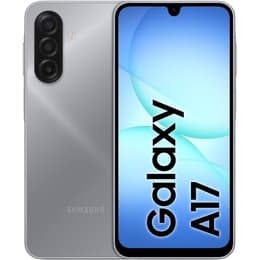
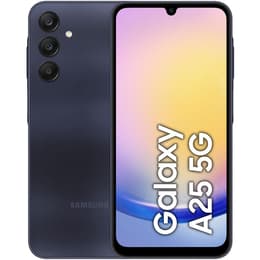
Galaxy A17 Vs Galaxy A25

  • 1-year minimum warranty
  • Free delivery on all items
  • Free 30-day returns
Galaxy A17
Starting at

Refurbished price:£145.00

Versus £199.78 new

See options
Galaxy A25
Starting at

Refurbished price:£150.00

Versus £272.58 new

See options

Differences at a glance

The Samsung Galaxy A17 (2025) and the Samsung Galaxy A25 (2023) represent accessible smartphone options designed for everyday digital tasks. While both models feature large batteries and versatile multi-lens camera systems, they differ primarily in their release timelines, display refresh rates, and long-term software support frameworks.

Running on Android with Samsung's custom interface, both devices offer familiar user experiences, though the newer model benefits from an extended software update lifecycle.

Available Models

Colour

Storage (GB)

Scores

Durability

When evaluating hardware longevity and support timelines, the Galaxy A17 and Galaxy A25 cater to users looking for dependable multi-year device ownership with differing software horizons.

  • Release timeline and software support: The Galaxy A17 launched in 2025 with an extended update policy providing major operating system upgrades for up to six years. The Galaxy A25 debuted in late 2023 and follows a standard four-year major upgrade schedule.
  • Expected practical lifespan: Due to its newer release date and longer commitment to security updates, the Galaxy A17 maintains active software relevancy further into the decade, whereas the Galaxy A25 approaches its upgrade milestone earlier.
  • Repairability and build durability: Both units incorporate standard consumer-grade plastic chassis designs and feature non-removable batteries, scoring similarly for general repair accessibility through authorized service channels.

Year of Release

2025

2023

OS

Android

Android

Foldable

No

No

Performance

Under everyday conditions, both smartphones manage standard applications, web browsing, and media streaming smoothly, though their internal configurations handle heavy multitasking and gaming differently.

  • Processor capabilities and multitasking: Both devices manage daily routines and social applications reliably, though the newer Galaxy A17 handles demanding apps and thermal efficiency with refined modern architecture.
  • Memory and storage options: Configurations span multiple tiers starting from 128GB of internal storage paired with adaptable RAM capacities, with the Galaxy A25 additionally offering expandable storage via a hybrid memory card slot.
  • Battery behavior: Each device packs a 5000mAh battery capable of supporting a full day of mixed use, complemented by moderate wired charging speeds that require a standard compatible adapter.

Screen quality

Visual output differs noticeably between the two models in terms of panel technology, maximum refresh rate, and overall brightness profiles for daily viewing.

  • Display technology: The Galaxy A25 features a vibrant Super AMOLED panel with deep contrast levels, while the Galaxy A17 utilizes an updated display configuration tailored for balanced outdoor visibility.
  • Refresh rate and smoothness: The Galaxy A25 supports a 120Hz refresh rate for fluid scrolling animations, whereas the Galaxy A17 operates at a standard 90Hz refresh rate designed to balance visual fluidity with energy efficiency.
  • Screen dimensions: Both phones provide expansive viewing spaces measuring around 6.5 to 6.7 inches, making them well-suited for reading, video playback, and general productivity tasks.

Resolution

1080x2340

1080 x 2340

Screen type

Super AMOLED, 90Hz

Super AMOLED

Audiovisual

Photography and media consumption capabilities are anchored by versatile multi-lens rear arrays and clear front-facing selfie cameras on both units.

  • Rear camera systems: Both models include a 50-megapixel primary sensor for crisp daytime shots, accompanied by ultra-wide and macro lenses for varied shooting perspectives.
  • Video and stabilization: The Galaxy A25 benefits from optical image stabilization on its main sensor to reduce blur during video recording, while the Galaxy A17 relies on digital stabilization features for everyday clips.
  • Audio output: Media consumption is supported by onboard speaker configurations and standard headphone jack inclusion on select variants, providing practical wired audio flexibility.

Main camera

"50 MP, f/1.8, (wide), 1/2.76"", 0.64µm, AF, OIS 5 MP, f/2.2, (ultrawide), 1/5.0"", 1.12µm 2 MP, f/2.4, (macro)"

50 megapixels

Front camera

50MP

13 megapixels

Miscellaneous

Practical daily usability is shaped by physical dimensions, security features, and modern connectivity standards across both smartphone iterations.

  • Security and authentication: Both devices utilize responsive, side-mounted fingerprint scanners integrated into the power button alongside facial recognition options for quick unlocking.
  • Physical dimensions: The Galaxy A17 and Galaxy A25 share comfortable, slim profiles with ergonomic edge curves that fit securely into pockets and bags during travel.
  • Connectivity options: Each model supports modern 5G cellular networks, dual-band Wi-Fi standards, and Bluetooth pairing for seamless accessory connection.

Weight

192 g

197 g

Screen size (in)

6.7

6.5

Mobile network

5G

5G

SIM card

Physical SIM

Dual Physical SIM

Carrier compatibility

Unlocked

Unlocked

Connector

USB-C

USB-C

What the community thinks

User discussions across community forums highlight consistent praise for the reliable daily battery endurance and clear multi-lens camera setups found on both devices. Common considerations involve noticing the absence of water-resistance ratings on the older model and recognizing the performance limits of entry-level processors when running graphics-heavy software. Users prioritizing longer software update longevity and a more recent release window will find the Galaxy A17 well-suited to their needs, while users valuing a smoother display refresh rate and expandable storage flexibility may lean toward the Galaxy A25.

For those exploring sustainable purchasing routes, opting for a quality-assured refurbished option provides an eco-friendly alternative that minimizes electronic waste without compromising on core functional capabilities. Ultimately, the choice depends on whether extended software support or specific display preferences carry higher weight in daily use.