
Smartphones
Compare models
Differences at a glance
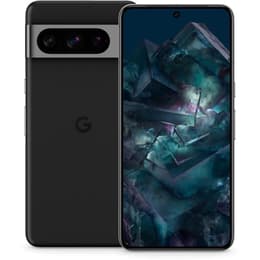
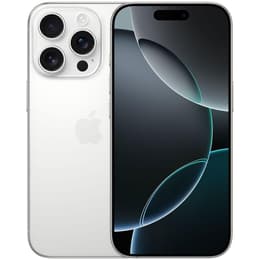
The Google Pixel 8 Pro, released in October 2023, and the iPhone 16 Pro, launched in September 2024, represent distinct approaches to high-end smartphone design and functionality. While both devices offer advanced camera systems and premium build quality, they differentiate themselves through their operating systems and core philosophies. The Pixel 8 Pro runs on Google's Android, emphasizing artificial intelligence and computational photography, whereas the iPhone 16 Pro operates on Apple's iOS, focusing on integrated ecosystem performance and refined user experience.
Colour
Storage (GB)
When considering the long-term usability of a smartphone, software support and physical durability are key factors. Both the Google Pixel 8 Pro and the iPhone 16 Pro are designed with longevity in mind, though their support models differ.
Year of Release
Compatible with latest Update
Foldable
Performance in modern smartphones encompasses not just raw processing power but also how efficiently the device handles daily tasks, manages battery life, and supports demanding applications. Both the Pixel 8 Pro and the iPhone 16 Pro deliver high-level performance, though with different underlying architectures.
The visual experience on a smartphone is largely defined by its display, and both the Google Pixel 8 Pro and the iPhone 16 Pro offer high-quality screens designed for vibrant and clear visuals.
Resolution
Screen type
Both the Google Pixel 8 Pro and the iPhone 16 Pro are recognized for their advanced camera systems, each leveraging sophisticated hardware and computational photography to capture high-quality images and videos.
Main camera
Front camera
Beyond core performance and camera capabilities, several practical features and design elements contribute to the overall user experience of a smartphone.
Weight
Screen size (in)
Mobile network
SIM card
Carrier compatibility
The Google Pixel 8 Pro and the iPhone 16 Pro each offer a compelling smartphone experience, catering to different user preferences and priorities. User feedback often highlights the Pixel 8 Pro's exceptional camera capabilities, particularly its computational photography and AI-driven features, which simplify complex editing tasks. Its extended software support commitment is also a significant praise point, offering peace of mind for long-term use. Some users, however, note that its raw performance might not always match the absolute top tier in demanding benchmarks, and battery life, while good, can vary with heavy usage.
The iPhone 16 Pro is frequently lauded for its powerful and efficient processor, delivering a consistently smooth and responsive experience across all applications, including intensive gaming and video editing. Its improved battery life over previous iPhone Pro models is a notable enhancement, providing extended usage throughout the day. The camera system is praised for its consistency and robust video recording features, though some users find the year-over-year photographic improvements to be subtle. The more compact and lighter design of the iPhone 16 Pro is also a positive for those preferring a smaller device.
Users prioritizing advanced computational photography, a larger display, and the longest guaranteed software support in the Android ecosystem may find the Google Pixel 8 Pro well-suited to their needs. Conversely, individuals who value top-tier raw performance, a highly integrated ecosystem, class-leading video capabilities, and a more compact form factor will likely lean towards the iPhone 16 Pro. Both devices represent excellent choices in the premium smartphone market, and considering a quality-assured refurbished option for either model can be a sustainable way to access these advanced technologies.