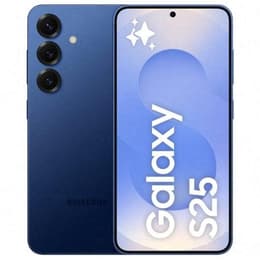
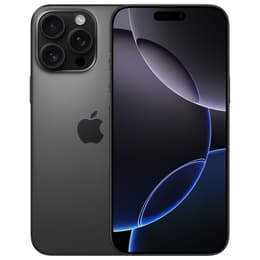

Galaxy S25 Vs iPhone 16 Pro Max

Galaxy S25
Galaxy S25
Starting at

Refurbished price:£435.00

Versus £766.13 new

See options
iPhone 16 Pro Max
iPhone 16 Pro Max
Starting at

Refurbished price:£658.00

Versus £1,199.00 new

See options

Ratings

The Samsung Galaxy S25, released in early 2025, and the iPhone 16 Pro Max, launched in late 2024, represent the latest advancements from two leading smartphone manufacturers. While both devices offer premium experiences, they cater to different user preferences through their distinct operating systems and hardware philosophies. The Galaxy S25 runs on Android 15 with Samsung's One UI, offering extensive customization, while the iPhone 16 Pro Max operates on iOS 18, known for its streamlined user experience and tight ecosystem integration. This comparison will delve into their practical differences to help users make an informed decision.

Scores

Durability

When considering the long-term usability of a smartphone, software support and physical resilience are key factors. Both the Galaxy S25 and iPhone 16 Pro Max are designed for extended practical lifespans, though their approaches to software longevity differ.

  • Software Longevity: The Samsung Galaxy S25 is set to receive seven years of Android OS and security updates, ensuring it remains current with the latest features and security patches well into the future. The iPhone 16 Pro Max typically receives 5-7 years of major iOS updates, with security patches often extending to 7-8 years, providing a similarly long period of software relevance.
  • Physical Durability: The Galaxy S25 features an aluminum frame and Gorilla Glass Victus 2 on both the front and back, offering robust protection against everyday wear and tear. It also carries an IP68 rating for water and dust resistance. The iPhone 16 Pro Max utilizes a titanium frame and a Ceramic Shield front, designed for enhanced drop performance and scratch resistance. It also boasts an IP68 rating, allowing for submersion in water up to 6 meters for 30 minutes.
  • Repairability: While specific repairability scores can vary, both manufacturers generally design their flagship devices with a balance of durability and serviceability. Users can expect access to parts and service for several years post-release for both models.

Year of Release

2025

2024

Foldable

No

No

Performance

Both devices are equipped with advanced internal components designed to deliver smooth and responsive performance across a wide range of tasks, from everyday browsing to demanding applications and gaming.

  • Processing Power: The Galaxy S25 is powered by a current-generation processor optimized for its ecosystem, enabling efficient handling of demanding apps and seamless multitasking. The iPhone 16 Pro Max features a powerful, custom-designed processor that provides significant performance headroom for intensive gaming, video editing, and complex computational tasks, ensuring a fluid user experience.
  • Multitasking and Storage: The Galaxy S25 comes with 12GB of RAM, facilitating efficient app switching and background process management. It offers storage options of 128GB and 256GB. The iPhone 16 Pro Max includes 8GB of RAM, which, combined with its optimized operating system, provides smooth performance even with numerous applications open. Storage configurations for the iPhone 16 Pro Max start at 256GB and go up to 1TB.
  • Real-World Responsiveness: Users of both devices can expect quick app loading times and generally lag-free operation. The Galaxy S25's processor is noted for its ability to handle AI features efficiently, while the iPhone 16 Pro Max's chip is designed for high-performance computing and power efficiency, contributing to its extended battery life.

Memory (GB)

12 GB

8 GB

Screen quality

The visual experience on both the Galaxy S25 and iPhone 16 Pro Max is a highlight, with each device featuring a high-quality display designed for vibrant colors and sharp details.

  • Display Technology and Clarity: The Galaxy S25 sports a 6.2-inch Dynamic LTPO AMOLED 2X display, offering deep blacks and vivid colors with an FHD+ resolution (2340 x 1080 pixels). The iPhone 16 Pro Max features a larger 6.9-inch Super Retina XDR OLED display with a higher resolution of 2868 x 1320 pixels, resulting in a slightly higher pixel density. Both displays support HDR content for enhanced contrast and color accuracy.
  • Brightness and Smoothness: Both phones offer excellent brightness levels, with the Galaxy S25 reaching up to 2600 nits peak brightness and the iPhone 16 Pro Max achieving 2000 nits peak brightness, ensuring good visibility even in bright outdoor conditions. Both devices also feature adaptive refresh rates up to 120Hz, providing smooth scrolling and fluid animations, with the iPhone's ProMotion technology dynamically adjusting from 1Hz to 120Hz for power efficiency.
  • Design and Viewing Experience: The iPhone 16 Pro Max features thinner display bezels, contributing to a more expansive viewing area. The Galaxy S25 maintains a modern design with a flat display. The larger screen of the iPhone 16 Pro Max offers a more immersive experience for media consumption and productivity.

Resolution

1080x2340

1320 x 2868

Screen type

Dynamic LTPO AMOLED 2X

LTPO Super Retina XDR OLED

Audiovisual

Both the Galaxy S25 and iPhone 16 Pro Max are equipped with versatile camera systems capable of capturing high-quality photos and videos in various conditions, though their specific configurations and strengths differ.

  • Rear Camera Systems: The Galaxy S25 features a triple camera setup including a 50MP main sensor, a 12MP ultra-wide lens, and a 10MP telephoto lens with 3x optical zoom. It incorporates a Next Gen ProVisual Engine for AI-enhanced photography. The iPhone 16 Pro Max also has a triple camera system, boasting a 48MP main sensor with sensor-shift optical image stabilization, a 48MP ultra-wide lens, and a 12MP periscope telephoto lens offering 5x optical zoom.
  • Photography and Video Capabilities: The Galaxy S25 is designed to take sharp, vibrant photos in everyday scenarios. The iPhone 16 Pro Max excels in detail capture, especially with its upgraded ultra-wide camera, and offers advanced video recording capabilities, including 4K resolution at 120 frames per second. Both devices provide strong low-light performance, with the iPhone 16 Pro Max benefiting from larger camera sensors for improved light intake.
  • Front Camera and Audio: Both phones feature a 12MP front-facing camera for clear selfies and video calls. For audio, both devices offer stereo speakers for an immersive media consumption experience, and their microphones are capable of capturing clear audio for calls and recordings.

Miscellaneous

Beyond core performance and display, several practical features contribute to the overall user experience and differentiate these two flagship smartphones.

  • Connectivity and Ports: The Galaxy S25 supports Bluetooth 5.4 and the latest Wi-Fi standards. The iPhone 16 Pro Max steps up with support for Wi-Fi 7 and Bluetooth 5.3, offering faster wireless speeds and improved efficiency. Both devices rely on USB-C for charging and data transfer, having moved away from proprietary ports. Neither device includes a traditional 3.5mm headphone jack.
  • Biometrics and User Interface: The Galaxy S25 features an ultrasonic in-screen fingerprint sensor for secure and convenient unlocking. The iPhone 16 Pro Max utilizes Face ID for facial recognition, providing a secure and seamless authentication method. The iPhone also includes a Dynamic Island for interactive notifications and a new dedicated capture button for quick camera access and controls.
  • Build Materials and Handling: The Galaxy S25 has an aluminum body and glass back, weighing approximately 162g. The iPhone 16 Pro Max features a titanium frame and a textured matte glass back, weighing around 227g, making it a noticeably heavier device. Its dimensions are also slightly larger, impacting one-handed use for some users.

Weight

162 g

227 g

Screen size (in)

6.2

6.9

Mobile network

5G

5G

SIM card

Physical SIM + eSIM

Physical SIM + eSIM

Carrier compatibility

Unlocked

Unlocked

The Samsung Galaxy S25 and iPhone 16 Pro Max both stand as formidable contenders in the premium smartphone market, each bringing a distinct set of strengths to the table. User sentiment often highlights the Galaxy S25's extensive customization options and its long-term software support as significant advantages for Android enthusiasts. Some users appreciate its vibrant display and capable camera system for everyday use. Criticisms, when they arise, sometimes focus on the iterative nature of design changes compared to previous generations.

The iPhone 16 Pro Max is frequently praised for its exceptional battery life, powerful performance, and advanced camera capabilities, particularly its video recording features and improved low-light photography. Its streamlined iOS experience and robust ecosystem are also consistent points of praise. Some users might find its larger size and weight a consideration for daily handling.

Users prioritizing extensive software longevity and the flexibility of the Android ecosystem, coupled with a balanced feature set, may find the Galaxy S25 well-suited to their needs. Conversely, users who prioritize top-tier camera performance, industry-leading battery endurance, and the integrated experience of iOS will likely lean towards the iPhone 16 Pro Max. Both devices offer a quality-assured refurbished option, providing an eco-friendly alternative for those seeking premium technology with a reduced environmental footprint.


See all articles

Our recent comparisons