
Galaxy S25 Vs iPhone 16 Pro

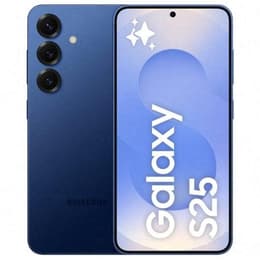
Galaxy S25
Galaxy S25
Starting at

Refurbished price:£435.00

Versus £766.13 new

See options
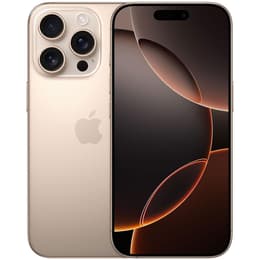
iPhone 16 Pro
iPhone 16 Pro
Starting at

Refurbished price:£560.00

Versus £999.00 new

See options

Ratings

The Samsung Galaxy S25 (released February 2025) and the Apple iPhone 16 Pro (released September 2024) represent the latest iterations of their respective flagship smartphone lines. While both devices offer premium experiences, they cater to different user preferences through their distinct operating systems and hardware philosophies. The Galaxy S25 runs on Android, emphasizing customization and an open ecosystem, whereas the iPhone 16 Pro operates on iOS, known for its streamlined interface and tight integration within Apple's ecosystem. Key differentiators include their camera systems, display technologies, and approaches to user interaction.

Scores

Durability

When considering the longevity of a smartphone, both the Galaxy S25 and the iPhone 16 Pro offer substantial software support and robust build quality, though their release timelines differ slightly.

  • Release Timeline: The iPhone 16 Pro, launched in September 2024, precedes the Galaxy S25, which became available in February 2025. This difference means the iPhone 16 Pro will likely reach its end-of-software-support earlier than the Galaxy S25.
  • Software Longevity: Samsung has committed to providing seven years of operating system and security updates for the Galaxy S25, ensuring extended software relevance. The iPhone 16 Pro, running iOS 18 at launch and supporting iOS 26.3.1 (a) as of March 2026, typically receives five to seven years of major iOS updates, offering a comparable long-term software experience.
  • Durability Features: Both devices feature IP68 ratings for dust and water resistance. The iPhone 16 Pro incorporates a Ceramic Shield front cover and a titanium frame, contributing to its resilience. The Galaxy S25 utilizes Corning Gorilla Glass Victus 2 for its front and back panels, paired with an Armor Aluminum frame, providing a high level of protection against everyday impacts.

Year of Release

2025

2024

Foldable

No

No

Performance

Both the Galaxy S25 and iPhone 16 Pro deliver high-level performance suitable for demanding applications and multitasking, though they achieve this through different hardware architectures.

  • Processing Power: The iPhone 16 Pro is powered by Apple's A18 Pro chip, designed for efficient handling of complex tasks, including advanced AI features and graphics-intensive applications. The Galaxy S25 features the Snapdragon 8 Elite processor, which provides a significant performance boost over its predecessors, ensuring smooth operation across various apps and gaming scenarios.
  • Multitasking and Responsiveness: The iPhone 16 Pro includes 8GB of memory, contributing to fluid app switching and overall system responsiveness. The Galaxy S25 comes with 12GB of memory across all models, allowing for extensive multitasking and efficient management of numerous open applications.
  • Battery Behavior: The iPhone 16 Pro is equipped with a 3582 mAh battery, offering up to 27 hours of video playback, with users reporting around 8-10 hours of screen-on time with moderate usage. The Galaxy S25 has a 4000 mAh battery, which in tests, has shown to last a full day, achieving approximately 14 hours and 15 minutes in video playback scenarios.

Memory (GB)

12 GB

8 GB

Screen quality

The visual experience on both devices is characterized by vibrant colors and sharp details, though they employ distinct display technologies and characteristics.

  • Display Technology and Clarity: The iPhone 16 Pro features a 6.3-inch Super Retina XDR OLED display, offering deep blacks and vibrant colors with a resolution of 2622 x 1206 pixels, resulting in a pixel density of 460 ppi. The Galaxy S25 sports a 6.2-inch Dynamic LTPO AMOLED 2X display, providing a resolution of 2340 x 1080 pixels and a pixel density of 416 ppi, delivering crisp visuals.
  • Brightness and Outdoor Visibility: Both phones offer excellent brightness levels for comfortable viewing in various lighting conditions. The iPhone 16 Pro reaches a typical brightness of 1000 nits and a peak brightness of 2000 nits. The Galaxy S25 matches this with a peak brightness of 2600 nits, ensuring good visibility even under direct sunlight.
  • Refresh Rate and Smoothness: Both devices incorporate adaptive refresh rate technologies for smooth scrolling and responsive interactions. The iPhone 16 Pro features ProMotion technology, with an adaptive refresh rate up to 120Hz. The Galaxy S25 also offers a 120Hz adaptive refresh rate, contributing to a fluid user experience.

Resolution

1080x2340

1206 x 2622

Screen type

Dynamic LTPO AMOLED 2X

LTPO Super Retina XDR OLED

Audiovisual

Both the Galaxy S25 and iPhone 16 Pro are equipped with advanced camera systems designed to capture high-quality photos and videos, each with its own strengths.

  • Rear Camera System: The iPhone 16 Pro features a versatile triple-camera setup, including a 48MP main camera with sensor-shift optical image stabilization, a 48MP ultrawide camera with a 120-degree field of view, and a 12MP telephoto lens offering 5x optical zoom. The Galaxy S25 also comes with a triple-camera system, comprising a 50MP main sensor with optical image stabilization, a 12MP ultrawide sensor, and a 10MP telephoto lens with 3x optical zoom.
  • Photography Performance: The iPhone 16 Pro's camera system is noted for its improved low-light performance and advanced computational photography features, including a new 'Fusion camera' for enhanced detail. The Galaxy S25, while retaining similar hardware to its predecessor, benefits from Samsung's ProVisual Engine, which optimizes image processing for natural skin tones, textures, and color accuracy, particularly in challenging lighting conditions.
  • Video Recording and Audio: The iPhone 16 Pro supports 4K video recording at up to 120 frames per second in Dolby Vision, and includes four studio-quality microphones for enhanced audio capture. The Galaxy S25 offers 8K video recording at 30 frames per second and has upgraded 10-bit HDR video recording, alongside stereo speakers for media consumption.

Miscellaneous

Beyond core features, both smartphones offer a range of practical elements that enhance user experience and connectivity.

  • Connectivity and Ports: Both devices support 5G cellular networks and the latest Wi-Fi standards, with the iPhone 16 Pro specifically supporting Wi-Fi 7. Both utilize USB-C for charging and data transfer. The iPhone 16 Pro is designed for dual eSIM, while the Galaxy S25 supports Bluetooth 5.4.
  • Biometric Security: The iPhone 16 Pro relies on Face ID for secure facial recognition. The Galaxy S25 features an ultrasonic in-screen fingerprint sensor for biometric authentication.
  • Design and Handling: The iPhone 16 Pro has dimensions of 149.6 x 71.5 x 8.25 mm and weighs 199 grams, featuring a titanium frame and a textured matte glass back. The Galaxy S25 measures 146.9 x 70.5 x 7.2 mm and weighs 162.0 grams, with an Armor Aluminum frame and glass back. The iPhone 16 Pro also introduces a new Camera Control button for quick access to camera functions.

Weight

162 g

199 g

Screen size (in)

6.2

6.3

Mobile network

5G

5G

SIM card

Physical SIM + eSIM

Physical SIM + eSIM

Carrier compatibility

Unlocked

Unlocked

The Samsung Galaxy S25 and iPhone 16 Pro each present a compelling package for users seeking a high-end smartphone experience, with distinct advantages tailored to different priorities. User feedback for the Galaxy S25 often praises its compact size, especially for an Android flagship, and its robust performance for daily use and gaming. Its extensive software support commitment is also a significant positive. Some users, however, note that while its camera system is good, it might not always match the vividness or dynamic range of some competitors, and battery life, while improved, may still require daily charging for heavy users.

The iPhone 16 Pro is frequently lauded for its powerful processing capabilities, advanced camera system with enhanced low-light performance, and the seamless integration within the Apple ecosystem. The introduction of the Camera Control button is also a well-received feature for photography enthusiasts. Criticisms sometimes revolve around battery life, with some users reporting the need for more frequent charging depending on usage patterns.

Users prioritizing a highly customizable Android experience, a slightly more compact design, and a longer software update commitment may find the Galaxy S25 well-suited to their needs. Conversely, those who value a streamlined iOS experience, advanced video capabilities, and a tightly integrated ecosystem might lean towards the iPhone 16 Pro. Both devices offer excellent performance and durability, making either a solid choice depending on individual preferences. For those looking for a quality-assured refurbished option, both models are available, providing an eco-friendly alternative to purchasing new.
See all articles

Our recent comparisons