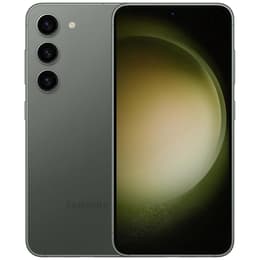


Galaxy S23 Vs Google Pixel 9 Pro XL

Galaxy S23
Galaxy S23
Starting at

Refurbished price:£186.84

Versus £1,019.00 new

See options
Google Pixel 9 Pro XL
Starting at

Refurbished price:£383.00

Versus £1,093.99 new

See options

Ratings

The Samsung Galaxy S23, released in February 2023, and the Google Pixel 9 Pro XL, launched in August 2024, are both high-end Android smartphones. While the Galaxy S23 offers a compact design with a focus on a balanced user experience, the Pixel 9 Pro XL emphasizes advanced computational photography and extended software support. Both devices run on the Android operating system, providing access to a wide ecosystem of applications and services.

Scores

Durability

When considering the long-term usability of these devices, their release timelines and software support policies are key factors.

  • Software Longevity: The Samsung Galaxy S23 is expected to receive four major Android operating system updates and five years of security patches, with its final OS update anticipated around 2025 or 2026. In contrast, the Google Pixel 9 Pro XL offers a more extensive commitment, providing seven years of both operating system and security updates from its release date.
  • Practical Lifespan: The Pixel 9 Pro XL's longer software support suggests a potentially extended period of optimal functionality and security, making it a suitable option for users who prefer to keep their devices for many years. The Galaxy S23, while still offering substantial support, will reach its end-of-life for major OS updates sooner.
  • Repairability: The Galaxy S23 series has shown improvements in repairability, with features like easier battery removal and labeled internal components, earning a French repairability index score of 8.2. The Pixel 9 Pro XL also features a dual-entry design and a separate daughterboard for its USB-C port, contributing to a French repairability index score of 8.6, though its screen can be delicate during replacement.

Year of Release

2023

2024

Compatible with latest Update

Yes

Yes

OS

Android

Android

Foldable

No

No

Performance

Both smartphones are equipped with powerful internal components designed to handle demanding tasks, though their approaches to performance can differ.

  • System Responsiveness: The Galaxy S23, powered by a specialized processor, delivers a consistently smooth experience for everyday applications, multitasking, and mobile gaming. Users generally report quick app loading and fluid navigation.
  • Multitasking and Storage: The Pixel 9 Pro XL, featuring a newer generation processor and typically offering 16 GB of RAM, provides ample capacity for extensive multitasking and running numerous applications simultaneously without slowdowns. Both devices offer various storage configurations, with the Galaxy S23's 256 GB and higher variants utilizing faster storage technology.
  • Battery Behavior: The Galaxy S23, with its 3900 mAh battery, generally provides a full day of use for moderate users, though heavy usage may require more frequent charging. The Pixel 9 Pro XL, housing a larger 5060 mAh battery, is noted by some users for offering multi-day battery life under lighter usage conditions, but can experience faster drain during intensive tasks or gaming.

Memory (GB)

8 GB

16 GB

Screen quality

The visual experience on both devices is designed to be immersive, with distinct characteristics in their display technologies.

  • Display Technology and Clarity: The Galaxy S23 features a 6.1-inch Dynamic AMOLED 2X display, offering vibrant colors and deep blacks with a resolution of 2340 x 1080 pixels. The Pixel 9 Pro XL comes with a larger 6.8-inch LTPO OLED display, providing a sharper resolution of 2992 x 1344 pixels.
  • Brightness and Refresh Rate: Both phones offer a smooth viewing experience with a 120 Hz refresh rate. The Galaxy S23 can reach a peak brightness of 1750 nits, ensuring good visibility in various lighting conditions. The Pixel 9 Pro XL boasts an even higher peak brightness, rated up to 3000 nits, which translates to exceptional outdoor visibility.
  • Viewing Experience: The Pixel 9 Pro XL's larger screen size and higher resolution may appeal to users who prioritize media consumption and a more expansive viewing area, while the Galaxy S23 offers a more compact form factor that is easier for one-handed use.

Resolution

1080 x 2340

1344 x 2992

Screen type

Dynamic AMOLED 2X

LTPO OLED

Audiovisual

Both smartphones are recognized for their advanced camera systems, each bringing unique strengths to photography and videography.

  • Rear Camera Systems: The Galaxy S23 is equipped with a versatile triple camera setup, including a 50 MP main sensor, a 12 MP ultrawide lens, and a 10 MP telephoto lens with 3x optical zoom. The Pixel 9 Pro XL also features a triple camera system, comprising a 50 MP main sensor, a 48 MP ultrawide lens, and a 48 MP telephoto lens with 5x optical zoom.
  • Photography Performance: The Pixel 9 Pro XL is often praised for its computational photography, delivering excellent color accuracy, dynamic range, and low-light performance, particularly for capturing natural skin tones. The Galaxy S23 also provides strong camera performance in various lighting, though some users have noted occasional motion blur in specific conditions.
  • Video and Audio: Both devices are capable of recording high-quality video. The Pixel 9 Pro XL has shown improved video stabilization, though low-light video can still exhibit some jitter. The front-facing camera on the Pixel 9 Pro XL is a 42 MP sensor, offering higher resolution for selfies and video calls compared to the Galaxy S23's 12 MP front camera.

Main camera

50 megapixels

50 megapixels

Front camera

12 megapixels

42 megapixels

Miscellaneous

Beyond core performance, several practical elements contribute to the overall user experience of these smartphones.

  • Connectivity and Ports: Both devices support 5G connectivity and modern Wi-Fi standards, ensuring fast internet access. The Galaxy S23 features Bluetooth 5.3 and a USB 3.2 Type-C port. The Pixel 9 Pro XL also uses a USB-C port, and its charging speed is rated at 37W wired, which some users find slower compared to other flagships.
  • Biometric Security: Both phones incorporate advanced biometric security features. The Galaxy S23 includes an in-display fingerprint scanner, while the Pixel 9 Pro XL offers both fingerprint and face recognition.
  • Design and Handling: The Galaxy S23 presents a more compact and lighter design, weighing 168g, which can be more comfortable for one-handed operation. The Pixel 9 Pro XL is a larger and heavier device at 221g, which some users have noted can lead to discomfort during extended use. Both devices feature durable glass backs and IP68 ratings for dust and water resistance.

Weight

350 g

221 g

Screen size (in)

6.1

6.8

Mobile network

5G

5G

SIM card

Physical SIM + eSIM

Physical SIM + eSIM

Carrier compatibility

Unlocked

Unlocked

Connector

USB-C

USB-C

The Samsung Galaxy S23 and Google Pixel 9 Pro XL each offer a compelling smartphone experience, catering to slightly different user priorities. Users often praise the Galaxy S23 for its balanced performance, compact design, and vibrant display. Some common criticisms have included initial reports of slower charging with non-optimal chargers and occasional software-related glitches that were largely addressed through updates.

The Pixel 9 Pro XL is frequently lauded for its exceptional camera capabilities, particularly its computational photography prowess, and its commitment to extended software support. However, some users have noted its considerable weight and slower charging speeds compared to some competitors.

For individuals prioritizing a more compact and lighter device with robust performance and a strong camera system, the Galaxy S23 remains a solid choice. Its design is well-suited for users who prefer ease of handling. Conversely, users who value cutting-edge computational photography, a larger display for media consumption, and a significantly longer period of software updates may find the Pixel 9 Pro XL to be a more fitting option. This device is particularly appealing for those who intend to keep their smartphone for many years, benefiting from continuous feature and security enhancements.

Both models represent quality choices in the smartphone market, and considering a quality-assured refurbished option for either device can be an eco-friendly alternative to purchasing new.


See all articles

Our recent comparisons