Galaxy S23 Vs iPhone 14 Pro

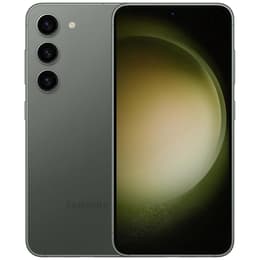
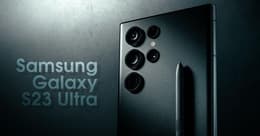
Galaxy S23
Galaxy S23
Starting at

Refurbished price:£186.84

Versus £1,019.00 new

See options
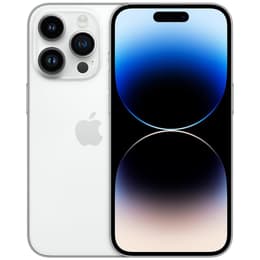
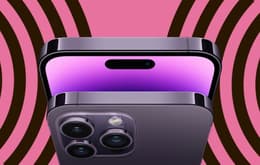
iPhone 14 Pro
iPhone 14 Pro
Starting at

Refurbished price:£304.00

Versus £1,099.00 new

See options

Ratings

The Samsung Galaxy S23, released in February 2023, and the Apple iPhone 14 Pro, launched in September 2022, represent two distinct approaches to high-end smartphone design and functionality. While both devices offer premium experiences, they cater to different user preferences through their respective operating systems and hardware philosophies. The Galaxy S23 operates on Android, offering a customizable interface, while the iPhone 14 Pro runs on iOS, known for its integrated ecosystem and streamlined user experience. Key differentiators include their camera systems, display technologies, and overall design aesthetics.

Scores

Durability

When considering the long-term usability of a smartphone, factors like software support, physical durability, and ease of repair are important. Both the Galaxy S23 and iPhone 14 Pro offer robust builds and receive regular software updates, contributing to their expected lifespans.

  • Software Longevity: The iPhone 14 Pro, having been released in September 2022, typically receives iOS updates for approximately five to six years from its launch. The Galaxy S23, released in February 2023, is expected to receive several years of Android OS and security updates, ensuring continued functionality and access to new features.
  • Physical Resilience: The Galaxy S23 features Gorilla Glass Victus 2 on both its front and back, paired with an Armor Aluminum frame, offering protection against drops and scratches. The iPhone 14 Pro utilizes Apple's Ceramic Shield front cover and a stainless steel frame, designed for enhanced durability. Both devices carry an IP68 rating for water and dust resistance, indicating they can withstand submersion in up to 6 meters of water for 30 minutes.
  • Repairability Aspects: While specific repairability scores can vary, the Galaxy S23 series has shown improvements in design for easier battery replacement, with pull tabs and clearly labeled components. The iPhone 14 Pro, while built with precision, generally requires specialized tools and expertise for internal repairs.

Year of Release

2023

2022

Compatible with latest Update

Yes

Yes

OS

Android

iOS

Foldable

No

No

Performance

The performance of a smartphone is crucial for handling daily tasks, demanding applications, and multitasking. Both the Galaxy S23 and iPhone 14 Pro are equipped with powerful internal components designed to deliver a smooth and responsive user experience.

  • Processing Capabilities: The Galaxy S23 is powered by a current-generation processor optimized for Samsung devices, which allows it to handle intensive applications and graphic-heavy games efficiently without significant slowdowns. The iPhone 14 Pro features a highly capable chip that delivers strong performance across single-core and multi-core tasks, ensuring fluid navigation and rapid app loading.
  • Multitasking and Responsiveness: With 8GB of RAM, the Galaxy S23 provides ample capacity for running multiple applications simultaneously and switching between them smoothly. The iPhone 14 Pro, with 6GB of RAM, is also optimized for efficient multitasking within the iOS environment, maintaining app states effectively.
  • Battery Behavior: The Galaxy S23 houses a 3900 mAh battery, with many users reporting it comfortably lasts a full day of moderate to heavy use, often achieving 5-7 hours of screen-on time. The iPhone 14 Pro, with a battery capacity around 3200 mAh, is also noted for its efficient power management, providing up to 23 hours of video playback and typically lasting a full day for most users.

Memory (GB)

8 GB

6 GB

Screen quality

The display is a primary interface for smartphone interaction, and both the Galaxy S23 and iPhone 14 Pro offer high-quality screens with distinct characteristics.

  • Display Technology and Clarity: The Galaxy S23 features a 6.1-inch Dynamic AMOLED 2X display, known for its vibrant colors, deep blacks, and excellent contrast. It has a resolution of 2340 x 1080 pixels, resulting in a pixel density of 425 pixels per inch (ppi). The iPhone 14 Pro also sports a 6.1-inch Super Retina XDR OLED display, offering sharp visuals and accurate color reproduction with a resolution of 2556 x 1179 pixels and a higher pixel density of 460 ppi.
  • Brightness and Outdoor Visibility: The Galaxy S23 can reach a peak brightness of 1750 nits, which ensures good visibility even in bright outdoor conditions. The iPhone 14 Pro excels in brightness, offering a typical maximum of 1000 nits, a peak of 1600 nits for HDR content, and an impressive 2000 nits peak brightness when used outdoors in direct sunlight, making it highly legible in various lighting environments.
  • Smoothness and Interaction: Both devices feature adaptive refresh rates up to 120Hz, providing smooth scrolling, fluid animations, and a responsive touch experience. The iPhone 14 Pro also introduces the Dynamic Island, an interactive area around the front camera cutout that displays alerts and background activities.

Resolution

1080 x 2340

1179 x 2556

Screen type

Dynamic AMOLED 2X

LTPO Super Retina XDR OLED

Audiovisual

Both the Galaxy S23 and iPhone 14 Pro are equipped with advanced camera systems designed to capture high-quality photos and videos in various conditions.

  • Rear Camera Systems: The Galaxy S23 features a versatile triple-camera setup, including a 50MP main sensor, a 12MP ultrawide lens, and a 10MP telephoto lens with 3x optical zoom. It is noted for its ability to capture detailed nighttime sky shots. The iPhone 14 Pro also has a triple-camera system, comprising a 48MP main sensor with second-generation sensor-shift optical image stabilization, a 12MP ultrawide lens, and a 12MP telephoto lens with 3x optical zoom.
  • Low-Light and Everyday Photography: The iPhone 14 Pro shows significant advancements in low-light photography, with its larger sensors and improved software processing, often delivering clearer and more detailed images in challenging lighting. The Galaxy S23 also performs well in low-light, producing vibrant and well-exposed photos.
  • Video Recording Capabilities: The Galaxy S23 supports video recording up to 8K resolution at 30 frames per second, offering high-resolution footage. The iPhone 14 Pro records video up to 4K at 60 frames per second and includes features like Cinematic mode for depth-of-field effects and Action mode for enhanced stabilization during movement.

Main camera

50 megapixels

48 megapixels

Front camera

12 megapixels

12 megapixels

Miscellaneous

Beyond core features, several practical elements contribute to the overall user experience of these smartphones.

  • Connectivity and Ports: Both devices support 5G connectivity for fast mobile data speeds and Bluetooth 5.3 for efficient wireless accessory connections. The Galaxy S23 includes Wi-Fi 6E for enhanced wireless network performance and features a USB-C port for charging and data transfer. The iPhone 14 Pro supports Wi-Fi 6 and uses a Lightning port.
  • Biometric Security and Special Features: The Galaxy S23 incorporates an ultrasonic under-display fingerprint sensor for secure unlocking. The iPhone 14 Pro relies on Face ID for facial recognition security. The iPhone 14 Pro also includes Emergency SOS via satellite, allowing users to contact emergency services in areas without cellular or Wi-Fi coverage.
  • Design and Handling: The Galaxy S23 weighs 168g, offering a relatively lightweight and compact feel. The iPhone 14 Pro is heavier at 206g, contributing to a denser in-hand feel. Both phones feature premium build materials, with the Galaxy S23 using Armor Aluminum and the iPhone 14 Pro using stainless steel for their frames.

Weight

350 g

206 g

Screen size (in)

6.1

6.1

Mobile network

5G

5G

SIM card

Physical SIM + eSIM

Physical SIM + eSIM

Carrier compatibility

Unlocked

Unlocked

Connector

USB-C

Lightning

The Samsung Galaxy S23 and iPhone 14 Pro each offer compelling features, appealing to different user priorities. Users often praise the Galaxy S23 for its balanced Android experience, including a vibrant display, reliable battery life for its size, and a versatile camera system that performs well in various scenarios. Some users note that its charging speed, while adequate, is not the fastest available. The iPhone 14 Pro is frequently lauded for its exceptionally bright display, powerful processing capabilities, and advanced video recording features, particularly its Cinematic and Action modes. Its low-light photography is also a common point of praise. However, some users find its weight to be a factor, and the continued use of the Lightning port is sometimes mentioned.

For users who prioritize a highly customizable Android environment, a lighter device, and the universal convenience of a USB-C port, the Galaxy S23 presents a strong option. Its camera system is well-rounded for everyday photography and offers high-resolution video recording. Conversely, individuals who value the integrated iOS ecosystem, superior outdoor display brightness, and advanced computational photography and video features may find the iPhone 14 Pro more aligned with their needs. Its robust performance ensures a smooth experience for demanding tasks and creative projects.

Ultimately, the choice between these two devices depends on individual preferences for operating system, specific feature priorities, and design considerations. Both models are excellent choices, and opting for a quality-assured refurbished option can be a sustainable way to acquire either device.
See all articles

Our recent comparisons